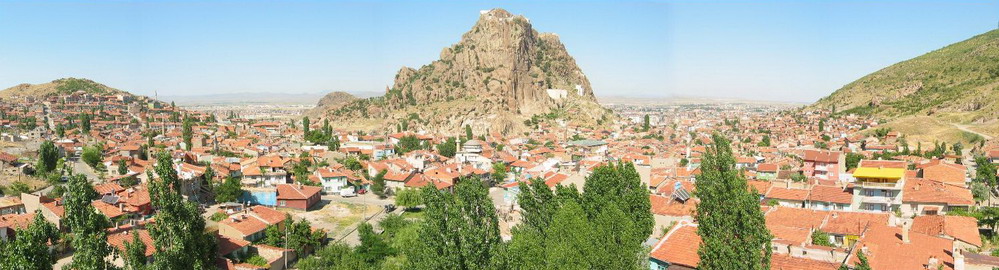
Located at the crossroads of the Aegean, Central Anatolia, and Mediterranean regions, Afyonkarahisar is one of Turkey’s most historic and culturally rich provinces. Famous for its magnificent volcanic rock fortress, ancient civilizations, thermal spa resorts, traditional cuisine, marble quarries, and important role in Turkish history, Afyonkarahisar offers visitors an unforgettable journey through thousands of years of Anatolian heritage.
Often simply called Afyon, the city has served as an important settlement since antiquity due to its strategic location along major trade routes connecting eastern and western Anatolia. Today, visitors are drawn not only by its impressive historical monuments but also by its renowned thermal springs, delicious local specialties such as Turkish delight and sucuk (spiced sausage), and spectacular natural landscapes.
Whether you are interested in archaeology, history, wellness tourism, outdoor adventures, or authentic Turkish culture, Afyonkarahisar provides a rewarding destination filled with fascinating discoveries.
History of Afyonkarahisar
The history of Afyonkarahisar stretches back more than 4,000 years.
Throughout its long history, the region has been home to numerous civilizations including the Hittites, Phrygians, Lydians, Persians, Romans, Byzantines, Seljuks, and Ottomans.
Its strategic position made the city an important military stronghold controlling the routes between Central Anatolia and the Aegean coast.
The city’s name combines two important features:
- Afyon, referring to the opium poppies historically cultivated throughout the region.
- Karahisar, meaning “Black Fortress,” named after the imposing dark volcanic rock rising dramatically above the city.
Afyonkarahisar also occupies an important place in modern Turkish history. During the Turkish War of Independence (1919–1922), the region witnessed some of the decisive battles that ultimately led to the foundation of the Republic of Turkey. The Great Offensive (Büyük Taarruz), launched from this region in August 1922, changed the course of the war.
Afyonkarahisar Castle (Karahisar Castle)
The city’s most recognizable landmark is the spectacular Afyonkarahisar Castle, dramatically perched atop a 226-meter-high volcanic rock overlooking the entire city.
The fortress is believed to have been established by the Hittites around 1350 BC before being expanded by the Phrygians, Romans, Byzantines, Seljuks, and Ottomans over the centuries.
Visitors willing to climb the nearly 700 stone steps to the summit are rewarded with breathtaking panoramic views across the city and surrounding plains.
Although much of the original fortress has disappeared, sections of ancient walls, cisterns, defensive towers, and historic structures remain, providing a fascinating glimpse into the city’s military past.
Sunrise and sunset are particularly spectacular times to visit the castle.
Archaeological Museum
One of Turkey’s finest regional museums, the Afyonkarahisar Archaeological Museum houses an impressive collection of artifacts spanning thousands of years.
Its exhibits include:
- Hittite sculptures
- Phrygian monuments
- Roman statues
- Byzantine inscriptions
- Ancient coins
- Marble sarcophagi
- Ceramics
- Jewelry
- Everyday objects from ancient Anatolian civilizations
The museum offers an excellent introduction to the rich archaeological heritage of western Anatolia.
Victory Museum and War of Independence Memorial
Afyonkarahisar played a decisive role during the Turkish War of Independence.
The Victory Museum and the nearby War of Independence Memorial commemorate the historic Great Offensive launched from this region in August 1922.
Visitors can explore military artifacts, historical documents, photographs, uniforms, maps, and exhibitions explaining one of the most important chapters in modern Turkish history.
Phrygian Valley
North of Afyonkarahisar lies the remarkable Phrygian Valley, one of Turkey’s most fascinating archaeological landscapes.
Carved into volcanic rock formations, the valley contains numerous ancient monuments dating back nearly 3,000 years.
Among its most impressive attractions are monumental rock façades dedicated to the Phrygian Mother Goddess Cybele.
The valley is also popular for hiking, cycling, photography, and nature excursions.
Aslantaş Monument
The Aslantaş (Lion Stone) Monument is one of the finest surviving examples of Phrygian rock-cut architecture.
Massive lion reliefs guard the entrance to the ancient monument, symbolizing strength and royal authority.
The detailed carvings remain remarkably well preserved despite their great age.
Aslankaya Monument
Nearby stands the magnificent Aslankaya, another monumental Phrygian sanctuary carved directly into the cliffs.
Its beautifully sculpted lion figures and decorative geometric patterns demonstrate the advanced artistic skills of the ancient Phrygian civilization.
These monuments are among Turkey’s most significant prehistoric rock carvings.
Open-Air Museum at Dinar
Approximately 100 kilometers south of Afyonkarahisar lies the town of Dinar, home to an important Open-Air Museum (Açık Hava Müzesi).
According to Greek mythology, this area witnessed the legendary musical contest between the god Apollo and the satyr Marsyas (sometimes incorrectly referred to as Manyas).
Visitors can explore:
- Roman gravestones
- Byzantine tombstones
- Ancient inscriptions
- Marble sculptures
- Architectural fragments
- Archaeological remains from several civilizations
The site offers an interesting combination of mythology and archaeology.
Thermal Tourism
Afyonkarahisar is internationally recognized as one of Turkey’s leading thermal spa destinations.
Rich geothermal resources have attracted visitors seeking healing waters since Roman times.
The province contains numerous luxury thermal hotels offering:
- Mineral-rich hot spring pools
- Turkish baths
- Spa therapies
- Wellness treatments
- Massage
- Mud therapy
- Rehabilitation facilities
The most famous thermal resorts include:
- Gazlıgöl
- Sandıklı Hüdai
- Ömer-Gecek
- Heybeli Thermal Springs
These resorts are particularly popular throughout the winter months.
Local Cuisine
Afyonkarahisar is considered one of Turkey’s gastronomic capitals.
Its traditional cuisine is famous throughout the country.
Popular local dishes include:
Afyon Sucuğu
Turkey’s most famous spicy beef sausage, prepared using traditional recipes and natural spices.
Kaymak
Rich buffalo cream served with honey, bread, or Turkish desserts.
Turkish Delight (Lokum)
Afyon is one of Turkey’s largest producers of premium Turkish delight made with pistachios, walnuts, rosewater, and fruit flavors.
Keşkek
A traditional Anatolian dish prepared from wheat and slow-cooked meat.
Haşhaşlı Products
The province is famous for pastries, breads, and desserts made with locally grown poppy seeds.
Shopping
Visitors can purchase a variety of regional products, including:
- Turkish delight
- Afyon sucuk
- Buffalo cream
- Local cheeses
- Marble handicrafts
- Poppy seed products
- Traditional textiles
- Handmade ceramics
- Copperware
- Regional spices
Climate
Afyonkarahisar experiences a continental climate.
Spring
Mild temperatures and blooming countryside make spring ideal for sightseeing.
Summer
Summers are warm and sunny, although cooler than many coastal regions.
Autumn
Pleasant weather and colorful landscapes create excellent conditions for outdoor activities.
Winter
Winters are cold with occasional snowfall, making thermal spa hotels especially attractive.
Transportation
By Road
Afyonkarahisar occupies one of Turkey’s most important highway intersections.
Excellent roads connect the city with:
- Ankara (approximately 250 km)
- İzmir (approximately 330 km)
- Antalya (approximately 290 km)
- Konya (approximately 220 km)
- Eskişehir (approximately 140 km)
- Bursa (approximately 270 km)
Frequent intercity buses operate throughout the country.
By Rail
Afyonkarahisar is an important railway junction connecting western and central Turkey.
Regular train services operate to several major cities, including İzmir, Konya, Eskişehir, Ankara, and Istanbul via connecting routes.
By Air
Although Afyonkarahisar does not have a commercial airport, visitors can easily reach the province via nearby airports:
- Zafer Airport (approximately 60 km)
- Isparta Süleyman Demirel Airport
- Kütahya Zafer Airport
- Denizli Çardak Airport
Airport shuttle services and rental cars provide convenient transportation to the city.
Districts of Afyonkarahisar Province
Afyonkarahisar Province consists of 18 districts, each offering its own historical, cultural, or natural attractions.
- Afyonkarahisar (Central District) – Administrative, historical, commercial, and cultural center of the province.
- Başmakçı – Known for poultry farming and peaceful rural landscapes.
- Bayat – Famous for traditional carpet weaving and local handicrafts.
- Bolvadin – Historic town near Lake Eber, known for wetlands and birdlife.
- Çay – Surrounded by fertile agricultural plains and mountain scenery.
- Çobanlar – A small district with traditional Anatolian village life.
- Dazkırı – Home to natural landscapes and agricultural production.
- Dinar – An important archaeological center associated with ancient Apamea and Greek mythology.
- Emirdağ – Known for its large overseas Turkish community and rich cultural traditions.
- Evciler – Rural district offering authentic countryside experiences.
- Hocalar – Mountainous landscapes ideal for nature lovers.
- İhsaniye – Gateway to the remarkable Phrygian Valley and numerous ancient monuments.
- İscehisar – Internationally famous for its high-quality marble quarries that have supplied stone since Roman times.
- Kızılören – Quiet agricultural district surrounded by natural beauty.
- Sandıklı – One of Turkey’s leading thermal tourism destinations.
- Sinanpaşa – Rich agricultural region with traditional villages.
- Sultandağı – Celebrated for cherry orchards, fruit production, and mountain scenery.
- Şuhut – Historically significant as the starting point of the Great Offensive during the War of Independence.
Best Time to Visit
The ideal times to visit Afyonkarahisar are April to June and September to October, when temperatures are comfortable for sightseeing, hiking, and exploring archaeological sites.
Winter is an excellent season for visitors planning a relaxing thermal spa holiday.
Afyonkarahisar is one of Turkey’s most underrated destinations, offering a remarkable combination of ancient history, impressive archaeology, breathtaking natural landscapes, thermal wellness, and rich culinary traditions. From climbing the dramatic Black Fortress and exploring the mysterious monuments of the Phrygian Valley to relaxing in mineral-rich hot springs and savoring the province’s famous local delicacies, every visit reveals another chapter of this fascinating Anatolian region.
Whether you are a history enthusiast, a cultural traveler, a wellness seeker, or simply looking to discover one of Turkey’s hidden gems, Afyonkarahisar promises an authentic and memorable travel experience that perfectly blends the past with the present.