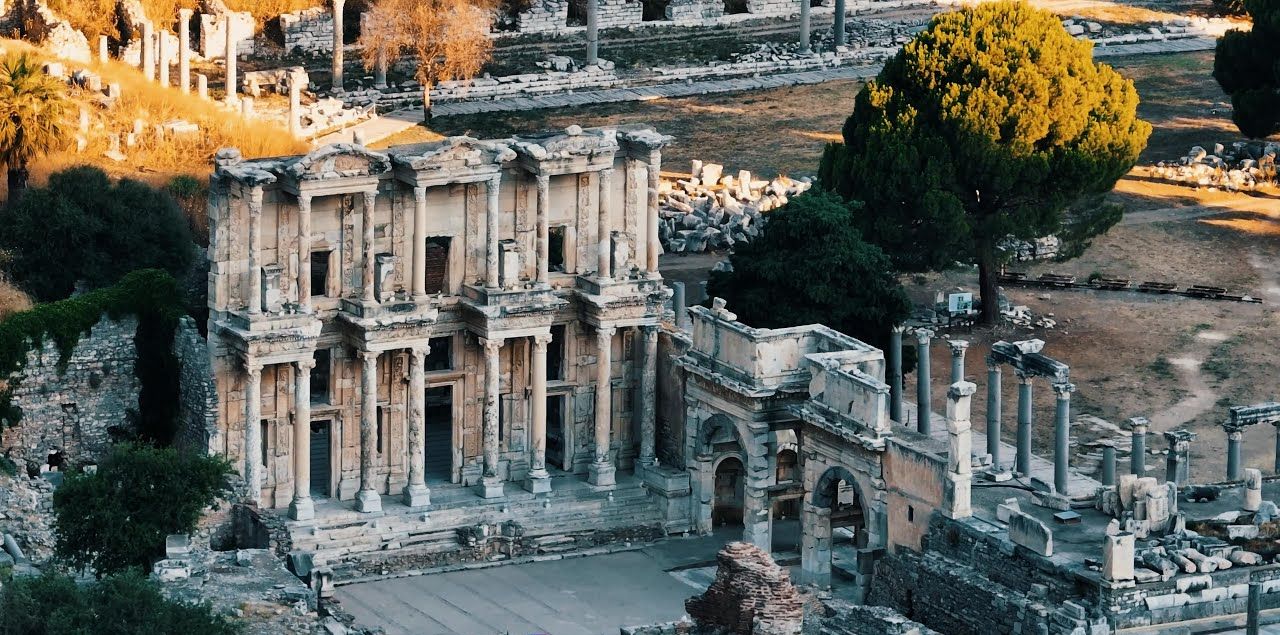
The Library of Celsus is one of the most iconic and best-preserved monuments in the ancient city of Ephesus. Located within the archaeological site in Selçuk, İzmir Province, it stands as a masterpiece of Roman architecture and a symbol of the city’s intellectual and cultural importance during antiquity.
A Monument of Roman Learning
The library was built during the Roman period between 115–117 AD, commissioned by Gaius Julius Aquila in memory of his father, Tiberius Julius Celsus Polemaeanus, a Roman senator and governor of Asia. Celsus is believed to be buried in a marble sarcophagus beneath the structure.
Situated next to the Commercial Agora, the library was one of the most important public buildings in Ephesus, reflecting the city’s role as a major center of knowledge and culture in the Roman world.
Architectural Grandeur
The Library of Celsus is especially renowned for its magnificent two-story façade, which has become one of the most photographed ruins in Türkiye.
Key architectural features include:
- A richly decorated, symmetrical façade
- Two levels of columns and niches
- Ornamental statues representing allegorical figures
- A grand central entrance framed by architectural sculptures
The four statues placed in front of the façade symbolize:
- Wisdom
- Knowledge (Mind)
- Intelligence
- Virtue or Science
(The originals of these statues are preserved in the Vienna Museum today.)
Interior Design and Function
Inside the library, the structure was designed to house thousands of scrolls and manuscripts, making it one of the largest libraries of the ancient world.
Features of the interior included:
- Wall niches arranged in three tiers for scroll storage
- Wooden shelves and reading spaces
- A central hall designed for study and scholarly activity
- An elevated floor system to protect scrolls from humidity
The library served not only as a storage place for texts but also as a monument honoring learning and civic pride.
Fire and Preservation
In approximately 260 AD, the library was damaged by fire, likely during a period of conflict and instability in the Roman Empire. Despite this, the façade survived, while much of the interior was destroyed.
Over time, the structure remained buried and partially collapsed until modern archaeological excavations restored its iconic front elevation.
Cultural and Historical Importance
The Library of Celsus reflects the intellectual life of ancient Ephesus and its status as a leading city of the Roman Empire. It stands as a powerful reminder of the importance placed on education, literature, and public knowledge in classical society.
Why Visit the Library of Celsus?
Today, the Library of Celsus is one of the highlights of Ephesus and is especially valued by visitors interested in:
- Roman architecture and engineering
- Ancient libraries and scholarship
- Archaeological photography
- The cultural heritage of Ephesus
A Timeless Symbol of Knowledge
With its elegant façade and rich historical background, the Library of Celsus remains one of the most extraordinary surviving monuments of the ancient world. It continues to represent the enduring legacy of knowledge, learning, and civic pride in Ephesus.