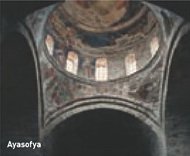
Hagia Sophia (Ayasofya) is one of the most iconic monuments in the world, located in the historic heart of Istanbul, Turkey. It stands as a powerful symbol of the city’s layered history, reflecting both Byzantine Christian and Ottoman Islamic heritage.
Originally built as a cathedral in antiquity, later converted into a mosque, then a museum, and today functioning again as a mosque, Hagia Sophia represents nearly 1,500 years of architectural and cultural transformation.
It is part of the UNESCO World Heritage-listed Historic Areas of Istanbul and remains one of the most visited landmarks in Turkey.
History
The current structure of Hagia Sophia was completed in 537 AD during the reign of Byzantine Emperor Justinian I, following the destruction of earlier churches on the same site.
It was built after the Nika Revolt of 532 AD, which destroyed the previous basilica. Justinian ordered a grand reconstruction that would become the largest church of its time.
Architects
The building was designed by:
- Isidorus of Miletus (Didim)
- Anthemius of Tralles (Aydın)
Byzantine Era
For nearly 1,000 years, Hagia Sophia served as the principal cathedral of the Eastern Roman (Byzantine) Empire and the center of Orthodox Christianity.
Ottoman Era
After the conquest of Istanbul in 1453, Sultan Mehmed II (Mehmed the Conqueror) converted Hagia Sophia into a mosque. Minarets were added, and major repairs and reinforcements were carried out over time.
Prominent Ottoman architect Mimar Sinan contributed structural reinforcements that helped preserve the building.
Later, during the reign of Sultan Abdülmecid (1839–1861), the Fossati brothers led restoration works.
Modern Period
In 1935, Hagia Sophia was opened as a museum by the Republic of Turkey. In 2020, it was reconverted into a mosque, while remaining open to visitors as one of Istanbul’s most important cultural landmarks.
Architecture
Hagia Sophia is renowned for its groundbreaking architectural design.
Key Features:
- Massive central dome (approx. 55.6 m high, ~31 m diameter)
- Innovative pendentive dome system
- Marble columns and imported stone from across the empire
- Large interior nave with golden mosaics (Byzantine era)
- Ottoman calligraphic panels added later
- Four minarets added during Ottoman period
The dome is considered a masterpiece of Byzantine engineering and influenced many later Ottoman mosques.
Interior Highlights
Inside Hagia Sophia, visitors can see:
- Byzantine mosaics of Christ, the Virgin Mary, and emperors
- Massive marble doors and columns
- Ottoman calligraphy panels
- Mihrab and minbar added during the mosque period
- Upper galleries with historical views of the nave
- Marble flooring and ancient stone details
Things to Do
Explore the Interior
Admire the fusion of Byzantine and Ottoman architecture in one space.
Study the Mosaics
Look for preserved Christian mosaics, especially in upper galleries.
Observe the Dome
Stand beneath the central dome to appreciate its scale and engineering.
Visit Nearby Attractions
Hagia Sophia is located in Sultanahmet, within walking distance of major landmarks.
Nearby Attractions
- Blue Mosque (Sultan Ahmed Mosque) – iconic Ottoman mosque
- Topkapi Palace – former residence of Ottoman sultans
- Basilica Cistern – ancient underground water system
- Hippodrome of Constantinople – historic public square
- Grand Bazaar – one of the world’s oldest markets
- Archaeological Museums of Istanbul – ancient artifacts and history
Practical Information
Location
Hagia Sophia is located in the Sultanahmet district of Istanbul’s historic peninsula.
Visiting Rules
As it functions as a mosque:
- Modest clothing is required
- Entry may be restricted during prayer times
- Women are required to cover their heads when entering prayer areas
- Shoes must be removed in prayer sections
Best Time to Visit
- Morning: fewer crowds
- Late afternoon: softer light and better photos
- Spring and autumn: most comfortable weather
Travel Tips
- Arrive early to avoid long queues
- Combine visit with Blue Mosque and Topkapi Palace
- Respect prayer times and local customs
- Use guided tours for deeper historical understanding
- Explore surrounding Sultanahmet Square on foot
Hagia Sophia is not only a monument but a living symbol of Istanbul’s layered identity, where Byzantine grandeur and Ottoman heritage meet in one of the most important architectural achievements in world history.