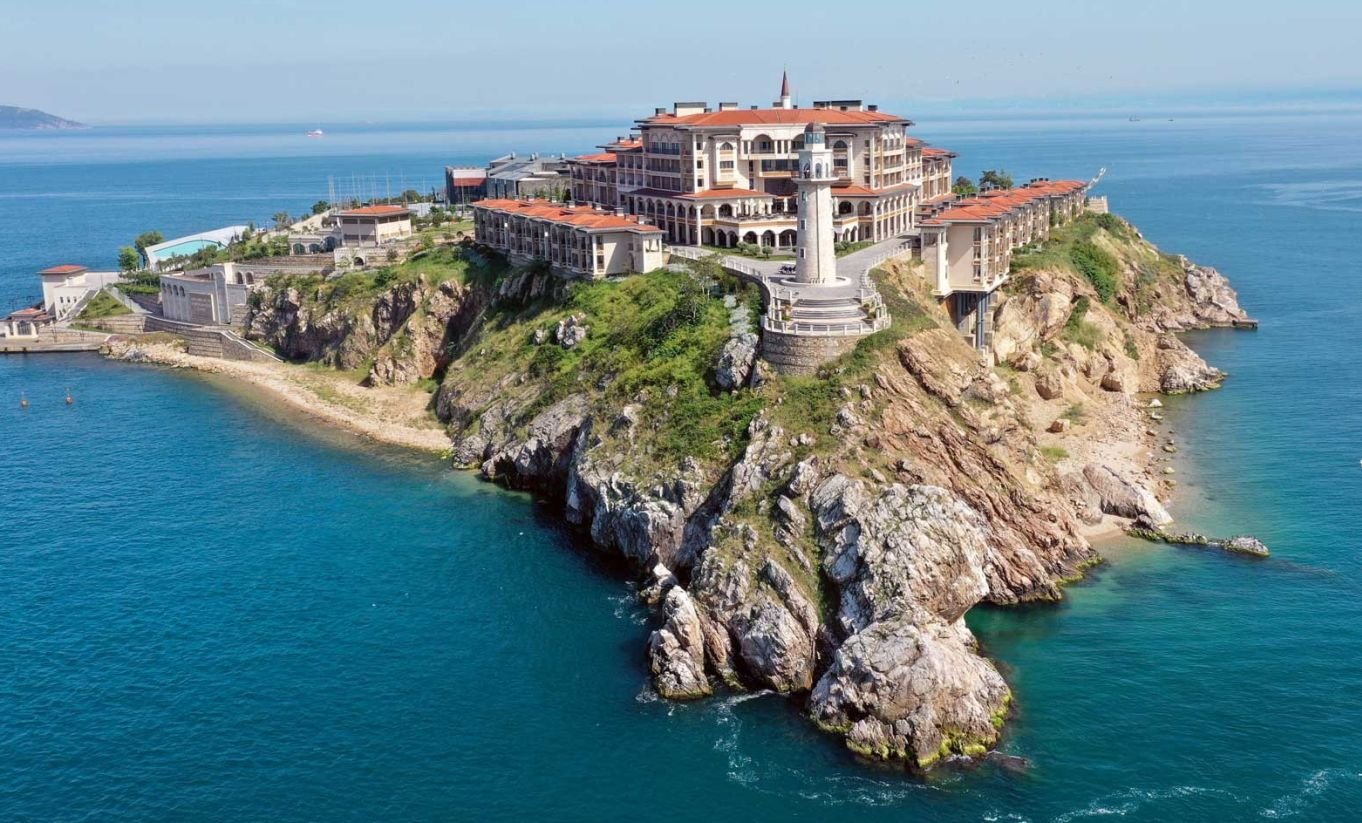
Yassıada, officially known today as Democracy and Freedoms Island (Demokrasi ve Özgürlükler Adası), is one of the smaller islands in Istanbul’s Princes’ Islands archipelago in the Sea of Marmara. Measuring approximately 740 meters in length and 185 meters in width, the island is characterized by its relatively flat terrain, from which it takes its name—Yassıada meaning “Flat Island.” Although the interior is level, much of the coastline consists of steep rocky cliffs that descend sharply into the sea.
Despite its peaceful appearance today, Yassıada has witnessed centuries of dramatic history. During the Byzantine era, the island served as a place of exile for political figures and religious leaders. A monastery was established on the island, reinforcing its role as a secluded location for imprisonment and isolation. Throughout the medieval period, Yassıada also experienced attacks by Latin forces during the Crusades and later by Russian fleets, leaving behind a turbulent legacy.
Following the Ottoman conquest of Constantinople in 1453, the island remained largely uninhabited and received little attention. In 1859, Sir Henry Bulwer, the British Ambassador to the Ottoman Empire, purchased Yassıada and constructed several distinctive castle-like buildings, landscaped gardens, and agricultural facilities. The island was later acquired by Khedive Ismail Pasha of Egypt, although he never carried out significant development projects there.
In 1947, Yassıada was transferred to the Turkish Navy, which established a modern naval training facility on the island. However, its place in Turkish history is most closely associated with the events following the military coup of 27 May 1960. The island became the site of the highly publicized Yassıada Trials, where former Prime Minister Adnan Menderes and numerous members of his government were prosecuted by the military regime. Following the trials, Menderes, Foreign Minister Fatin Rüştü Zorlu, and Finance Minister Hasan Polatkan were sentenced to death and executed in 1961. These events remain among the most significant and debated chapters in modern Turkish political history.
In recent years, the island has undergone extensive restoration and redevelopment. Reopened to visitors as Democracy and Freedoms Island, it now features museums, memorials, exhibition halls, conference facilities, landscaped gardens, walking paths, and a marina. The exhibitions document the island’s complex history, particularly the political events of the 1960 coup, while honoring the principles of democracy, justice, and civil liberties.
Today, Yassıada offers visitors a unique blend of historical reflection and scenic beauty. Surrounded by the tranquil waters of the Sea of Marmara, the island provides an opportunity to explore an important chapter of Turkey’s modern history while enjoying panoramic coastal views and the peaceful atmosphere of the Princes’ Islands.