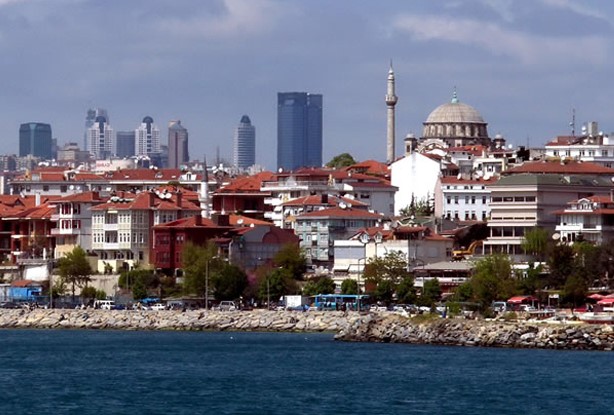
Located on the Anatolian side of Istanbul, Uskudar is one of the city’s oldest and most culturally rich districts. Facing the Bosphorus, it has served for centuries as a strategic crossing point between Asia and Europe, blending deep historical heritage with vibrant modern life.
Uskudar lies on the eastern shore of the Bosphorus and is bordered by:
- Beykoz to the north
- Ümraniye to the northeast
- Ataşehir & Kadıköy to the south
- The Bosphorus Strait to the west
It covers a compact but historically dense coastal area and consists of numerous neighborhoods.
Unlike many districts, Uskudar has no rural villages, only urban and coastal settlements.
Geography and Setting
Uskudar is defined by its:
- Long Bosphorus coastline
- Rolling hills rising toward the interior
- Strategic maritime position facing Europe
Its coastline offers some of the most iconic panoramic views of Istanbul, especially at sunset.
Ancient History
Uskudar’s roots go back more than 2,500 years, making it one of the earliest continuously inhabited areas of Istanbul.
Chrysopolis (Golden City)
In antiquity, Uskudar was known as Chrysopolis, meaning “Golden City”. Several theories explain this name:
- Gold collected as tax from Anatolia was stored here
- The city reflected golden light at sunset
- Mythological connections to ancient figures such as Chryses
- Its wealth from trade and maritime control
During the Persian and later Greek periods, Chrysopolis became an important customs and naval control point along the Bosphorus.
Classical and Hellenistic Era
Throughout antiquity:
- It was influenced by Persians, Athenians, and Macedonians
- Served as a military and trade checkpoint
- Controlled Bosphorus maritime traffic and taxation
The nearby region also connected to Chalcedon (Kadıköy), forming a dual urban structure on both sides of the strait.
Roman and Byzantine Period
During the Byzantine era, Üsküdar remained strategically vital:
- Used as a military staging area for Bosphorus control
- Hosted imperial camps and military expeditions
- Served as a departure point for campaigns toward Anatolia
Key historical events include:
- Harun al-Rashid’s campaigns reaching Üsküdar (8th century)
- Crusader armies camping in the region during their expeditions
- Power struggles involving Byzantine emperors and rival factions
Despite wars and invasions, the area maintained continuous settlement.
Early Turkish and Ottoman Period
Uskudar entered Turkish history well before the conquest of Istanbul.
- 14th century: Became part of early Ottoman influence under Orhan Gazi
- Used as a forward base facing Constantinople
- Strategic marriages and alliances strengthened Ottoman presence
Before 1453, Üsküdar was already under significant Turkish control, functioning as a gateway to Byzantium.
After the conquest:
- Anatolian populations were settled in the region
- Uskudar became one of Istanbul’s three main judicial districts (Bilad-ı Selase) alongside Galata and Haslar
Ottoman Uskudar
During the Ottoman era, Üsküdar became a major religious, cultural, and logistical center.
Religious and Cultural Role
- Starting point of the Surre Alayı (annual pilgrimage caravan to Mecca)
- Home to numerous mosques, lodges, and dervish orders
- Strong Sufi and spiritual presence
Major Ottoman Structures
Some important landmarks include:
- Maiden’s Tower
- Karacaahmet Cemetery
- Rum Mehmed Pasha Mosque
These structures reflect Uskudar’s role as both a spiritual center and a gateway district.
Modern Development
Today, Uskudar is a blend of:
- Historic waterfront neighborhoods
- Modern residential districts
- Business and transport hubs
- Cultural and religious landmarks
Urban growth has expanded inland while preserving the Bosphorus identity.
Culture and Daily Life
Uskudar is known for its:
- Traditional Istanbul lifestyle
- Strong religious and cultural heritage
- Family-oriented neighborhoods
- Historic bazaars and tea gardens
- Artistic and literary associations
Despite modernization, it retains a slower, more traditional rhythm compared to central Istanbul.
Top Attractions in Üsküdar
1. Bosphorus Waterfront
A scenic promenade with:
- Sunset views toward Europe
- Historic mansions (yalıs)
- Cafés and walking paths
2. Maiden’s Tower
One of Istanbul’s most iconic landmarks, located just offshore.
3. Historic Mosques
Including:
- Mihrimah Sultan Mosque
- Şemsi Paşa Mosque
- Çinili Mosque
4. Karacaahmet Cemetery
One of the oldest and largest cemeteries in Istanbul, rich in Ottoman history.
5. Kuzguncuk Neighborhood
A colorful, historic district known for:
- Wooden houses
- Religious harmony
- Artistic atmosphere
Food and Drink
Uskudar offers a wide range of traditional and modern cuisine:
- Fish restaurants along the Bosphorus
- Turkish breakfast cafés
- Street simit vendors
- Traditional Ottoman dishes
- Dessert shops (baklava, lokma, sütlaç)
Transportation
Uskudar is one of Istanbul’s key transport hubs:
- Metro lines (Marmaray connection)
- Ferries to European side (Eminönü, Beşiktaş)
- Bus and minibus networks
- Road access to Ümraniye and Kadıköy
It is one of the easiest districts for cross-continental travel.
Nearby Attractions
- Kadıköy – cultural and nightlife center
- Çamlıca Hill – panoramic city views
- Beylerbeyi Palace – Ottoman waterfront palace
- Ümraniye – modern residential district
Travel Tips
- Visit at sunset for the best Bosphorus views
- Take a ferry ride for a classic Istanbul experience
- Explore Kuzguncuk for photography and architecture
- Try seafood restaurants along the coast
- Combine Üsküdar with Kadıköy in one trip
Why Visit Uskudar?
Uskudar is where history, spirituality, and daily life meet the Bosphorus. It is not only a gateway between continents but also a living museum of Istanbul’s layered past – from ancient Chrysopolis to modern metropolitan life.