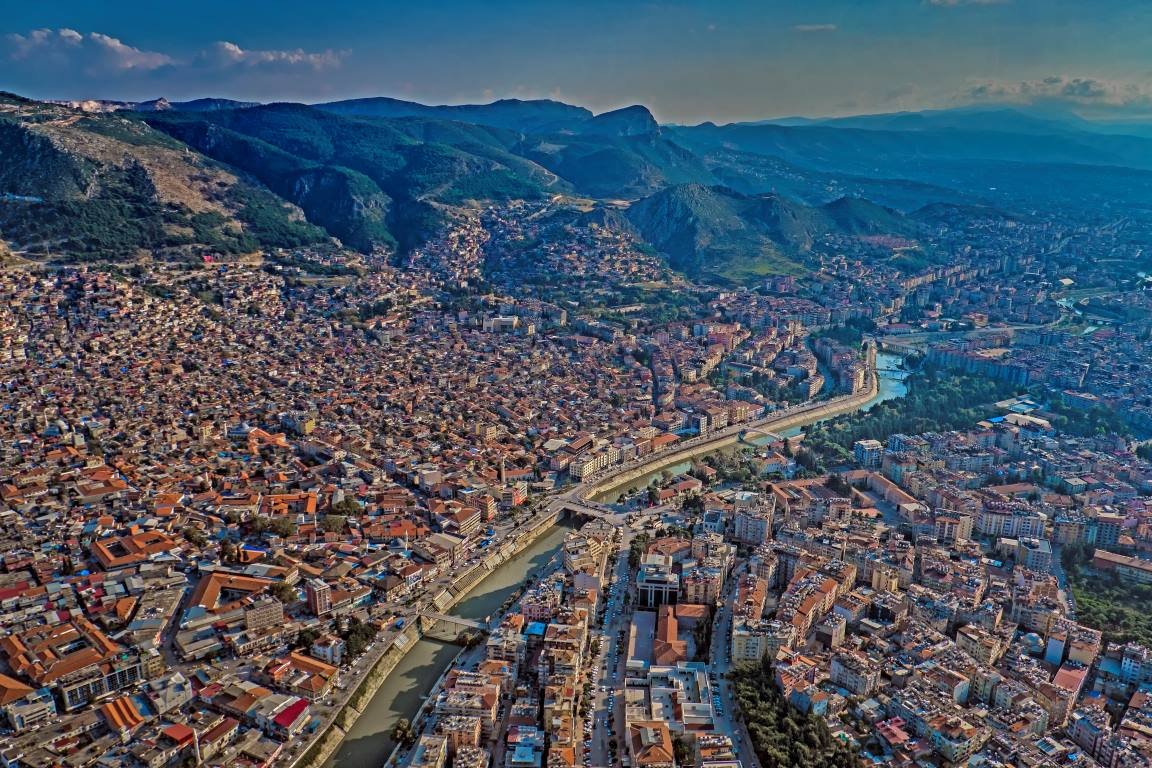
Located in the far south of Turkey near the Mediterranean coast and bordering Syria, Hatay Province is one of the country’s most fascinating cultural regions. Its provincial capital, Antakya—known in ancient times as Antioch—is among the world’s oldest continuously inhabited cities and has served as a meeting point of civilizations, religions, and cultures for more than 2,300 years.
Hatay is celebrated for its remarkable archaeological treasures, rich religious heritage, outstanding cuisine, and multicultural atmosphere. Throughout history, Greeks, Romans, Byzantines, Arabs, Seljuks, Crusaders, Mamluks, and Ottomans all ruled the region, leaving behind an extraordinary legacy of monuments, traditions, and architecture.
Today, visitors to Hatay can explore ancient churches, Roman mosaics, medieval fortifications, lively bazaars, Ottoman houses, and some of Turkey’s finest culinary traditions, making the province one of the country’s most rewarding cultural destinations.
A City Founded by the Seleucids
Antakya was founded around 300 BC by Seleucus I Nicator, one of the generals of Alexander the Great and founder of the Seleucid Empire. Named Antioch after Seleucus’s father, Antiochus, the city quickly became the capital of the Seleucid Kingdom and one of the greatest cities of the Hellenistic world.
Its strategic location on important trade routes linking Anatolia, Mesopotamia, Persia, and the Mediterranean transformed Antioch into a prosperous commercial, political, and cultural center. Merchants from across Europe, Asia, and Africa exchanged goods here, while philosophers, artists, and scholars contributed to the city’s flourishing intellectual life.
By the first century BC, Antioch ranked among the largest and wealthiest cities of the Roman Empire, rivaling Rome, Alexandria, and Constantinople in importance.
Antioch During the Roman Empire
When the Romans annexed Syria in 64 BC, Antioch became the capital of the Roman Province of Syria and entered one of the most prosperous periods in its history.
The city was famous throughout the Roman world for its:
- Grand colonnaded streets
- Luxurious villas
- Magnificent temples
- Public baths
- Theaters
- Aqueducts
- Markets and forums
- Beautiful fountains
- Flourishing arts and sciences
Nearby olive groves and fertile agricultural lands generated enormous wealth, while local workshops became renowned for producing fine textiles, glassware, jewelry, and luxury goods.
During the 4th and 5th centuries AD, Antioch reached the height of its prosperity and became one of Christianity’s most influential cities.
One of Christianity’s Earliest Centers
Few cities have played as significant a role in the history of Christianity as Antakya.
According to the New Testament, it was here that the followers of Jesus were first called “Christians.” During the first century AD, the city became one of the earliest and most important centers of Christian teaching and missionary activity.
Several key figures of early Christianity visited Antioch, including:
- St. Peter, regarded as the first Bishop of Antioch before traveling to Rome.
- St. Paul, who used Antioch as the headquarters for several missionary journeys between approximately AD 47 and 55.
- St. Barnabas, one of the earliest Christian missionaries.
Because of its religious importance, Antioch became one of the five original patriarchates of early Christianity, alongside Rome, Constantinople, Alexandria, and Jerusalem.
Today, visitors can still experience this remarkable religious heritage through the city’s churches, sacred sites, and multicultural communities.
From Byzantines to Ottomans
Hatay’s history reflects centuries of changing empires and civilizations.
Beginning in the 6th century, devastating earthquakes and destructive fires severely damaged Antioch. The city was temporarily occupied by the Persian Sassanids in AD 540 and again in 611, before becoming part of the expanding Arab Caliphate in 637.
During Arab rule, Antioch declined from its former grandeur but remained an important regional center.
The Byzantine Empire recaptured the city in 969, transforming it into a fortified frontier against advancing Turkish forces. In 1084, the Seljuk Turks conquered Antioch, followed by the Crusaders in 1098, who established the famous Principality of Antioch.
In 1268, the Mamluks captured the city, and finally, in 1517, it became part of the Ottoman Empire under Sultan Selim I.
Hatay remained within the Ottoman Empire until the end of the First World War. Following a brief period under French administration, the region joined the Republic of Turkey in 1939, becoming the modern Province of Hatay.
Modern Hatay
Today, Hatay remains one of Turkey’s most productive agricultural regions. The fertile Amik Plain produces abundant crops including:
- Wheat
- Cotton
- Rice
- Grapes
- Citrus fruits
- Olives
- Vegetables
- Pomegranates
- Figs
Traditional industries continue to manufacture:
- Olive oil
- Soap
- Cotton textiles
- Silk products
- Leather goods
- Shoes
- Handmade knives
Agriculture, food production, tourism, and small-scale manufacturing remain the foundation of the regional economy.
Hatay Archaeology Museum
One of Hatay’s greatest attractions is the outstanding Hatay Archaeology Museum, internationally recognized for possessing one of the world’s richest collections of Roman mosaics.
The museum displays magnificent mosaics recovered from ancient cities throughout the region, many depicting scenes from Greek mythology, daily Roman life, hunting, nature, and geometric designs.
Other highlights include:
- Marble statues
- Roman sarcophagi
- Byzantine artifacts
- Ancient coins
- Glassware
- Jewelry
- Sculptures
- Ceramics
The museum offers visitors an exceptional opportunity to appreciate the extraordinary artistic achievements of the ancient civilizations that flourished in Hatay.
St. Peter’s Cave Church
Among the world’s most important Christian pilgrimage sites is St. Peter’s Cave Church (St. Pierre Church).
Carved into the mountainside just outside Antakya, this ancient cave is traditionally believed to be the place where St. Peter preached to the city’s earliest Christian community during the first century AD.
Simple yet deeply atmospheric, the cave church contains ancient stone altars, floor mosaics, and traces of medieval frescoes. A natural spring flows inside the cave and has long been regarded as sacred by pilgrims.
Recognizing its immense religious significance, the Vatican officially declared St. Peter’s Cave a place of pilgrimage in 1983. Every year, thousands of Christian pilgrims from around the world visit this remarkable sanctuary.
The Iron Gate of Antioch
South of St. Peter’s Cave stands the historic Iron Gate, one of the few surviving sections of Antioch’s ancient defensive system.
Originally constructed as part of the city’s Roman fortifications, the gate also functioned as a flood-control structure across a mountain stream. Walking through this area allows visitors to imagine the immense size and grandeur of ancient Antioch, where portions of city walls, towers, and archaeological remains still survive.
Antioch Castle
Perched high above the city, the impressive Antioch Castle occupies one of the most spectacular viewpoints in Hatay.
Originally fortified during the Hellenistic period and expanded by the Romans, Byzantines, Crusaders, and later Muslim rulers, the castle stretches across the surrounding mountains with walls extending several kilometers.
Although much of the fortress lies in ruins today, visitors who make the climb are rewarded with breathtaking panoramic views over Antakya, the Asi River, surrounding valleys, and distant mountains.
The castle is particularly beautiful during sunrise and sunset, when the city’s historic skyline is bathed in golden light.
The Asi River (Orontes)
Flowing through the center of Antakya, the Asi River, known in ancient times as the Orontes, has shaped the city’s history for more than two millennia.
Unlike most rivers in the region, the Asi flows from south to north, giving rise to its Turkish name, meaning “rebellious” or “contrary.”
Today, riverside parks, cafés, restaurants, and walking paths provide pleasant places to relax while enjoying views of the historic city.
Traditional Bazaars and Local Life
The historic streets of Antakya are filled with lively bazaars where traditional craftsmanship continues much as it has for centuries.
Visitors can browse shops selling:
- Handmade soaps
- Olive oil products
- Spices
- Silk scarves
- Copperware
- Jewelry
- Leather goods
- Traditional sweets
- Handcrafted knives
The city’s multicultural character is reflected in its friendly atmosphere, historic neighborhoods, and vibrant local markets.
Hatay Cuisine
Hatay is widely regarded as one of Turkey’s greatest culinary destinations and has been internationally recognized for its rich gastronomic heritage.
Local specialties include:
- Tepsi Kebab
- Kağıt Kebab
- Oruk (stuffed bulgur meatballs)
- Humus
- Muhammara
- Zahter salad
- Stuffed vegetables
- Fresh olive oil dishes
- Künefe, Hatay’s world-famous cheese pastry dessert
The cuisine reflects centuries of Turkish, Arab, Levantine, and Mediterranean influences, creating one of the country’s most diverse and flavorful food traditions.
Nearby Attractions
Hatay Province also offers numerous fascinating destinations beyond Antakya:
- Harbiye (Ancient Daphne): Famous for its beautiful waterfalls, lush gardens, restaurants, and mythology associated with Apollo and Daphne.
- Samandağ: One of Turkey’s longest Mediterranean beaches, ideal for relaxation and birdwatching.
- Titus Tunnel and Beşikli Cave: An extraordinary Roman engineering project near Çevlik, featuring a monumental rock-cut tunnel and ancient tombs.
- Vakıflı Village: Turkey’s only remaining Armenian village, known for its peaceful atmosphere and organic agricultural products.
Best Time to Visit
Hatay enjoys a Mediterranean climate with hot summers and mild winters.
The best seasons for sightseeing are spring (March to May) and autumn (September to November), when temperatures are comfortable for exploring historical monuments, archaeological sites, and nearby natural attractions.
Why Visit Hatay?
Hatay is one of Turkey’s most culturally diverse and historically significant destinations. Few places in the world offer such an extraordinary combination of ancient civilizations, early Christian heritage, Roman mosaics, Ottoman architecture, multicultural traditions, and internationally celebrated cuisine.
Whether exploring the magnificent mosaics of the Hatay Archaeology Museum, visiting the sacred St. Peter’s Cave Church, climbing the ancient walls of Antioch Castle, wandering through historic bazaars, or savoring the unforgettable flavors of Hatay’s cuisine, visitors will discover a region where thousands of years of history continue to shape everyday life.
Rich in heritage, hospitality, and timeless beauty, Hatay remains one of Turkey’s most captivating and rewarding destinations for travelers interested in history, religion, archaeology, and authentic cultural experiences.