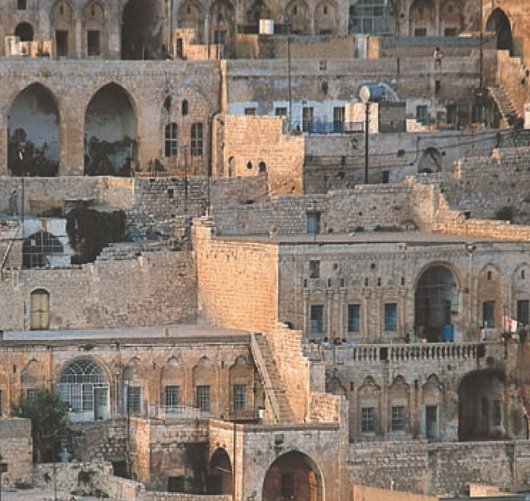
Perched dramatically on the southern slopes of a limestone ridge overlooking the vast Mesopotamian Plain, Mardin is one of Turkey’s most extraordinary historical cities. With its honey-colored stone houses cascading down the hillside, magnificent medieval monuments, ancient monasteries, narrow cobbled streets, and breathtaking panoramic views, Mardin is often described as an open-air museum where thousands of years of civilization continue to live side by side.
Located in Southeastern Anatolia, near the Syrian border, Mardin has served for millennia as a crossroads connecting Anatolia, Mesopotamia, Persia, and the Middle East. Throughout its long history, the city has been home to diverse cultures including Assyrians (Syriacs), Arabs, Kurds, Turks, Armenians, and numerous other communities, creating one of the richest cultural mosaics in Turkey.
Today, Mardin captivates visitors with its remarkable architecture, world-famous stone craftsmanship, historic mosques, ancient monasteries, traditional bazaars, elegant mansions, and authentic atmosphere. It is a destination where every street tells a story stretching back more than four thousand years.
A History Spanning Thousands of Years
The Mardin region has been continuously inhabited since prehistoric times.
Throughout history, it has been ruled by many civilizations, including:
- Early Mesopotamian kingdoms
- Assyrians
- Persians
- Romans
- Byzantines
- Arabs
- Artuqids
- Seljuks
- Ayyubids
- Mongols
- Ottomans
- Republic of Turkey
Known in antiquity as Marida, the city occupied a strategic position overlooking the fertile plains of northern Mesopotamia, making it an important military fortress and commercial center for centuries.
The city became part of the Ottoman Empire in 1517 during the reign of Sultan Selim I, ushering in several centuries of stability and prosperity.
The Architecture of Golden Stone
Mardin’s greatest treasure is its remarkably preserved architecture.
The city is built almost entirely from locally quarried golden limestone that changes color throughout the day, glowing in shades of honey, amber, and gold beneath the Mediterranean sun.
Traditional Mardin houses are famous for their:
- Elaborate stone carvings
- Decorative arches
- Spacious courtyards
- Elegant terraces
- Ornamental windows
- Fine craftsmanship
The city’s builders carefully designed the houses so that no building blocks another’s view of the Mesopotamian Plain—a centuries-old architectural tradition that continues to define Mardin’s spectacular skyline.
Walking through the historic streets feels like stepping into another era, where every doorway, balcony, and carved façade reflects generations of master stonemasons.
Mardin Old City
The beautifully preserved Old City (Eski Mardin) is one of Turkey’s finest historical urban centers.
Visitors can wander through:
- Narrow cobblestone streets
- Ancient stairways
- Historic stone houses
- Traditional bazaars
- Hidden courtyards
- Artisan workshops
- Small cafés
- Boutique hotels
Unlike many historic cities, Mardin’s old quarter has remained largely intact, preserving its medieval character and authentic atmosphere.
Every corner offers exceptional opportunities for photography and exploration.
Mardin Castle
Towering above the city is the imposing Mardin Castle, often called the “Eagle’s Nest.”
Originally constructed during the Roman period and strengthened by successive Byzantine, Arab, Seljuk, and Artuqid rulers, the fortress occupies one of the most commanding positions in southeastern Turkey.
Although access to parts of the castle is currently limited due to conservation and military considerations, its impressive walls dominate the city’s skyline and provide a constant reminder of Mardin’s strategic importance throughout history.
Ulu Mosque (Great Mosque)
The Ulu Mosque (Ulu Cami) is one of Mardin’s oldest and most important Islamic monuments.
Dating primarily from the 12th century during the Artuqid period, it is renowned for:
- Elegant stone architecture
- Beautifully decorated minaret
- Intricate calligraphy
- Spacious courtyard
- Harmonious proportions
- Historic prayer hall
Its finely carved minaret is among the city’s most recognizable landmarks and remains one of the finest examples of medieval Islamic architecture in Anatolia.
Sultan Isa Medrese
Built in 1385, the magnificent Sultan Isa Medrese (Zinciriye Medresesi) represents one of the masterpieces of late medieval Islamic architecture.
The building impresses visitors with:
- Monumental carved entrance portal
- Beautiful stone decorations
- Large courtyard
- Elegant domes
- Historic classrooms
- Panoramic rooftop terrace
The richly ornamented portal is regarded as one of the greatest achievements of Anatolian stone carving.
From the rooftop, visitors enjoy breathtaking views stretching across the endless plains of Mesopotamia.
Kasımiye Medrese
The spectacular Kasımiye Medrese, completed during the 15th century, is another architectural jewel of Mardin.
Its highlights include:
- Beautiful domes
- Finely carved stonework
- Ornamental courtyards
- Elegant arcades
- Reflecting pool
- Educational chambers
The flowing water channels throughout the complex symbolize the journey of human life, adding philosophical meaning to its already impressive architecture.
The medrese remains one of the city’s most photographed landmarks.
Deyrulzafaran Monastery
Only 7 kilometers east of Mardin stands the remarkable Deyrulzafaran Monastery, one of the world’s oldest active Syriac Orthodox monasteries.
Founded upon the remains of an ancient sun temple, the monastery served for centuries as the seat of the Syriac Orthodox Patriarchate.
Visitors can explore:
- Ancient chapels
- Monastic courtyards
- Stone passageways
- Historic library
- Prayer halls
- Underground sanctuary
- Beautiful gardens
The monastery remains one of Christianity’s most significant religious centers in the Middle East.
Its name, meaning “Monastery of Saffron,” derives from the warm golden color of its stone walls.
Mor Gabriel Monastery
Approximately 18 kilometers east of Midyat lies Mor Gabriel Monastery, founded in 397 AD, making it one of the oldest functioning Christian monasteries in the world.
The monastery continues to serve the Syriac Orthodox community and preserves:
- Ancient churches
- Stone courtyards
- Beautiful mosaics
- Historic manuscripts
- Religious artifacts
- Traditional monastic life
Its peaceful surroundings and exceptional historical importance attract pilgrims and visitors from around the world.
Midyat
The charming town of Midyat is one of Mardin Province’s most popular destinations.
Famous for its magnificent stone mansions and traditional Telkari silver craftsmanship, Midyat offers visitors an authentic glimpse into southeastern Anatolian culture.
Highlights include:
- Historic stone houses
- Traditional Syriac churches
- Silver workshops
- Local bazaars
- Boutique hotels
- Cultural museums
Midyat has also served as the filming location for numerous Turkish television series thanks to its remarkably preserved architecture.
Telkari Silver Craftsmanship
Midyat is internationally renowned for its delicate silver filigree art known as Telkari.
Master craftsmen create intricate jewelry using extremely fine strands of silver woven into elegant floral and geometric patterns.
Visitors can purchase:
- Necklaces
- Earrings
- Bracelets
- Rings
- Decorative objects
- Religious items
This centuries-old craft remains one of the defining symbols of Mardin Province.
Kızıltepe
Approximately 21 kilometers south of Mardin lies the historic town of Kızıltepe.
Its greatest monument is the magnificent Ulu Mosque, built during the 13th century by the Artuqids.
The mosque is celebrated for:
- Superb mihrab reliefs
- Monumental entrance portal
- Beautiful geometric carvings
- Elegant stone architecture
It is widely regarded as one of the finest surviving examples of Artuqid architecture in Turkey.
Dara Ancient City
One of southeastern Turkey’s greatest archaeological treasures is the ancient city of Dara, located near Mardin.
Founded by the Byzantine Empire in the 6th century, Dara became an important frontier fortress facing the Persian Empire.
Visitors can explore:
- Massive city walls
- Rock-cut cisterns
- Necropolis
- Roman bridge remains
- Underground chambers
- Churches
- Market areas
Often described as the “Ephesus of Mesopotamia,” Dara remains one of Turkey’s most fascinating archaeological sites.
Hasankeyf
Near the border with Batman Province lies the legendary town of Hasankeyf, one of the oldest continuously inhabited settlements in the world.
Its historical attractions include:
- Medieval citadel
- Ancient cave dwellings
- Historic palace ruins
- Stone bridges
- Islamic monuments
- Archaeological museum
Hasankeyf complements a visit to Mardin perfectly, providing further insight into the region’s extraordinary history.
Traditional Markets
Mardin’s historic bazaars preserve centuries-old trading traditions.
Visitors can browse shops selling:
- Handmade carpets
- Kilims
- Silver jewelry
- Copperware
- Leather products
- Traditional clothing
- Local spices
- Olive oil soaps
- Handcrafted souvenirs
Friendly merchants and traditional artisan workshops create an authentic shopping experience.
Local Cuisine
Mardin possesses one of Turkey’s richest culinary traditions, influenced by Arab, Kurdish, Syriac, and Anatolian cultures.
Popular specialties include:
- Kaburga Dolması (stuffed lamb ribs)
- Irok (stuffed bulgur)
- Sembusek
- Kibbeh
- Grilled kebabs
- Lamb dishes
- Assorted mezes
- Homemade breads
- Almond desserts
- Syriac wines
Locally grown herbs, olive oil, spices, pistachios, almonds, and pomegranates contribute to the distinctive regional flavors.
Economy
Historically an important commercial center, modern Mardin’s economy is supported by:
- Agriculture
- Tourism
- Livestock
- Stone craftsmanship
- Textile production
- Silver jewelry
- Food processing
- Trade
Major agricultural products include:
- Wheat
- Barley
- Lentils
- Sesame
- Grapes
- Pistachios
- Olives
Getting to Mardin
By Air
Mardin Airport offers regular domestic flights connecting the city with Istanbul, Ankara, İzmir, and several other major Turkish cities.
By Road
Modern highways connect Mardin with:
- Diyarbakır
- Batman
- Şanlıurfa
- Gaziantep
- Şırnak
- Nusaybin
Regular intercity buses operate throughout southeastern Turkey.
By Rail
Although Mardin’s historic railway branch no longer serves the city center, nearby stations provide rail connections within the region.
Best Time to Visit
The ideal seasons to explore Mardin are spring (April–May) and autumn (September–November) when temperatures are comfortable for sightseeing.
Spring fills the surrounding countryside with greenery and wildflowers, while autumn offers crystal-clear views across the Mesopotamian Plain.
Summers are hot and dry, whereas winters are cool with occasional snowfall that creates a magical contrast against the city’s golden stone architecture.
Why Visit Mardin?
Mardin is one of Turkey’s most enchanting destinations—a city where history, architecture, religion, and culture have blended harmoniously for thousands of years. Its magnificent stone houses, medieval streets, elegant mosques, ancient monasteries, vibrant bazaars, and panoramic views over Mesopotamia create an atmosphere unlike anywhere else in the world.
Whether exploring the artistic masterpieces of the Sultan Isa and Kasımiye Medreses, admiring the timeless beauty of Deyrulzafaran and Mor Gabriel monasteries, wandering through Midyat’s historic silver workshops, or simply watching the sunset over the endless Mesopotamian Plain, visitors quickly discover why Mardin is often regarded as one of Turkey’s greatest architectural and cultural treasures—a living museum where every stone tells the story of civilizations that have shaped the history of humanity.