Category: Religion

  • Christianity in Turkiye: Following the Footsteps of Early Christianity

    Turkey occupies a unique place in the history of Christianity. Much of the New Testament is connected with ancient Anatolia, where the Apostles traveled, early Christian communities were established, and some of Christianity’s most significant events took place. From the missionary journeys of St. Paul to the Seven Churches of Revelation, and from the cave churches of Cappadocia to the magnificent Hagia Sophia, Turkey offers an extraordinary journey through the origins of the Christian faith.

    Today, the country preserves an exceptional collection of churches, monasteries, archaeological sites, and pilgrimage destinations that attract visitors from around the world.


    The Birth of Early Christian Communities

    Christianity spread rapidly throughout Anatolia during the first century AD. The region became one of the earliest centers of the new faith, with numerous churches established across Asia Minor.

    Several books of the New Testament were addressed to Christian communities in present-day Turkey, while many of the Apostles preached, traveled, and established churches throughout the region.


    St. Paul and His Missionary Journeys

    Paul the Apostle, one of Christianity’s most influential figures, was born in the ancient city of Tarsus in southern Turkey.

    Following his conversion to Christianity, Paul undertook several missionary journeys across Anatolia, Greece, and the eastern Mediterranean, helping transform Christianity from a small Jewish movement into a religion embraced by diverse communities throughout the Roman world.

    Many of the cities he visited—including Ephesus, Iconium, Lystra, Derbe, Antioch, and others—are located within modern-day Turkey.


    Antioch: Where the Name “Christian” Was First Used

    Antakya, known in antiquity as Antioch, was one of the most important cities of the early Christian world.

    According to the New Testament, it was here that the followers of Jesus were first called “Christians.”

    Antioch became a major center for Christian teaching and missionary activity, serving as the starting point for St. Paul’s missionary journeys.


    Church of Saint Peter

    Carved into the mountainside, the Church of Saint Peter is traditionally regarded as one of the world’s oldest places of Christian worship.

    According to Christian tradition, both St. Peter and St. Paul preached here.

    In 1963, the Vatican recognized the site as an official place of pilgrimage.


    The Seven Churches of Revelation

    Western Turkey is home to the famous Seven Churches of Asia Minor, mentioned in the Book of Revelation.

    These early Christian communities played a vital role in the spread of Christianity during the first century.

    The Seven Churches are:

    • Ephesus (Selçuk)
    • Smyrna (İzmir)
    • Pergamon (Bergama)
    • Thyatira (Akhisar)
    • Sardis (Sart)
    • Philadelphia (Alaşehir)
    • Laodicea (near Denizli)

    Today, these archaeological sites form one of the world’s most important Christian pilgrimage routes.


    Ephesus: A Center of Early Christianity

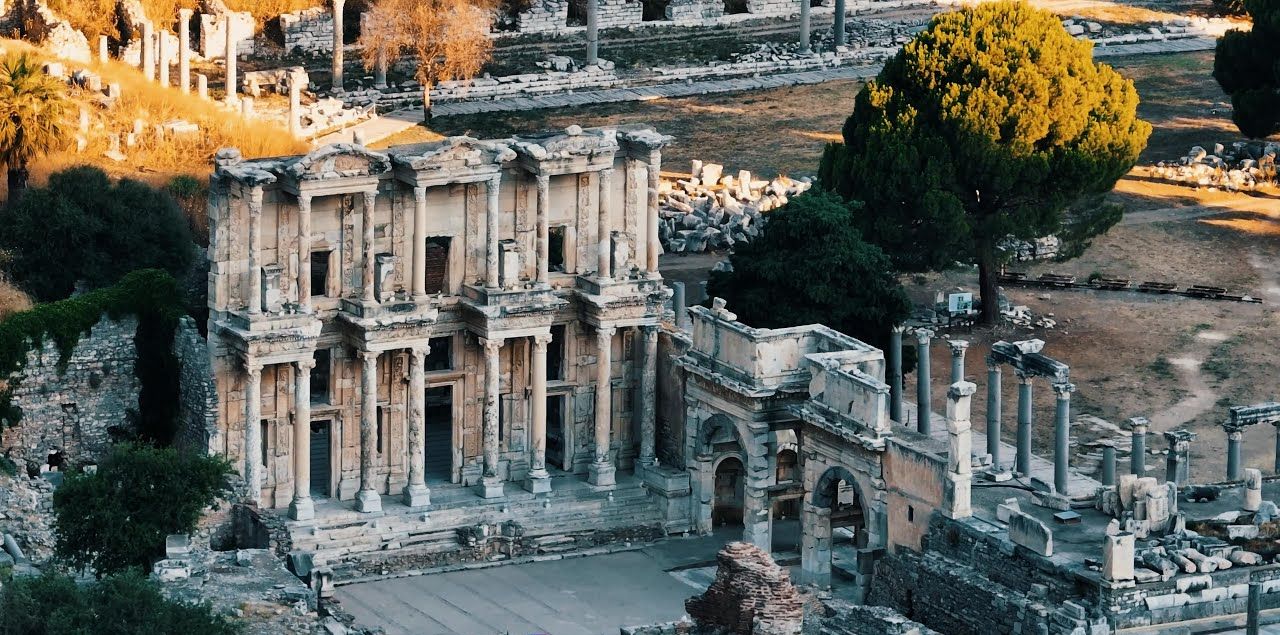
    Ephesus was one of the greatest cities of the Roman Empire and one of Christianity’s earliest and most influential centers.

    St. Paul spent considerable time in Ephesus, preaching and writing to the Christian community there. His Letter to the Ephesians remains one of the books of the New Testament.

    According to Christian tradition, St. John the Evangelist later settled in Ephesus and brought the Virgin Mary with him.

    Major attractions include:

    • Library of Celsus
    • Great Theatre
    • Marble Streets
    • Early Christian monuments

    House of the Virgin Mary

    Located on Mount Koressos near Ephesus, this peaceful sanctuary is traditionally believed by many Christians to be the final residence of Mary, the mother of Jesus.

    Recognized as an important pilgrimage site, it welcomes visitors from many Christian denominations as well as people of other faiths.

    Several Popes have visited the shrine over the years.


    Basilica of Saint John

    Built over the traditional burial place of St. John the Apostle, this impressive Byzantine basilica was commissioned by Emperor Justinian in the 6th century.

    Although now in ruins, it remains one of Turkey’s most important Christian archaeological sites.


    St. Nicholas of Myra

    Saint Nicholas Church is dedicated to St. Nicholas, the 4th-century bishop whose generosity inspired the modern legend of Santa Claus.

    Located in Demre (ancient Myra), the church preserves remarkable Byzantine architecture and remains an important destination for Christian pilgrims.


    Cappadocia: Christianity Beneath the Rocks

    The extraordinary volcanic landscape of Cappadocia became an important refuge for early Christians during periods of persecution.

    Over the centuries, communities carved churches, monasteries, homes, and entire underground cities into the soft volcanic rock.

    Visitors can explore:

    • More than 200 rock-cut churches
    • Beautiful Byzantine frescoes
    • Monastic complexes
    • Underground cities such as Derinkuyu and Kaymaklı

    These underground settlements provided protection for thousands of Christians during times of conflict.


    The Monastery of Sumela

    Sumela Monastery is one of Turkey’s most spectacular Christian monuments.

    Founded in the 4th century, the monastery is dramatically built into a steep cliff overlooking the forests of the Pontic Mountains near Trabzon.

    For centuries, it served as one of the most important centers of Orthodox Christianity in the Black Sea region.

    Its remarkable frescoes and breathtaking location continue to attract visitors from around the world.


    Istanbul: Capital of Byzantine Christianity

    When Emperor Constantine established Constantinople (modern Istanbul) as the capital of the Eastern Roman Empire in 330 AD, the city became one of Christianity’s most influential centers.

    For more than one thousand years, Constantinople served as the spiritual heart of the Byzantine Empire and the Eastern Orthodox Church.


    Hagia Sophia

    Completed in 537 AD during the reign of Emperor Justinian I, Hagia Sophia was the largest cathedral in the Christian world for nearly a thousand years.

    Its immense dome, elegant architecture, and magnificent mosaics made it one of history’s greatest architectural achievements.

    Today, Hagia Sophia remains one of the world’s most visited historic monuments.


    Chora Church

    Formerly known as the Church of the Holy Saviour in Chora, this Byzantine monument is celebrated for its exceptional mosaics and frescoes illustrating scenes from the lives of Christ and the Virgin Mary.

    Its artwork is widely regarded as one of the finest surviving examples of late Byzantine art.


    Christian Pilgrimage in Turkey Today

    Turkey remains one of the world’s most important destinations for Christian pilgrims, biblical scholars, historians, and cultural travelers.

    Popular pilgrimage routes include:

    • The Seven Churches of Revelation
    • St. Paul’s missionary journey
    • Ephesus and the House of the Virgin Mary
    • Cappadocia’s rock-cut churches
    • Antioch and the Church of Saint Peter
    • Sumela Monastery
    • Hagia Sophia

    These sites offer visitors a unique opportunity to explore the origins and development of Christianity in the very landscapes where much of its early history unfolded.


    Turkey preserves an extraordinary Christian heritage that spans nearly two thousand years. From the missionary journeys of St. Paul and the first Christian communities of Antioch to the monumental churches of Byzantium and the hidden sanctuaries of Cappadocia, the country offers an unparalleled journey through the history of Christianity.

    For pilgrims, historians, and travelers alike, Turkey remains one of the most significant destinations in the Christian world, where sacred history, remarkable architecture, and ancient traditions continue to inspire visitors from every corner of the globe.
  • Religions in Turkiye: A Crossroads of Faith and Civilization

    Turkey occupies a unique position at the crossroads of Europe and Asia, serving for thousands of years as a meeting point of civilizations, cultures, and religions. Throughout its long history, Anatolia has played a central role in the development of the world’s major monotheistic faiths—Judaism, Christianity, and Islam—while also preserving traces of many earlier belief systems.

    Today, Turkey is internationally recognized for its remarkable religious heritage, where ancient synagogues, early Christian churches, Byzantine monasteries, magnificent Ottoman mosques, and sacred archaeological sites stand as enduring symbols of its diverse past.


    A Land of Religious Heritage

    Few countries possess such a rich concentration of sacred sites representing multiple religions. For centuries, Anatolia has welcomed travelers, pilgrims, scholars, and believers from around the world.

    Turkey’s religious heritage reflects:

    • Thousands of years of continuous civilization
    • The coexistence of different religious communities
    • Important events in biblical and Islamic history
    • Outstanding examples of sacred architecture
    • UNESCO World Heritage Sites connected with faith and history

    Judaism in Turkey

    Jewish communities have lived in Anatolia for more than two thousand years. Archaeological discoveries, including ancient synagogues, Hebrew inscriptions, and religious artifacts, testify to a long-established Jewish presence across the region.

    Important Jewish heritage sites include:

    • The ancient synagogue of Sardis
    • Historic synagogues in Istanbul
    • Jewish museums and cultural centers
    • Sephardic heritage dating from the Ottoman Empire

    Following the expulsion of Jews from Spain in 1492, Sultan Bayezid II welcomed thousands of Sephardic Jews to the Ottoman Empire, where many communities flourished for centuries.


    Christianity in Turkey

    Turkey occupies an extraordinary place in Christian history.

    Many of the most significant events of early Christianity occurred in Anatolia, including:

    • The missionary journeys of St. Paul
    • The establishment of the first Christian communities
    • The Seven Churches of Revelation
    • The final home traditionally associated with the Virgin Mary
    • The birthplace of numerous early saints and theologians

    Among Turkey’s most important Christian sites are:

    • Ephesus
    • Antioch (Antakya)
    • Cappadocia’s rock-cut churches
    • Sumela Monastery
    • Hagia Sophia
    • Basilica of St. John
    • Church of St. Peter

    These landmarks continue to attract pilgrims and visitors from around the world.


    Islam in Turkey

    Islam has shaped Turkish culture, architecture, art, and daily life for nearly a thousand years.

    Following the arrival of the Seljuk Turks and later the rise of the Ottoman Empire, magnificent mosques, religious schools, libraries, charitable foundations, and architectural masterpieces were constructed throughout the country.

    Some of Turkey’s finest Islamic monuments include:

    • Blue Mosque (Sultan Ahmed Mosque)
    • Süleymaniye Mosque
    • Selimiye Mosque
    • Green Mosque (Yeşil Cami)
    • Ulu Mosque (Bursa)
    • Mevlana Museum in Konya

    Visitors are welcome to explore many of these historic mosques while respecting local customs and dress codes.


    Other Religious Traditions

    Turkey’s cultural landscape also preserves evidence of numerous earlier religions and belief systems.

    Throughout history, Anatolia was home to:

    • Ancient Anatolian religions
    • Greek and Roman pagan traditions
    • Zoroastrian influences
    • Early monastic communities
    • Sufi traditions
    • Small modern communities practicing Buddhism, Hinduism, and other faiths

    This remarkable diversity illustrates Turkey’s historical role as a bridge between civilizations.


    Religious Tourism in Turkey

    Turkey has become one of the world’s leading destinations for religious and cultural tourism.

    Visitors can follow numerous pilgrimage routes and historical trails, including:

    • The Seven Churches of Revelation
    • St. Paul’s missionary journeys
    • The House of the Virgin Mary
    • Cappadocia’s underground churches
    • Mevlana’s spiritual heritage in Konya
    • Ottoman imperial mosques
    • Ancient Jewish communities of western Anatolia

    These journeys offer valuable insights into the shared heritage of humanity’s great religious traditions.


    A Tradition of Coexistence

    For centuries, communities of different faiths lived together throughout the Ottoman Empire and Anatolia, contributing to the country’s rich cultural mosaic. Historic neighborhoods in cities such as Istanbul, İzmir, Bursa, Antakya, and Edirne preserve churches, synagogues, and mosques located within close proximity, reflecting this diverse heritage.

    Today, the Republic of Turkey is a secular state whose constitution guarantees freedom of religion and belief, while its historic religious monuments continue to welcome visitors from every background.


    Turkey offers one of the world’s richest collections of religious and historical sites, making it a unique destination for pilgrims, historians, archaeologists, and cultural travelers. Whether exploring ancient synagogues, early Christian churches, Byzantine monasteries, or magnificent Ottoman mosques, visitors encounter a remarkable legacy shaped by thousands of years of faith, culture, and civilization.

    This exceptional blend of religious heritage, architectural splendor, and cultural diversity makes Turkey an inspiring destination for anyone interested in the history of the world’s great religions.

  • The Seven Churches of Revelation (Apocalypse) in Asia Minor, Turkey

    Ephesus Turkey

    The Seven Churches of Revelation, also known as the Seven Churches of the Apocalypse, are among the most important biblical and historical heritage sites in Turkey. Mentioned by Saint John the Apostle in the Book of Revelation (Revelation 2–3), these seven early Christian communities were located in the ancient region of Asia Minor, today’s western Turkey.

    The churches represented the spiritual, social, and religious challenges faced by early Christian communities during the Roman period. In his letters, Saint John praised their faith, warned against their weaknesses, and encouraged them to remain committed to their beliefs.

    Today, travelers can follow the Seven Churches of Revelation Route, visiting ancient cities filled with magnificent ruins, Roman architecture, Byzantine remains, and some of the earliest centers of Christianity.

    The seven churches are:

    1. Ephesus (Efes) – near Selçuk, İzmir
    2. Smyrna (Smyrna/İzmir) – modern İzmir
    3. Pergamum (Pergamon/Bergama) – İzmir Province
    4. Thyatira (Akhisar) – Manisa Province
    5. Sardis (Sart) – Salihli, Manisa Province
    6. Philadelphia (Alaşehir) – Manisa Province
    7. Laodicea (Laodikya) – near Denizli

    Tours ranging from one to four days can be organized to visit several or all of these remarkable biblical destinations.


    Historical Background

    The Seven Churches existed during the 1st century AD, when Christianity was spreading throughout the Roman Empire.

    At the time, Asia Minor was one of the most culturally advanced regions of the ancient world, containing wealthy Greek and Roman cities connected by major trade routes.

    According to Christian tradition, after leaving Jerusalem, Saint John spent his later years in the region of Ephesus and wrote the Book of Revelation while in exile on the nearby island of Patmos.

    The seven letters addressed specific communities:

    • Ephesus was praised for perseverance but criticized for losing its first love.
    • Smyrna was encouraged to remain faithful despite persecution.
    • Pergamum was warned against false teachings.
    • Thyatira was encouraged to maintain purity of faith.
    • Sardis was criticized for spiritual weakness.
    • Philadelphia was praised for loyalty and endurance.
    • Laodicea was warned against being spiritually “lukewarm.”

    Beyond their religious significance, these cities were major centers of politics, commerce, philosophy, art, and architecture.


    The Seven Churches of Revelation


    1. Ephesus (Efes), İzmir

    Overview

    The ancient city of Ephesus was the most important of the Seven Churches and one of the greatest cities of the Roman world.

    Located near modern Selçuk in İzmir Province, Ephesus was a major port, commercial center, and religious destination.

    Saint John addressed the Ephesian Christians, praising their patience and dedication while warning them not to abandon their original devotion.


    Top Attractions

    Visitors can explore:

    • Library of Celsus
    • Great Theatre
    • Temple of Artemis
    • Marble Street
    • Curetes Street
    • Terrace Houses
    • Temple of Hadrian
    • Church of Mary
    • Basilica of Saint John

    Ephesus is also associated with the life of the Virgin Mary and Saint Paul.


    2. Smyrna (İzmir)

    Overview

    Ancient Smyrna, located in modern İzmir, was one of the most important cities of the Aegean world.

    The Christian community of Smyrna received one of the most encouraging messages in Revelation, praising its faithfulness during periods of persecution.


    Top Attractions

    Highlights include:

    • Agora of Smyrna
    • Ancient city ruins
    • Kadifekale (Pagos Hill)
    • Archaeological Museum of İzmir
    • Historic waterfront area

    Smyrna continued as an important Christian center for centuries and became one of the major cities of Byzantine Anatolia.


    3. Pergamum (Pergamon), Bergama, İzmir

    Overview

    The ancient city of Pergamum was one of the most powerful cultural centers of the Hellenistic world.

    The Book of Revelation refers to Pergamum as the place “where Satan’s throne is,” often interpreted as a reference to the city’s imperial cult and powerful pagan institutions.


    Top Attractions

    Visitors should see:

    • Acropolis of Pergamon
    • Altar of Zeus
    • Ancient Theatre
    • Temple of Trajan
    • Library of Pergamum
    • Asclepion Medical Center
    • Red Basilica

    Pergamum was also famous for its ancient medical school and the invention of parchment.


    4. Thyatira (Akhisar), Manisa

    Overview

    Located in modern Akhisar, Thyatira was an important commercial city known for textile production, metalworking, and trade guilds.

    The Book of Revelation mentions the Christian community of Thyatira and warns against false teachings.


    Top Attractions

    The archaeological remains include:

    • Roman street remains
    • Ancient foundations
    • Column fragments
    • Basilica remains

    Although less extensive than other sites, Thyatira remains an important stop on the Revelation route.


    5. Sardis (Sart), Manisa

    Overview

    Ancient Sardis was the capital of the wealthy Kingdom of Lydia and later became a major Roman city.

    The city was famous for its wealth, gold resources, and the legendary King Croesus.

    In Revelation, Sardis was criticized for appearing alive outwardly but lacking spiritual strength.


    Top Attractions

    Visitors can explore:

    • Temple of Artemis
    • Roman Gymnasium
    • Synagogue of Sardis
    • Marble-paved streets
    • Ancient theatre
    • Lydian remains

    The synagogue of Sardis is one of the largest and most impressive ancient Jewish worship buildings discovered in the Roman world.


    6. Philadelphia (Alaşehir), Manisa

    Overview

    Ancient Philadelphia was founded in the Hellenistic period and became an important gateway between western Anatolia and the interior regions.

    The Christian community received one of the most positive messages in Revelation, praised for its faith despite difficulties.


    Top Attractions

    Remaining monuments include:

    • St. John’s Basilica
    • Byzantine church ruins
    • Ancient city remains
    • Historic walls

    The modern town of Alaşehir preserves layers of Greek, Roman, Byzantine, and Ottoman history.


    7. Laodicea (Laodikya), Denizli

    Overview

    Located near modern Denizli, Laodicea was one of the richest cities in ancient Asia Minor.

    The city was famous for:

    • Banking
    • Textile production
    • Medical knowledge
    • Trade

    In Revelation, Laodicea was criticized for being spiritually “lukewarm.”


    Top Attractions

    The archaeological site includes:

    • Ancient Theatre
    • Roman Stadium
    • Colonnaded streets
    • Church of Laodicea
    • Monumental fountains
    • Bath complexes

    Recent excavations have revealed impressive structures, making Laodicea one of Turkey’s most exciting archaeological destinations.


    Seven Churches of Revelation Tour Routes

    1-Day Tour

    Suitable for travelers based around İzmir:

    • Ephesus
    • Smyrna
    • Pergamum

    2-Day Tour

    A popular itinerary:

    Day 1

    • Ephesus
    • Smyrna

    Day 2

    • Sardis
    • Philadelphia
    • Thyatira

    3-Day Tour

    A complete western Anatolia route:

    Day 1

    • Ephesus
    • Smyrna

    Day 2

    • Pergamum
    • Thyatira
    • Sardis

    Day 3

    • Philadelphia
    • Laodicea

    4-Day Complete Biblical Heritage Tour

    Includes:

    • All seven churches
    • Archaeological museums
    • Ancient cities
    • Christian heritage sites
    • Local villages
    • Traditional Turkish cuisine

    Nearby Attractions

    The Seven Churches route can be combined with many famous destinations:

    Pamukkale

    Famous for:

    • White travertine terraces
    • Ancient Hierapolis
    • Cleopatra’s Pool

    Aphrodisias

    A magnificent Roman city dedicated to Aphrodite, famous for sculpture schools.

    Bodrum

    Home to:

    • Ancient Halicarnassus
    • Castle of Saint Peter
    • Aegean coastline

    İzmir

    Turkey’s third-largest city, offering:

    • Coastal promenades
    • Historic bazaars
    • Museums
    • Modern restaurants

    Best Time to Visit

    The ideal seasons are:

    Spring (April–June)

    • Mild temperatures
    • Green landscapes
    • Comfortable sightseeing

    Autumn (September–October)

    • Pleasant weather
    • Fewer crowds
    • Excellent photography conditions

    Summer can be very hot, especially at open-air archaeological sites.


    Travel Tips

    • Wear comfortable walking shoes; most sites require extensive walking.
    • Carry water and sun protection.
    • Hire local guides for deeper historical and biblical explanations.
    • Allow enough time at Ephesus, Pergamum, Sardis, and Laodicea.
    • Combine archaeological visits with nearby museums.
    • Consider a private tour for a more flexible experience.

    Why Visit the Seven Churches of Revelation?

    The Seven Churches of Revelation in Turkey offer a unique journey where biblical history, ancient civilizations, archaeology, and Mediterranean landscapes meet. These cities were not only important centers of early Christianity but also some of the greatest urban civilizations of the ancient world.

    Following the footsteps of Saint John through Ephesus, Pergamum, Sardis, Laodicea, and the other churches provides travelers with a deeper understanding of the origins of Christianity and the remarkable cultural heritage of Anatolia. It is one of Turkey’s most meaningful historical routes for pilgrims, history lovers, and cultural travelers.

  • Visiting a Mosque in Turkiye: A Guide to Respectful and Memorable Visits

    konya turkey

    Discover the Beauty of Turkey’s Historic Mosques

    Turkey is home to some of the world’s most magnificent mosques, where breathtaking architecture, centuries of history, and living religious traditions come together. From the grand imperial mosques of Istanbul to elegant neighborhood mosques in small towns, these sacred places welcome millions of visitors each year.

    Many of Turkey’s mosques are open to both worshippers and tourists, offering a unique opportunity to admire exquisite Ottoman architecture, intricate tilework, graceful domes, soaring minarets, and peaceful interiors. As active places of worship, however, visitors are expected to follow a few simple customs to ensure respect for those who come to pray.

    Before Entering a Mosque

    One of the first traditions visitors will notice is the removal of shoes before entering the prayer hall. Shoes are left on shelves or in designated storage areas near the entrance, as the carpets inside are kept clean for worshippers who pray directly on the floor.

    Wearing modest clothing is essential when visiting a mosque. Both men and women are expected to dress respectfully.

    Women are generally asked to:

    • Cover their hair with a headscarf.
    • Wear clothing that covers the shoulders, arms, and legs.
    • Avoid tight or revealing clothing.

    Men should:

    • Wear long trousers.
    • Cover their shoulders.
    • Avoid shorts or sleeveless tops.

    Many of Turkey’s most visited mosques provide complimentary headscarves and lightweight covering garments for visitors who are not dressed according to the required guidelines. These can usually be borrowed free of charge and returned after the visit.

    Respecting Prayer Times

    Muslims perform five daily prayers, each announced by the müezzin, whose beautiful call to prayer echoes from the mosque’s minarets throughout the day. During these prayer times, parts of the mosque may be reserved exclusively for worshippers, and sightseeing may be temporarily restricted.

    If possible, plan your visit between prayer times to enjoy a quieter atmosphere and avoid interrupting religious services. Friday afternoons, particularly around the midday prayer, are often the busiest time of the week, as many Muslims gather for the weekly congregational prayer.

    Etiquette Inside the Mosque

    Once inside, visitors are encouraged to move quietly and respectfully. Speaking in a soft voice helps preserve the peaceful atmosphere, while loud conversations, laughter, or disruptive behavior should be avoided.

    Photography is generally permitted in many mosques, provided it does not disturb worshippers. Flash photography, posing in front of people who are praying, or walking directly across the prayer area during services should be avoided.

    Visitors should also be mindful not to touch religious objects unnecessarily and should always follow any instructions given by mosque staff or volunteers.

    A Place of Worship and Hospitality

    For Muslims, the mosque is much more than an architectural landmark—it is a place of prayer, reflection, learning, and community. Visitors are warmly welcomed when they show courtesy and respect for local customs.

    Many travelers are pleasantly surprised by the hospitality they encounter. In some mosques, volunteers are available to answer questions about Islamic traditions, architecture, or the history of the building, making the visit both educational and culturally enriching.

    An Unforgettable Cultural Experience

    Visiting a mosque in Turkey offers more than the chance to admire extraordinary architecture. It provides insight into a living tradition that has shaped the country’s history and culture for centuries.

    Whether you are exploring the iconic imperial mosques of Istanbul, the elegant Seljuk mosques of central Anatolia, or the charming neighborhood mosques found throughout the country, observing proper etiquette allows you to fully appreciate these remarkable places with respect and understanding. A thoughtful visit will leave you with a deeper appreciation of Turkey’s rich cultural heritage and the enduring importance of its sacred spaces.

  • Buddhism in Turkiye: A Small but Growing Spiritual Community

    Buddhism is a minority religion in Turkey, practiced by a relatively small community consisting mainly of foreign residents, expatriates, international students, and a limited number of Turkish citizens who have embraced Buddhist philosophy and meditation. Although Buddhism does not have a long historical presence in modern Turkey and has no official institutional status comparable to the country’s major religions, interest in Buddhist teachings, meditation, and mindfulness has gradually increased in recent decades.

    Most Buddhist activities are centered in major cities such as Istanbul, İzmir, and Ankara, where meditation groups, cultural associations, and wellness centers provide opportunities for study and practice.


    Buddhism in Modern Turkey

    Unlike Christianity, Judaism, or Islam, Buddhism has not traditionally been part of Anatolia’s religious landscape. Today, the Buddhist community is relatively small and diverse, representing various traditions, including:

    • Zen Buddhism
    • Mahayana Buddhism
    • Theravada Buddhism
    • Tibetan Buddhism
    • Secular mindfulness and meditation practices

    Rather than large temples or monasteries, most Buddhist communities meet in cultural centers, private venues, or meditation studios.


    Buddhist Communities in Turkey

    Several organizations provide opportunities for meditation, Buddhist study, and community gatherings.

    Yun Hwa Sangha – Istanbul

    One of the most established Buddhist communities in Turkey is the Yun Hwa Sangha, located in the Fenerbahçe neighborhood of Istanbul’s Kadıköy district.

    The community offers:

    • Meditation sessions
    • Dharma teachings
    • Group practice
    • Study meetings
    • Weekend and residential retreats
    • Buddhist ceremonies

    The organization also occasionally arranges longer retreats in western Turkey, providing participants with opportunities for intensive meditation and spiritual practice.


    Triratna Buddhist Community

    The Triratna Buddhist Community has organized occasional meditation groups, introductory workshops, and Buddhist study sessions in Turkey.

    Its activities generally focus on:

    • Meditation practice
    • Mindfulness
    • Buddhist philosophy
    • Community discussions
    • Introductory courses

    Participation is typically open to both beginners and experienced practitioners.


    Meditation and Mindfulness Centers

    Although not exclusively Buddhist, several meditation and wellness centers throughout Turkey draw inspiration from Buddhist traditions, particularly mindfulness and Zen meditation.

    These centers commonly offer:

    • Mindfulness training
    • Guided meditation
    • Stress management programs
    • Silent retreats
    • Breathing exercises
    • Yoga classes
    • Personal development workshops

    Many of these programs are designed for individuals seeking relaxation, mental well-being, and personal growth regardless of religious background.


    Buddhism and Cultural Diversity in Turkey

    Turkey’s constitution guarantees freedom of religion and belief, allowing individuals to practice their faith freely within the framework of Turkish law.

    Although Buddhism represents only a very small portion of the population, Buddhist practitioners contribute to Turkey’s multicultural and international community.

    The country’s growing international population and increasing interest in meditation and mindfulness have helped expand awareness of Buddhist philosophy, particularly in urban centers.


    Visiting Buddhist Communities

    Visitors interested in Buddhism while traveling in Turkey may find opportunities to participate in:

    • Meditation sessions
    • Dharma talks
    • Mindfulness workshops
    • Cultural events
    • Silent retreats
    • Yoga and wellness programs

    As many groups operate on a community or volunteer basis, it is advisable to contact organizers in advance for current schedules and visitor information.


    While Buddhism remains a small minority tradition in Turkey, it continues to develop through international communities, meditation groups, and mindfulness organizations. In cities such as Istanbul and İzmir, visitors and residents can explore Buddhist philosophy, meditation, and contemplative practices in welcoming community settings.

    Turkey’s long-standing tradition of cultural diversity and religious freedom provides an environment where people from many different faiths—including Buddhism—can share their beliefs, traditions, and practices while contributing to the country’s rich multicultural heritage.