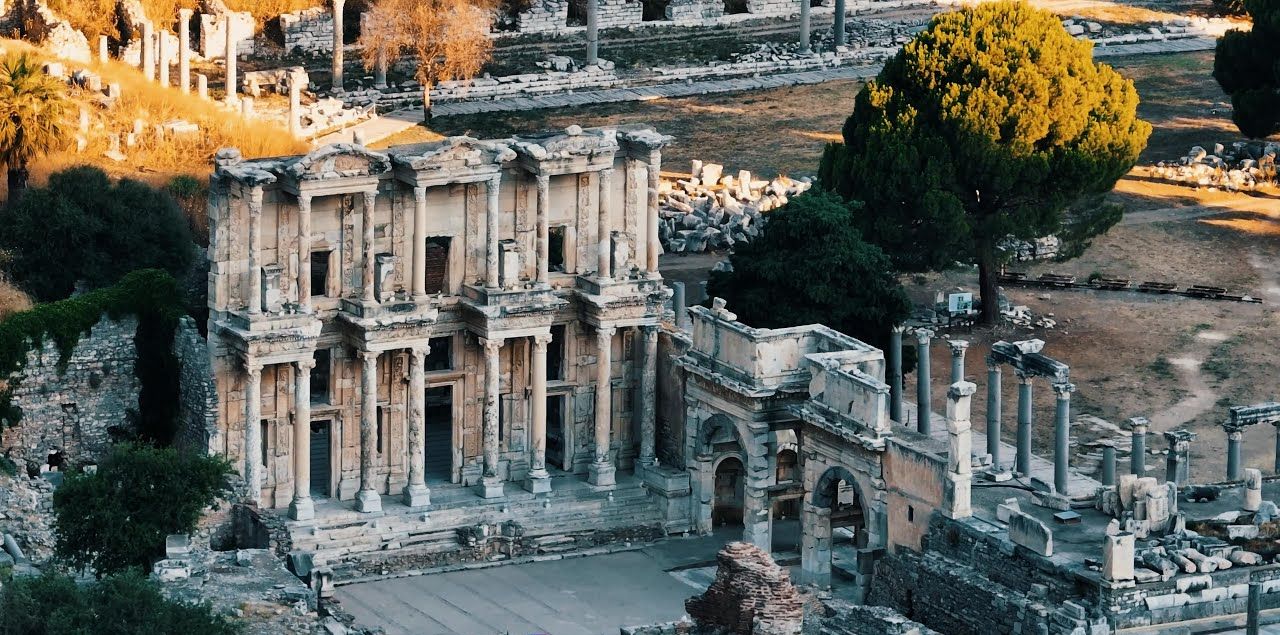
The Seven Churches of Revelation, also known as the Seven Churches of the Apocalypse, are among the most important biblical and historical heritage sites in Turkey. Mentioned by Saint John the Apostle in the Book of Revelation (Revelation 2–3), these seven early Christian communities were located in the ancient region of Asia Minor, today’s western Turkey.
The churches represented the spiritual, social, and religious challenges faced by early Christian communities during the Roman period. In his letters, Saint John praised their faith, warned against their weaknesses, and encouraged them to remain committed to their beliefs.
Today, travelers can follow the Seven Churches of Revelation Route, visiting ancient cities filled with magnificent ruins, Roman architecture, Byzantine remains, and some of the earliest centers of Christianity.
The seven churches are:
- Ephesus (Efes) – near Selçuk, İzmir
- Smyrna (Smyrna/İzmir) – modern İzmir
- Pergamum (Pergamon/Bergama) – İzmir Province
- Thyatira (Akhisar) – Manisa Province
- Sardis (Sart) – Salihli, Manisa Province
- Philadelphia (Alaşehir) – Manisa Province
- Laodicea (Laodikya) – near Denizli
Tours ranging from one to four days can be organized to visit several or all of these remarkable biblical destinations.
Historical Background
The Seven Churches existed during the 1st century AD, when Christianity was spreading throughout the Roman Empire.
At the time, Asia Minor was one of the most culturally advanced regions of the ancient world, containing wealthy Greek and Roman cities connected by major trade routes.
According to Christian tradition, after leaving Jerusalem, Saint John spent his later years in the region of Ephesus and wrote the Book of Revelation while in exile on the nearby island of Patmos.
The seven letters addressed specific communities:
- Ephesus was praised for perseverance but criticized for losing its first love.
- Smyrna was encouraged to remain faithful despite persecution.
- Pergamum was warned against false teachings.
- Thyatira was encouraged to maintain purity of faith.
- Sardis was criticized for spiritual weakness.
- Philadelphia was praised for loyalty and endurance.
- Laodicea was warned against being spiritually “lukewarm.”
Beyond their religious significance, these cities were major centers of politics, commerce, philosophy, art, and architecture.
The Seven Churches of Revelation
1. Ephesus (Efes), İzmir
Overview
The ancient city of Ephesus was the most important of the Seven Churches and one of the greatest cities of the Roman world.
Located near modern Selçuk in İzmir Province, Ephesus was a major port, commercial center, and religious destination.
Saint John addressed the Ephesian Christians, praising their patience and dedication while warning them not to abandon their original devotion.
Top Attractions
Visitors can explore:
- Library of Celsus
- Great Theatre
- Temple of Artemis
- Marble Street
- Curetes Street
- Terrace Houses
- Temple of Hadrian
- Church of Mary
- Basilica of Saint John
Ephesus is also associated with the life of the Virgin Mary and Saint Paul.
2. Smyrna (İzmir)
Overview
Ancient Smyrna, located in modern İzmir, was one of the most important cities of the Aegean world.
The Christian community of Smyrna received one of the most encouraging messages in Revelation, praising its faithfulness during periods of persecution.
Top Attractions
Highlights include:
- Agora of Smyrna
- Ancient city ruins
- Kadifekale (Pagos Hill)
- Archaeological Museum of İzmir
- Historic waterfront area
Smyrna continued as an important Christian center for centuries and became one of the major cities of Byzantine Anatolia.
3. Pergamum (Pergamon), Bergama, İzmir
Overview
The ancient city of Pergamum was one of the most powerful cultural centers of the Hellenistic world.
The Book of Revelation refers to Pergamum as the place “where Satan’s throne is,” often interpreted as a reference to the city’s imperial cult and powerful pagan institutions.
Top Attractions
Visitors should see:
- Acropolis of Pergamon
- Altar of Zeus
- Ancient Theatre
- Temple of Trajan
- Library of Pergamum
- Asclepion Medical Center
- Red Basilica
Pergamum was also famous for its ancient medical school and the invention of parchment.
4. Thyatira (Akhisar), Manisa
Overview
Located in modern Akhisar, Thyatira was an important commercial city known for textile production, metalworking, and trade guilds.
The Book of Revelation mentions the Christian community of Thyatira and warns against false teachings.
Top Attractions
The archaeological remains include:
- Roman street remains
- Ancient foundations
- Column fragments
- Basilica remains
Although less extensive than other sites, Thyatira remains an important stop on the Revelation route.
5. Sardis (Sart), Manisa
Overview
Ancient Sardis was the capital of the wealthy Kingdom of Lydia and later became a major Roman city.
The city was famous for its wealth, gold resources, and the legendary King Croesus.
In Revelation, Sardis was criticized for appearing alive outwardly but lacking spiritual strength.
Top Attractions
Visitors can explore:
- Temple of Artemis
- Roman Gymnasium
- Synagogue of Sardis
- Marble-paved streets
- Ancient theatre
- Lydian remains
The synagogue of Sardis is one of the largest and most impressive ancient Jewish worship buildings discovered in the Roman world.
6. Philadelphia (Alaşehir), Manisa
Overview
Ancient Philadelphia was founded in the Hellenistic period and became an important gateway between western Anatolia and the interior regions.
The Christian community received one of the most positive messages in Revelation, praised for its faith despite difficulties.
Top Attractions
Remaining monuments include:
- St. John’s Basilica
- Byzantine church ruins
- Ancient city remains
- Historic walls
The modern town of Alaşehir preserves layers of Greek, Roman, Byzantine, and Ottoman history.
7. Laodicea (Laodikya), Denizli
Overview
Located near modern Denizli, Laodicea was one of the richest cities in ancient Asia Minor.
The city was famous for:
- Banking
- Textile production
- Medical knowledge
- Trade
In Revelation, Laodicea was criticized for being spiritually “lukewarm.”
Top Attractions
The archaeological site includes:
- Ancient Theatre
- Roman Stadium
- Colonnaded streets
- Church of Laodicea
- Monumental fountains
- Bath complexes
Recent excavations have revealed impressive structures, making Laodicea one of Turkey’s most exciting archaeological destinations.
Seven Churches of Revelation Tour Routes
1-Day Tour
Suitable for travelers based around İzmir:
- Ephesus
- Smyrna
- Pergamum
2-Day Tour
A popular itinerary:
Day 1
- Ephesus
- Smyrna
Day 2
- Sardis
- Philadelphia
- Thyatira
3-Day Tour
A complete western Anatolia route:
Day 1
- Ephesus
- Smyrna
Day 2
- Pergamum
- Thyatira
- Sardis
Day 3
- Philadelphia
- Laodicea
4-Day Complete Biblical Heritage Tour
Includes:
- All seven churches
- Archaeological museums
- Ancient cities
- Christian heritage sites
- Local villages
- Traditional Turkish cuisine
Nearby Attractions
The Seven Churches route can be combined with many famous destinations:
Pamukkale
Famous for:
- White travertine terraces
- Ancient Hierapolis
- Cleopatra’s Pool
Aphrodisias
A magnificent Roman city dedicated to Aphrodite, famous for sculpture schools.
Bodrum
Home to:
- Ancient Halicarnassus
- Castle of Saint Peter
- Aegean coastline
İzmir
Turkey’s third-largest city, offering:
- Coastal promenades
- Historic bazaars
- Museums
- Modern restaurants
Best Time to Visit
The ideal seasons are:
Spring (April–June)
- Mild temperatures
- Green landscapes
- Comfortable sightseeing
Autumn (September–October)
- Pleasant weather
- Fewer crowds
- Excellent photography conditions
Summer can be very hot, especially at open-air archaeological sites.
Travel Tips
- Wear comfortable walking shoes; most sites require extensive walking.
- Carry water and sun protection.
- Hire local guides for deeper historical and biblical explanations.
- Allow enough time at Ephesus, Pergamum, Sardis, and Laodicea.
- Combine archaeological visits with nearby museums.
- Consider a private tour for a more flexible experience.
Why Visit the Seven Churches of Revelation?
The Seven Churches of Revelation in Turkey offer a unique journey where biblical history, ancient civilizations, archaeology, and Mediterranean landscapes meet. These cities were not only important centers of early Christianity but also some of the greatest urban civilizations of the ancient world.
Following the footsteps of Saint John through Ephesus, Pergamum, Sardis, Laodicea, and the other churches provides travelers with a deeper understanding of the origins of Christianity and the remarkable cultural heritage of Anatolia. It is one of Turkey’s most meaningful historical routes for pilgrims, history lovers, and cultural travelers.
Leave a Reply
You must be logged in to post a comment.