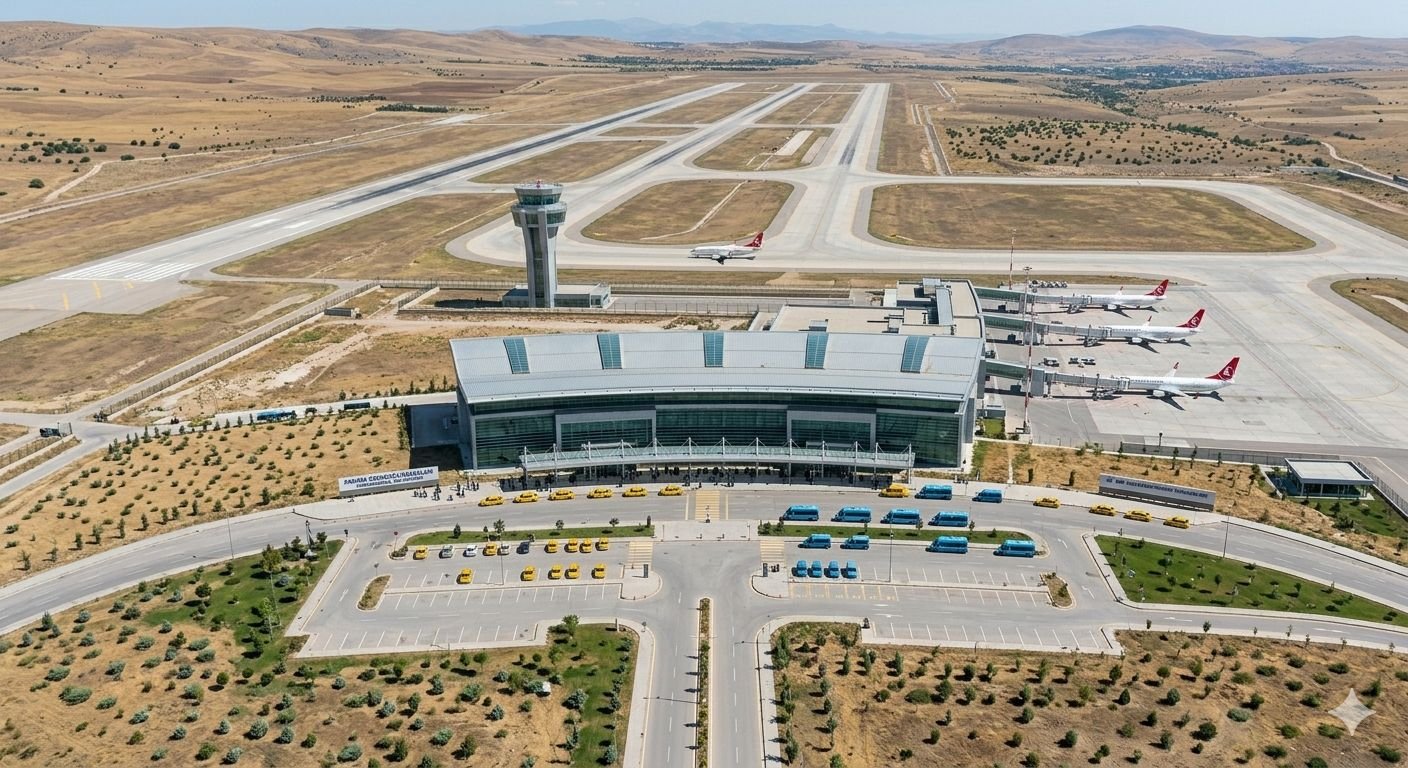
Bodrum, located in the western part of Muğla Province on the Bodrum Peninsula, is one of Turkey’s most important tourism destinations. The town can be reached by air, road, and sea. Milas-Bodrum Airport, Bodrum Bus Terminal, local minibuses, taxis, and ferry services are the main transportation options, especially during the summer tourism season.
Getting to Bodrum by Air
The main airport serving Bodrum is Milas-Bodrum Airport. The airport is approximately 35–37 km from Bodrum town center.
Transportation options from the airport include:
- MUTTAŞ airport buses
- HAVAŞ airport buses
- Taxis
- Private transfers
- Rental cars
- Private vehicles
Visitors should check current departure times and routes before traveling, as airport shuttle schedules may change depending on the season.
Milas-Bodrum Airport to Bodrum
The journey from Milas-Bodrum Airport to Bodrum is relatively easy. Airport buses and private transfers are popular choices, while rental cars provide greater flexibility for visitors planning to explore the entire peninsula.
Getting to Bodrum by Bus
Bodrum has regular intercity bus connections with many cities across Turkey.
Direct or connecting services are available from major destinations including:
- Istanbul
- Ankara
- Izmir
- Antalya
- Aydın
- Denizli
- Muğla
- Other cities throughout Turkey
Bus travel is particularly popular among domestic travelers during the summer season.
Bodrum Bus Terminal
The main intercity bus terminal is located in Torba, along the Bodrum–Milas highway.
From the terminal, passengers can continue to Bodrum town center and other parts of the peninsula by local buses, minibuses, or taxis.
Getting to Bodrum by Car
Bodrum is connected to Turkey’s main road network through Milas.
From Izmir
A common route is:
Izmir → Aydın → Söke → Milas → Bodrum
From Aydın
The route generally follows:
Aydın → Söke → Milas → Bodrum
From Muğla
Travelers can follow:
Muğla → Yatağan → Milas → Bodrum
From Antalya
Travelers coming from Antalya can travel westward through the Mediterranean and Muğla region before continuing toward Bodrum, although the journey is considerably longer than from Izmir or Aydın.
During July, August, public holidays, and weekends, traffic around Bodrum can become very heavy.
Public Transportation in Bodrum
Bodrum Peninsula is relatively large, with many separate resort areas and villages. Public transportation is therefore an important part of getting around.
The main options include:
- Local minibuses
- Municipal buses
- Taxis
- Rental cars
- Private vehicles
- Bicycles
- Motorcycles
- Boats
Minibuses and buses connect Bodrum town with popular destinations such as:
- Gümbet
- Bitez
- Ortakent
- Yalıkavak
- Gündoğan
- Türkbükü
- Torba
- Turgutreis
- Akyarlar
Minibuses in Bodrum
Dolmuş, or local minibuses, are one of the most convenient ways to travel short and medium distances around Bodrum Peninsula.
They connect Bodrum town with many surrounding neighborhoods and resorts.
Popular routes include:
Bodrum → Gümbet → Bitez → Ortakent
and
Bodrum → Torba → Yalıkavak → Gündoğan
Service frequency varies depending on the season and destination. During summer, services are generally more frequent.
Taxis in Bodrum
Taxis are useful for travelers who want direct transportation between hotels, beaches, marinas, the airport, and other destinations.
They are particularly convenient for:
- Airport transfers
- Nighttime transportation
- Travelers with luggage
- Families
- Destinations where public transportation is limited
During the busy summer season, arranging a taxi in advance can be useful.
Car Rental in Bodrum
Renting a car is one of the best options for visitors who want to explore the entire Bodrum Peninsula.
A rental car makes it easier to visit places such as:
Bodrum → Yalıkavak → Gümüşlük → Turgutreis → Akyarlar → Güvercinlik
without depending on public transportation schedules.
Rental cars are available at Milas-Bodrum Airport as well as in Bodrum and other parts of the peninsula.
However, parking can be difficult in Bodrum town during the peak summer season. Visitors staying at hotels should check whether the property provides private parking.
Getting to Bodrum by Sea
One of Bodrum’s greatest transportation advantages is its location on the Aegean Sea.
The town has ferry and passenger boat connections to various destinations, particularly during the summer.
Depending on the season, routes may include:
- Kos
- Rhodes
- Kalymnos
- Leros
- Symi
- Datça
Schedules vary according to the season, weather conditions, and ferry operators, so current timetables should always be checked before traveling.
Bodrum–Kos Ferry
The ferry connection between Bodrum and Kos is one of the most popular international sea routes in the region.
This makes it possible to combine a Bodrum holiday with a short trip to Greece.
Travelers should check current passport, visa, and entry requirements according to their nationality before departure.
Bodrum–Datça Ferry
Seasonal sea services may also connect Bodrum and Datça.
This is a convenient alternative to traveling by road and can turn the journey itself into a scenic Aegean experience.
Ferry services can occasionally be affected by strong winds and adverse weather conditions, so passengers should check the latest departure information on the day of travel.
Traveling from Bodrum to Other Resorts
Bodrum is also a useful starting point for exploring other destinations in Muğla and the surrounding Aegean region.
Bodrum to Milas
Milas is the closest major inland town to Bodrum and is also home to Milas-Bodrum Airport.
Bodrum to Didim
Didim lies north of Bodrum and can be reached by road.
Bodrum to Marmaris
Marmaris can be reached by road via Muğla.
Bodrum to Fethiye
Fethiye is accessible by road through Muğla and the surrounding region.
Bodrum to Datça
Datça can be reached by road or, depending on the season, by ferry.
Yacht and Boat Transportation in Bodrum
Bodrum is one of Turkey’s most important yachting and sailing destinations.
The peninsula has several marinas and ports serving private yachts, charter boats, excursion boats, and cruise ships.
Boat trips provide access to many beautiful destinations that are difficult or impossible to reach by road.
Popular destinations include:
- Bodrum’s secluded bays
- Karaada
- Orak Island
- Aquarium Bay
- Yalıçiftlik
- Gümüşlük
- Yalıkavak
- Türkbükü
For visitors interested in exploring the coastline, a private yacht or daily boat tour can be one of the most enjoyable transportation options.
Transportation from Bodrum Airport to the Town Center
For travelers arriving at Milas-Bodrum Airport, several options are available.
Airport Bus
MUTTAŞ and HAVAŞ services provide scheduled connections depending on the current seasonal timetable.
Taxi
A taxi provides direct transportation to the hotel and is especially convenient for families and travelers with luggage.
Private Transfer
Private airport transfers can be arranged in advance and are particularly convenient for groups.
Rental Car
A rental car is ideal for travelers planning to explore several parts of the Bodrum Peninsula.
Best Transportation Options in Bodrum
| Transportation | Best For |
|---|---|
| Airplane | Travelers arriving from distant cities |
| Airport Bus | Airport–Bodrum transportation |
| Intercity Bus | Domestic travelers |
| Dolmuş | Local transportation |
| Municipal Bus | Affordable travel |
| Taxi | Fast, direct transportation |
| Rental Car | Exploring the peninsula |
| Ferry | Greek islands and Datça |
| Boat/Yacht | Bays and islands |
| Bicycle | Short-distance travel |
Transportation Tips for First-Time Visitors
If this is your first visit to Bodrum, the following combination can be practical:
Airport → Bodrum: MUTTAŞ, HAVAŞ, taxi, or private transfer
Bodrum town: Walking + local minibuses
Exploring the peninsula: Rental car
Exploring secluded bays: Daily boat tour or private yacht
Visiting Greece: Ferry
This combination allows visitors to experience Bodrum without relying on a single form of transportation.
Traffic and Parking in Bodrum
Traffic is one of the most important transportation considerations during the summer.
The roads can become particularly busy during:
- July and August
- Weekends
- Public holidays
- Long holiday weekends
- Evening hours
Bodrum town center can also become crowded because of restaurants, nightlife, shopping areas, and marina traffic.
Visitors staying in the center may find it easier to leave their car at the hotel and use walking, minibuses, or taxis.
Traveling Around the Bodrum Peninsula
One of the best ways to experience Bodrum is to divide the peninsula into different day trips.
Northern Bodrum
Torba → Güvercinlik → Yalıkavak → Gündoğan → Türkbükü
This route is ideal for discovering marinas, beaches, restaurants, and luxury resorts.
Western Bodrum
Gümüşlük → Turgutreis → Akyarlar
This area is known for beautiful sunsets, beaches, fishing villages, and Aegean landscapes.
Southern Bodrum
Bitez → Ortakent → Yahşi → Yalıçiftlik
This route offers beaches, restaurants, water sports, and quieter coastal areas.
Best Way to Explore Bodrum
For a short holiday of 2–3 days, public transportation, taxis, and walking may be sufficient.
For a 5–7 day holiday, renting a car can be useful if you want to visit several parts of the peninsula.
For travelers primarily interested in beaches and secluded bays, boat tours may be more useful than renting a car.
For travelers interested in yachting and luxury tourism, a private yacht charter offers the opportunity to explore the coastline at your own pace.
Bodrum, Muğla, is one of Turkey’s most accessible and best-connected holiday destinations. Visitors can reach the peninsula by air, road, bus, car, ferry, and boat.
The main gateway is Milas-Bodrum Airport, approximately 35–37 km from Bodrum town center. Airport buses, taxis, private transfers, and rental cars provide convenient connections between the airport and the resort areas.
For traveling around the peninsula, dolmuşes and municipal buses are economical choices, while taxis and rental cars provide greater flexibility.
Bodrum’s location on the Aegean coast also makes sea transportation an important part of the travel experience. Seasonal ferry services connect Bodrum with destinations such as Kos and Datça, while daily boat tours and private yachts provide access to secluded bays and islands.
For travelers planning a complete Bodrum holiday, the ideal combination is often public transportation for local travel, a rental car for exploring the peninsula, and a boat tour for discovering the coastline.