Category: Uncategorized

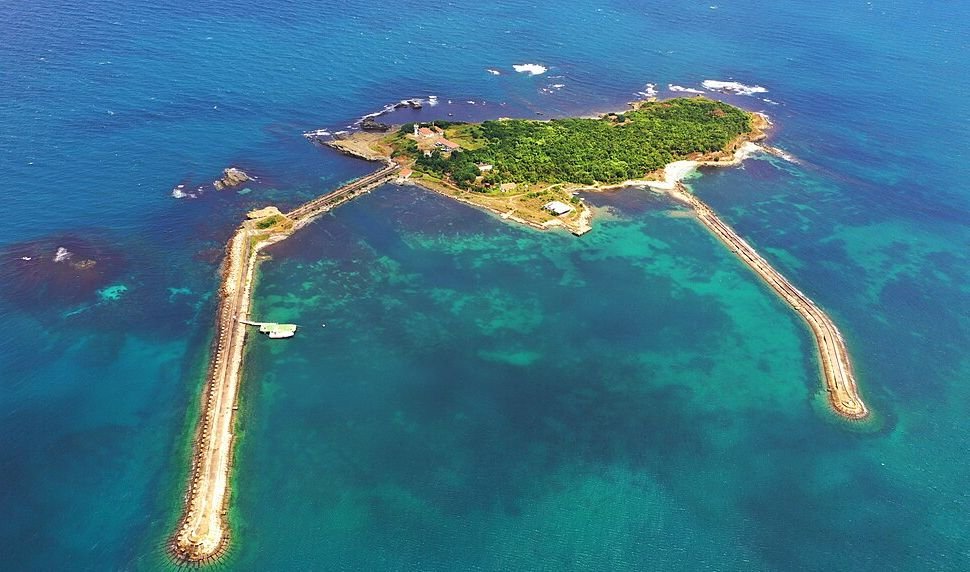
  • Kefken Island is a Black Sea island 10 minutes away from Cebeci beach

    Kefken Island is a Black Sea island 10 minutes away from Cebeci beach

    Kefken Island is a Black Sea island within the borders of Kocaeli province, 10 minutes away from the Cebeci coast. Its shores are 1.7 kilometers long in total and the area of the island is 0.11 square kilometers. The distance to the nearest land is 0.8 kilometers. Most of the coast is rocky and consists of small beaches.

    On the island, there are castle walls dating back to the Genoese and there are nearly forty water wells. It is thought that these wells were built by the Genoese as cisterns to collect rainwater.

    The anise plant used in the production of raki and a 25 cm high plant called ‘wild melon’ by the islanders grow spontaneously. Laurel and fig trees are also abundant on the island.

    The island, which İpsiz Recep Emice used as a headquarters during the Turkish War of Independence, also contributed to the War of Independence.

    The fishing cooperative on the island has approximately 75 boats and fishing is highly developed. There is also underwater hunting on and around the island. However, interest in underwater fishing has decreased due to the salmon fish farms established on the island.

    The lighthouse on the island was built on November 30, 1879. The light of the lighthouse can be seen from about 13-17 miles away and gives direction to the ships traveling to and from the eastern coast of the Black Sea.

    Kefken Island is one of the two islands suitable for settlement in the Black Sea Region together with Giresun Island (Aretias) and is larger than Giresun Island in terms of surface area.

    The island, whose historical features are preserved, is a 1st degree protected area. The island belongs to the Ministry of Finance, and there is only a maritime control center as an official institution. Although there are many bays to swim in, there is no touristic activity or regular sea transportation.

  • Hunting in Turkey

    hunter turkey

    Geographic structure of Turkey, is appropriate for development of hunt tourism in connection with its plant cover and wild life. Hunting grounds, which will be opened to hunting tourism with considering the hunting animals potential of our country, are determined and announced by Ministry of Environment and Forests (National Parks, Hunting and Wild Life General Directorate).

    Foreign tourist hunters, can hunt with Hunting Tousim Permission Certificate, issued to A Class Tourism Agencies by Ministry of Forest. Also, foreign tourist hunters can only hunt species, breed and set free here within private hunting grounds approved by Ministry of Forest, National Parks and Hunt – wild Life General Directorate.

    Foreign tourist hunters, who can hunt by means of Tourism Agencies, according to the related decision of MAK (Central Hunt Commission) and regulation related with the application of 6136 Numbered Law, can bring their hunting guns and accessories together with them.

    In Hunting Permission Certificates; name, surname, nationality of the hunter who will participate hunting party, dates and customs offices, when and where he will enter and exit our country, hunting grounds, dates of hunt and hunting animal species and numbers that he can hunt, are mentioned.

    Hunting Animals Allowed for Hunting in Turkey
    Wild animals allowed for hunting in Turkey are determined each year according to their species and hunting periods. These changes are determined by the decesions of the Central Hunting Commision which has been organized each year. Bear, hook horned mountain goat (samua), wild goat (Bezoar), wild boar, lynx, wolf, jackal, fox, from big hunting animals, are served against its value to usage of national and foreign hunters under hunting tourism title. Hunting of hunting animals except these can only be possible within special hunting grounds. Foreign hunters can not hunt hunting animals except above mentioned animals outside special grounds.

    Research On Hunting Species
    In order to research animal species, activities of foreign researchers, who will come to Turkey and submission of applications made on this matter to related authorities under a certain procedure is also performed by Ministry of Forest, National Parks and Hunting – Wild Life General Directorate. In case of finding appropriate after investigation of application demands by required official authorities, research permission under certain conditions is given. Under research study, sampling from wild animals and getting egg, etc. production materials to outside of country is not permitted.

  • Transportation in Turkey

    Turkish Airlines, Delta, British Airways, Air France, KLM, Lufthansa, Sabena, Swissair and Olympic Airways serve Ataturk International Airport (IST), which is located 15 mi/24 km southwest of Istanbul (allow plenty of time to get to the airport during rush hour). Turkish Airlines, Austrian, Lufthansa and Sabena serve Ankara’s Esenboga Airport (ESB), which is located 22 mi/35 km northeast of the capital’s center. Turkish Airlines offers frequent domestic flights to major cities within Turkey.

    Various cruise lines include Turkish ports on their Mediterranean itineraries. Turkish Maritime Lines connects major ports along the Aegean, Black Sea and Mediterranean coasts it takes about six days to go from Istanbul along the Black Sea to Trabzon via Sinop—very enjoyable.

    There is rail service connecting most European countries to Istanbul, and there’s also rail service within Turkey (it’s usually slower than bus service). Express bus service connects many European capitals and large cities with Istanbul on a regular (and fairly inexpensive) basis. Inexpensive buses and minibuses connect most points within the country (the former are quite comfortable, and the latter provide an opportunity to meet the local people—if you’re willing to sacrifice comfort for that opportunity).

    Self- and chauffeur driven cars are also available (an excellent way to visit the country). Major highways are in good shape, but beware of slow-moving vehicles, animals and especially Turkish drivers, who don’t seem to follow traffic rules. Snow and ice require extra caution. Driving is on the right—though sometimes drivers ignore this rule! City streets are often narrow and congested with traffic. Parking in Istanbul, Izmir and Ankara is a hassle: Don’t rent a car in these cities.

    Taxis (shared and metered) are the best way to travel within most cities and towns. However, visitors to Ankara and Istanbul should be aware that some taxi drivers may try to cheat tourists by “forgetting” to turn on the meter (and then demanding an outrageous sum) or putting the night meter on during the day. Between 7 am and midnight always check to see that the meter reads gunduz (days). Shared taxis (dolmuses) travel on fixed routes for fixed fares. Tipping is not expected in shared taxis. Some city buses are adequate, but others are overcrowded.

  • Istanbul Airport: Turkey’s Global Aviation Gateway

    Istanbul Airport: Turkey’s Global Aviation Gateway

    Istanbul Airport (IATA: IST, ICAO: LTFM) is the largest and most important international airport in Turkey and one of the most significant aviation hubs in the world. Serving the historic and strategically located city of Istanbul, the airport connects Europe, Asia, the Middle East, Africa, and the Americas through thousands of domestic and international flights every week.

    Since its official opening in 2018 and the complete transfer of commercial operations in 2019, Istanbul Airport has rapidly grown into one of the busiest airports globally. With its modern infrastructure, massive passenger capacity, advanced technology, and strategic location between continents, the airport symbolizes Turkey’s ambition to become a global center for transportation and tourism.


    Location and Geography

    Istanbul Airport is located in the Arnavutköy district on the European side of Istanbul. The airport lies north of the city center near the Black Sea coast and is positioned between the settlements of Yeniköy, Tayakadın, and Akpınar. It is situated at the intersection of important roads connecting Arnavutköy, Göktürk, and Çatalca.

    The airport complex covers approximately 7,600 hectares near Lake Terkos, making it one of the largest airport sites in the world. Around 6,172 hectares of this land previously consisted of state-owned forest areas before development began.

    Its geographical position provides major strategic advantages. Istanbul itself sits between Europe and Asia, allowing airlines to reach more than 120 countries within a few hours of flight time. This location has helped Istanbul Airport become a major global transit hub.


    History and Development

    The idea for a new mega-airport emerged due to the increasing congestion at Atatürk Airport, which had reached its maximum operational capacity. The Turkish government launched the Istanbul Airport project as part of a long-term vision to transform Turkey into a major international aviation center.

    Construction officially began in 2015. The airport was designed in multiple phases, with plans for future expansion that could eventually allow it to handle more than 200 million passengers annually.

    The first phase officially opened on 29 October 2018, coinciding with the 95th anniversary of the Republic of Turkey. On 6 April 2019, all scheduled commercial passenger flights were transferred from Atatürk Airport to Istanbul Airport, and the IATA code “IST” was reassigned to the new airport.

    This transition marked one of the largest airport relocations in aviation history.


    Architecture and Design

    Istanbul Airport is widely recognized for its impressive modern architecture and large-scale design. The terminal building combines contemporary engineering with elements inspired by traditional Turkish and Islamic architecture.

    The main terminal is one of the largest airport terminals under a single roof in the world. The airport features:

    • Spacious passenger halls
    • Advanced baggage systems
    • High-tech security infrastructure
    • Luxury lounges
    • Large shopping areas
    • Hotels and conference facilities
    • Smart airport technologies

    The control tower design was inspired by the shape of a tulip, one of the traditional symbols of Turkish culture and Istanbul’s Ottoman heritage.

    The airport was built with sustainability and efficiency in mind, including energy-saving technologies and environmentally conscious construction practices.


    Passenger Traffic and Global Ranking

    In recent years, Istanbul Airport has become one of the busiest airports in the world.

    In 2023, the airport handled more than 76 million passengers, making it:

    • The 2nd-busiest airport in Europe after Heathrow Airport
    • The 2nd-busiest airport in the Middle East after Dubai International Airport
    • The 7th-busiest airport globally in total passenger traffic

    Additionally, according to ACI World statistics, Istanbul Airport served more than 58 million international passengers in 2023, making it the 6th-busiest airport worldwide for international passenger traffic.

    These figures demonstrate the airport’s rapid rise as a global aviation powerhouse.


    Turkish Airlines Hub

    Istanbul Airport serves as the primary hub for Turkish Airlines, the national airline of Turkey and one of the world’s largest international carriers.

    Turkish Airlines operates flights from Istanbul to destinations across Europe, Asia, Africa, North America, South America, and Oceania. Thanks to Istanbul Airport’s strategic location, the airline can efficiently connect passengers between continents.

    The airport currently offers flights to destinations in approximately 122 countries, making it one of the most internationally connected airports in the world.


    Transportation and Accessibility

    Istanbul Airport is connected to the city through several transportation options, including:

    • Metro lines
    • Airport shuttle buses
    • Taxis
    • Private transfers
    • Car rental services
    • Highway connections

    The airport is directly connected to major highways such as the Kuzey Marmara Motorway (O-7), allowing easier travel between different parts of Istanbul.

    The distance between Istanbul Airport and Sabiha Gökçen International Airport on the Asian side of the city is approximately 83.2 kilometers. The journey typically takes around 52 minutes via the Kuzey Marmara Motorway, depending on traffic conditions.


    Shopping, Dining, and Passenger Experience

    Istanbul Airport offers a premium travel experience with extensive shopping and dining facilities. Inside the terminal, passengers can find:

    • International luxury brands
    • Duty-free shopping areas
    • Turkish restaurants and cafes
    • International fast-food chains
    • Traditional Turkish cuisine
    • VIP lounges
    • Relaxation areas

    The airport’s duty-free area is among the largest in the world and attracts millions of international travelers every year.

    Passengers also benefit from modern digital systems, free Wi-Fi, charging stations, family services, medical facilities, and multilingual assistance.


    Economic Importance

    The airport plays a vital role in Turkey’s economy by supporting:

    • Tourism
    • International trade
    • Employment
    • Cargo transportation
    • Foreign investment

    As one of the country’s largest infrastructure projects, Istanbul Airport has created thousands of jobs directly and indirectly. It also contributes significantly to Istanbul’s position as a global business and tourism destination.

    The airport’s cargo facilities have strengthened Turkey’s role in international logistics and freight transportation between continents.


    Future Expansion Plans

    Istanbul Airport was designed with future growth in mind. Once all construction phases are completed, the airport is expected to include:

    • Multiple additional runways
    • Expanded terminal capacity
    • Increased cargo operations
    • Larger passenger handling systems

    Future plans aim for the airport to eventually accommodate up to 200 million passengers annually, potentially making it one of the busiest airports on Earth.


    Tourism and Cultural Impact

    For many visitors, Istanbul Airport serves as the first impression of Turkey. The airport reflects modern Turkish identity while showcasing aspects of the country’s culture, hospitality, and global ambitions.

    Its location in Istanbul — a city historically connecting East and West — reinforces its symbolic role as a bridge between continents, cultures, and civilizations.

    Millions of tourists arriving through Istanbul Airport continue onward to famous Turkish destinations such as:

    • Cappadocia
    • Antalya
    • İzmir
    • Bodrum
    • Bursa
    • Trabzon
    • Pamukkale

    The airport therefore acts not only as a transportation hub but also as a gateway to Turkish tourism and culture.


    Istanbul Airport has rapidly become one of the most important aviation centers in the world. Combining modern infrastructure, strategic geographic positioning, high passenger capacity, and global connectivity, the airport represents Turkey’s growing influence in international transportation and tourism.

    From its impressive architecture and technological innovation to its role as the main hub of Turkish Airlines, Istanbul Airport continues to shape the future of global aviation. As expansion projects continue and passenger numbers increase, the airport is expected to remain one of the world’s leading transportation hubs for decades to come.

  • Paragliding in Fethiye – Mugla

    OLUDENIZ – BABADAG
    Location: Mount Baba, which is in the province territory of Fethiye of Mugla city, is 7 km inside from the coastal line. It rises just after the Oludeniz (Blue Lagoon) beach and faces just towards to south. You can reach to take off runway via a 45 minutes from Oludeniz stabilize but nearly smooth road.

    Flight Season: Secure flights can be performed between April and October.

    Regional Characteristics: Oludeniz, which is the first place where paragliding is performed in Turkey, has a world – wide fame. Its unique nature, sun and sea is enchanting thousands of national and foreign tourists every year, and has a structure appropriate for all kinds of outdoor activity. There is no transportation, accommodation and nutrition problems within the developed touristic center, region. Yacht tours are also drawing attention in the area. Mount Baba is preferred as trekking and camping area during summer and winter.

    Take Off Runways: There are total of three runways in Mount Baba. 1700 meters high in south runway is appropriate to take off. 1800 meters high north runway is a little bit small and upright. Take off area of the 1900 meters high north peek runway is very comfortable. As 1700 meters high runway is taking the south wind just from the opposite side during the most part of the day, generally take off is made from here. Approximately 20 wings can be lied on very wide runway at the same time.

    Landing Runway: Belcekiz beach at the coast of Oludeniz, is a long and very comfortable and secure landing runway with its width.

    Meteorological Characteristics: During summer season, the weather is stable. Sometimes during morning hours a north wind comes and take off is made from north runways into the valley. The South runway faces a south wind, between 5 – 20 km. during most of the day hours.

    Things that should be considered: Especially during the beginning and end of the season, climate change months weather can change rapidly and cloud can cover the take off area. On south runway, during the period till to the midday west wind coming from the west end of the mount, can create a false south wind and mislead.