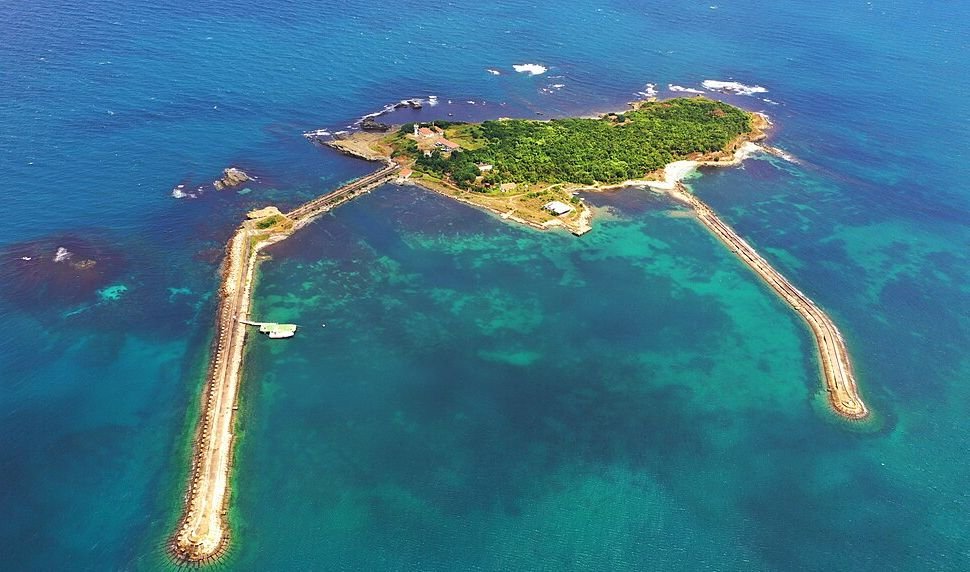
Discover One of the Black Sea’s Few Inhabitable Islands
Just offshore from the popular seaside village of Cebeci in Kandıra, Kocaeli Province, Kefken Island is one of the Black Sea’s most intriguing natural and historical landmarks. Surrounded by rugged cliffs, secluded coves, and crystal-clear waters, the island combines centuries of history with unspoiled natural beauty.
Located only about 800 meters from the mainland—roughly a 10-minute boat ride from Cebeci Beach—Kefken Island remains a protected destination where history, wildlife, and coastal scenery coexist in a remarkably untouched setting.
A Small Island with a Rich History
Covering approximately 0.11 square kilometers and boasting a shoreline of around 1.7 kilometers, Kefken Island has played an important role throughout history despite its modest size.
Archaeological remains indicate that the island was occupied during the medieval period, most notably by the Genoese, the powerful maritime traders who established colonies and fortifications throughout the Black Sea between the 13th and 15th centuries.
Visitors can still discover sections of the old Genoese defensive walls, offering a fascinating glimpse into the island’s strategic importance along historic maritime trade routes.
One of the island’s most remarkable features is its collection of nearly forty ancient stone cisterns. These carefully constructed reservoirs are believed to have been built by the Genoese to collect and store rainwater, ensuring a reliable freshwater supply for sailors, soldiers, and traders stationed on the island.
A Place Connected to the Turkish War of Independence
Kefken Island also holds an important place in modern Turkish history.
During the Turkish War of Independence (1919–1923), the island served as a base for the legendary local militia leader İpsiz Recep, one of the region’s most celebrated national heroes. From here, resistance forces carried out operations and contributed to protecting the Black Sea coast during the struggle for independence.
Today, the island remains a symbol of both regional history and national heritage.
Rich Flora and Coastal Wildlife
Despite its small size, Kefken Island supports a surprising variety of Mediterranean and Black Sea vegetation.
Among the naturally occurring plants are:
- Wild anise, traditionally associated with the production of rakı
- A distinctive plant locally known as the “wild melon”
- Laurel trees
- Fig trees
- Native shrubs and coastal vegetation adapted to the island’s rocky terrain
The island’s protected status has helped preserve its unique ecosystem, making it an attractive destination for nature enthusiasts and birdwatchers.
Fishing and Maritime Traditions
Fishing has long been central to life around Kefken Island.
The nearby fishing cooperative operates approximately 75 fishing boats, and the surrounding waters have traditionally supported a thriving fishing industry.
The island’s clear waters have also attracted recreational divers and underwater hunters. In recent years, however, underwater fishing activity has declined due to the establishment of offshore fish farms in the surrounding area.
The Historic Kefken Lighthouse
Standing proudly on the island is the historic Kefken Lighthouse, first illuminated on 30 November 1879 during the late Ottoman period.
For well over a century, the lighthouse has guided ships navigating the often-challenging waters of the western Black Sea. Its light is visible from approximately 13 to 17 nautical miles, providing an important navigational aid for vessels traveling along Turkey’s northern coastline.
Today, the lighthouse remains one of the island’s most recognizable landmarks and a favorite subject for photographers.
A Protected Natural and Archaeological Site
Kefken Island is one of only two naturally inhabitable islands in Turkey’s Black Sea region, the other being Giresun Island (Aretias). In fact, Kefken is the larger of the two by surface area.
Recognizing its outstanding historical and environmental significance, the island has been designated a First-Degree Archaeological and Natural Protected Site. This status safeguards its ancient remains, natural habitats, and landscapes from inappropriate development.
Ownership of the island rests with the Turkish state, and the only permanent official presence is a maritime control station.
Visiting Kefken Island
Although Kefken Island lies just a short distance from the mainland, it remains largely undeveloped. There are no hotels, restaurants, or regular passenger ferry services, which has helped preserve its peaceful atmosphere and natural character.
Private boats occasionally visit the island during the summer months, allowing visitors to admire its dramatic coastline, hidden coves, rocky shores, and crystal-clear waters.
Because facilities are extremely limited, anyone planning a visit should bring sufficient drinking water, food, sun protection, and appropriate footwear.
Nearby Attractions
Many visitors combine Kefken Island with other attractions along the Kandıra coastline, including:
- Cebeci Beach, known for its wide sandy shoreline and calm summer atmosphere.
- Kerpe, a charming Black Sea resort famous for its dramatic rock formations and natural swimming areas.
- Pink Rocks (Pembe Kayalar), a unique geological formation where soft pink sandstone was once quarried for use in historic Ottoman buildings.
Together, these destinations make the Kefken Peninsula one of the most scenic coastal regions in northwestern Turkey.
Why Visit Kefken Island?
Kefken Island offers a rare opportunity to experience an untouched corner of Turkey’s Black Sea coast. Its medieval Genoese ruins, historic lighthouse, rich natural vegetation, and connection to the Turkish War of Independence create a fascinating blend of history and nature.
Whether viewed from the mainland, explored by private boat, or admired from the surrounding coastline, Kefken Island remains one of Kocaeli’s hidden treasures and an unforgettable destination for travelers seeking authentic Black Sea landscapes.
Leave a Reply
You must be logged in to post a comment.