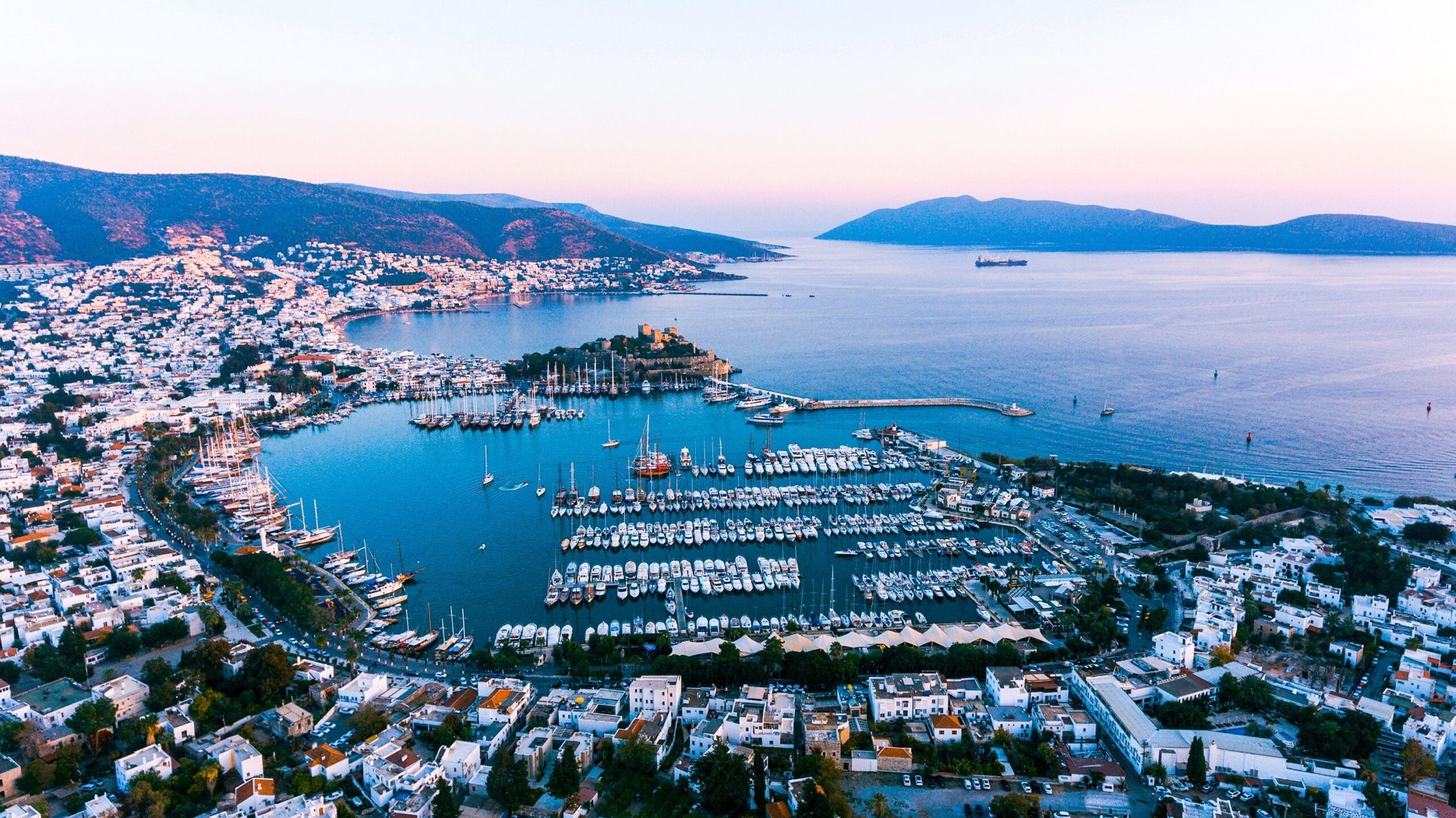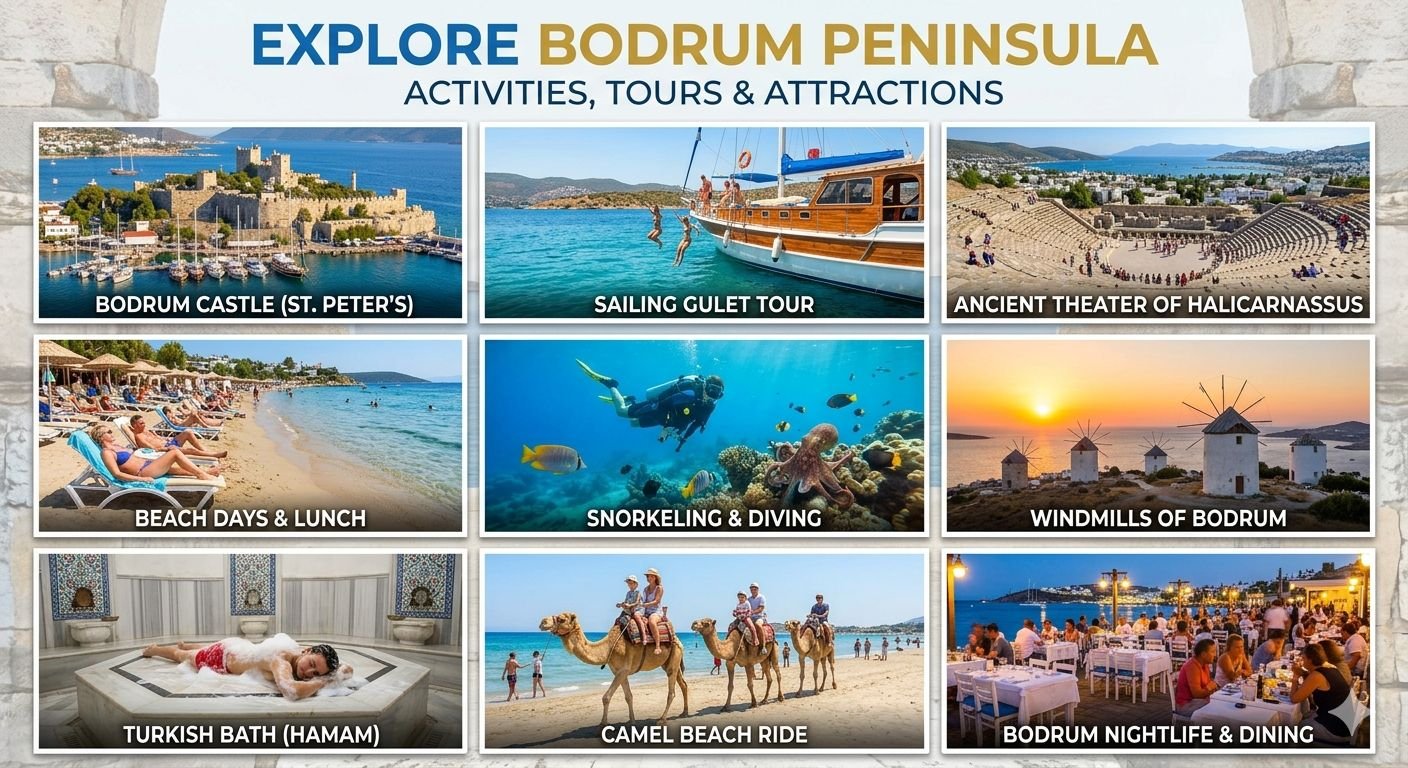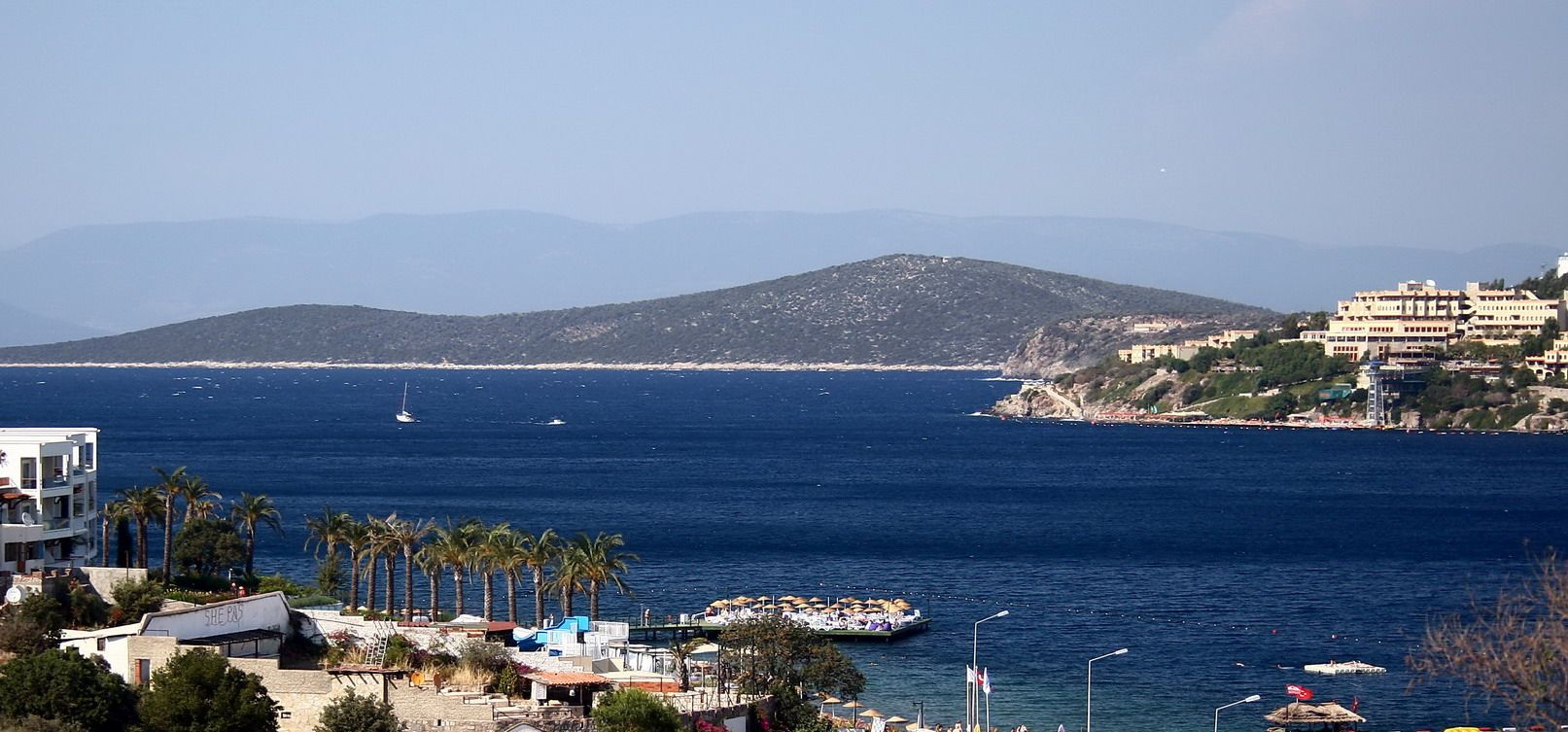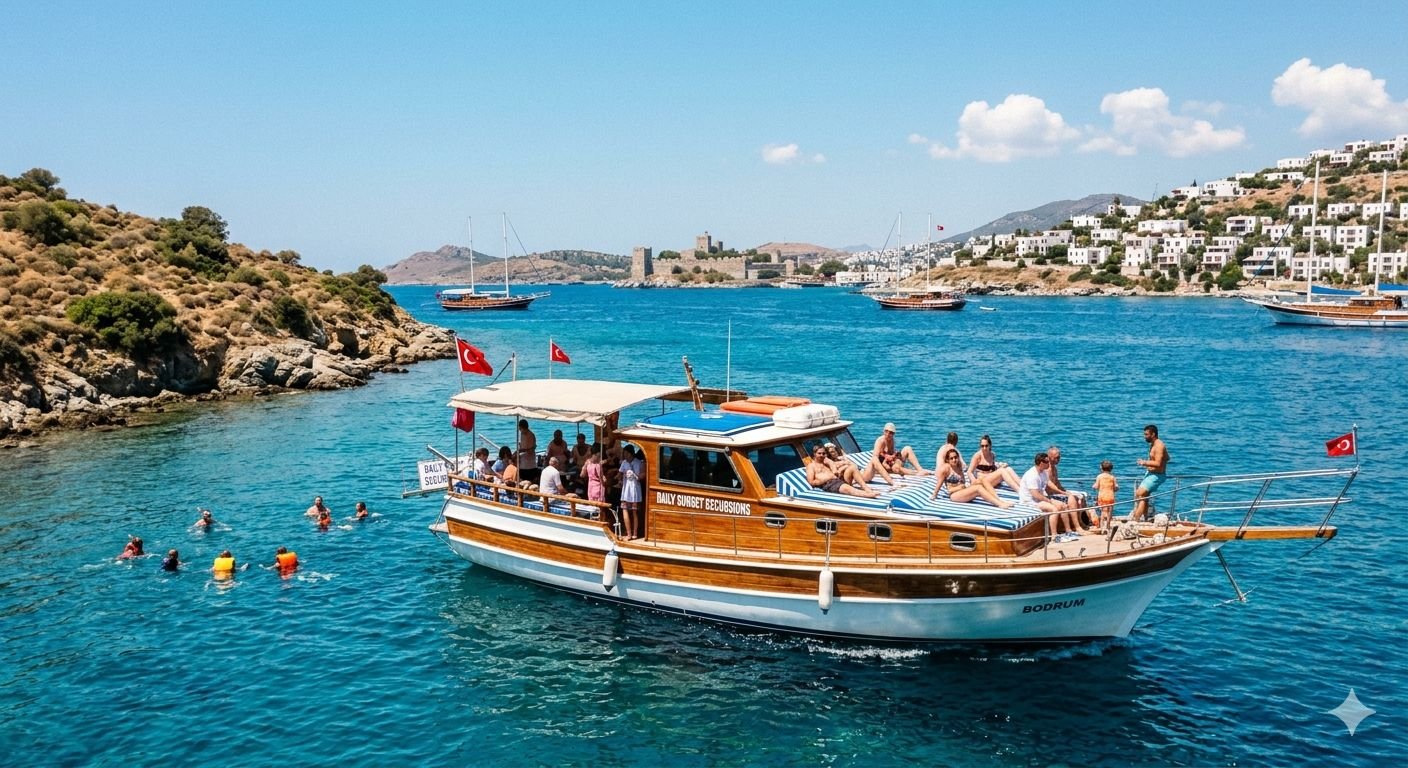
Bodrum, one of the most celebrated destinations on Turkey’s Aegean coast, is a town shaped by the sea. Its whitewashed houses, historic Bodrum Castle, lively marina, beaches, restaurants, and famous nightlife attract visitors from around the world. Yet the true character of the Bodrum Peninsula is often discovered away from the town itself—out on the water.
Within minutes of leaving Bodrum Harbour, the busy streets give way to a spectacular maritime landscape of turquoise water, secluded bays, rocky islands, and pine-covered hills. Hidden beaches and quiet coves that are difficult or impossible to reach by road become accessible by boat.
Whether you are travelling with family, planning a romantic day at sea, looking for secluded swimming spots, interested in ancient history, or simply want to enjoy a sunset with friends, Bodrum offers a remarkable variety of boat-trip experiences.
From traditional wooden gulets and private yacht charters to multi-day Blue Cruises and day trips to nearby Greek islands, there is an option for almost every type of traveller.
Here is a complete guide to exploring Bodrum and its surrounding coastline by boat.
Choosing Your Bodrum Boat Trip
Before choosing an itinerary, it is useful to understand the main types of boat trips available from Bodrum. Your ideal option will depend on your budget, group size, preferred level of privacy, and how much time you want to spend on the water.
1. Daily Group Boat Tours
Daily shared boat tours are the most popular and generally the most affordable way to explore the Bodrum coast.
Most traditional wooden boats, particularly gulets, leave the harbour between approximately 10:00 and 11:00 in the morning and return between 17:00 and 18:00.
A typical day includes several swimming stops, lunch on board, time for snorkeling, and opportunities to relax on deck.
Typical characteristics:
- Duration: Approximately 7–8 hours
- Capacity: Often 20–40 passengers, although smaller boats are also available
- Experience: Social, relaxed, and organized
- Itinerary: Usually 3–4 swimming and sightseeing stops
- Meals: Lunch is commonly included
- Typical price: Around €30–€50 per person, depending on the boat, season, itinerary, and inclusions
Group tours are particularly suitable for solo travellers, couples, and visitors who want to experience Bodrum by boat without paying for a private charter.
2. Private Boat and Yacht Charters
A private charter is an excellent choice for families, couples, or groups of friends who want greater freedom and privacy.
Instead of following a fixed itinerary, you can usually discuss your preferred route with the captain and spend more time at the bays and beaches that interest you most.
Depending on the vessel, you may be able to choose:
- Departure and return times
- Swimming locations
- Lunch arrangements
- Snorkeling stops
- Music and onboard entertainment
- Water sports
- Sunset cruising
- Private dining
A private gulet or yacht for a small group can sometimes offer surprisingly good value when the total cost is divided between several passengers.
For example, a full-day private charter for approximately 6–8 people may range from €600 to €1,200 or more, depending heavily on the vessel, season, route, crew, and services included.
3. Blue Cruise: Multi-Day Sailing
For travellers who want more than a single day at sea, the traditional Blue Cruise (Mavi Yolculuk) is one of the most memorable ways to experience the Turkish Aegean and Mediterranean coasts.
Blue Cruises generally last several days and can explore areas such as the Gulf of Gökova, the Datça Peninsula, Marmaris, and routes toward the Mediterranean.
Guests stay aboard the boat in private cabins, waking up in a different bay or anchorage each morning.
A typical multi-day cruise can include:
- Private cabins
- Breakfast, lunch, and dinner
- Daily swimming stops
- Snorkeling
- Visits to historical sites
- Overnight stays in secluded bays
- Opportunities to explore coastal villages
Prices vary considerably according to the boat, season, route, cabin type, and level of service. A useful starting point for planning is approximately €400–€700 per person for a 3–4-night trip, although premium gulets and luxury yachts can cost substantially more.
The Best Bodrum Boat Trip Routes and Bays
The Bodrum Peninsula has dozens of attractive bays and islands, and individual operators offer different combinations of stops.
Some of the most popular destinations include Orak Island, Black Island, Aquarium Bay, Rabbit Bay, and the coves surrounding the Gulf of Gökova.
Orak Island: Turquoise Waters and Secluded Beaches
Orak Island is among the most famous boat-trip destinations near Bodrum. Located east of the peninsula, the island is particularly well known for its remarkably clear turquoise water and beautiful coastal scenery.
The shallow sections of the bay can appear almost tropical on sunny days, which is one reason the area is sometimes promoted as the “Turkish Maldives.”
A typical boat tour may spend between 30 and 90 minutes in the area, depending on the itinerary and sea conditions.
The main attraction is the water itself. Swimming, snorkeling, sunbathing, and simply relaxing on the boat are the principal activities.
Some itineraries combine Orak Island with other nearby locations such as Pabuç Burnu and Rabbit Bay (Tavşan Burnu).
Best for: Swimming, snorkeling, photography, families, and first-time visitors to Bodrum.
Black Island (Kara Ada): Thermal Springs and Natural Mud Baths
Black Island (Kara Ada) is another popular destination and offers a very different experience from the open-water swimming stops.
The island is known for its thermal and mineral-rich waters as well as natural mud baths. Visitors can cover themselves with mineral-rich mud before washing it away in the warm water.
The experience is less about sightseeing and more about relaxation.
Depending on the tour, the itinerary may also include snorkeling locations such as Aquarium Bay, where clear water provides good visibility for observing marine life.
Best for: Relaxation, families, swimming, snorkeling, and visitors interested in natural spa experiences.
Aquarium Bay
Aquarium Bay is named for the clarity of its water, which can make the bay feel like a natural swimming pool.
On calm, sunny days, visibility beneath the surface can be excellent, making this a popular location for snorkeling.
It is worth remembering, however, that underwater visibility varies with weather, wind, currents, and water conditions. Even on a clear day, conditions can change.
Best for: Snorkeling, swimming, underwater photography, and families.
Rabbit Bay (Tavşan Burnu)
Rabbit Bay is another common stop on Bodrum boat-tour itineraries. The sheltered setting and relatively calm waters make it a pleasant place for a final swim before returning to Bodrum.
The bay is particularly enjoyable later in the afternoon when the pace of the day begins to slow down.
Best for: Relaxing swims, families, and a quieter end to a boat excursion.
Bodrum to Kos: A Day Trip to Greece
One of the advantages of Bodrum’s location is its proximity to the Greek island of Kos.
Regular ferry connections make it possible to visit Greece for the day and return to Turkey in the evening, provided you meet the applicable entry requirements.
The crossing generally takes around 45–60 minutes, depending on the service and sea conditions.
Once in Kos, visitors can explore Kos Town, walk along the waterfront, visit historical attractions, enjoy Greek cuisine, or simply relax at a café.
Important Travel Information
If you are travelling from Turkey to Greece, you should carry your valid passport and any required visa or travel authorization.
Do not assume that a Turkish residence permit, nationality, or existing travel document automatically gives you permission to enter Greece. Entry requirements depend on your nationality and current regulations.
Ferry prices also vary by operator, season, and availability, so it is best to check current fares before travelling.
Sea Conditions
The Aegean can become noticeably rougher during windy periods, particularly during the summer Meltemi season.
Travellers who are prone to seasickness should consider choosing a morning crossing when conditions are calmer and should plan accordingly.
Best for: History, international travel, shopping, restaurants, and travellers who want to combine Turkey and Greece in one holiday.
Exploring the Gulf of Gökova
For travellers taking a private charter or multi-day Blue Cruise, the Gulf of Gökova offers some of the most spectacular scenery in southwestern Turkey.
The gulf combines forest-covered mountains, crystal-clear water, historic ruins, traditional villages, and sheltered anchorages.
Sedir Island and Cleopatra Beach
Sedir Island, also known as Cleopatra Island, is one of the best-known historical and natural attractions in the Gulf of Gökova.
The island is famous for its distinctive golden sand and clear, shallow waters. According to local legend, the sand was brought from North Africa for Cleopatra. The historical accuracy of this story is debated, but it remains one of the area’s most enduring legends.
The island also contains archaeological remains, making it more than simply a beach destination.
Because the beach and archaeological environment are protected, visitors should follow local regulations and avoid disturbing the sand or archaeological areas.
Best for: History, beaches, swimming, photography, and nature.
English Harbour
English Harbour is a sheltered anchorage surrounded by green hills and relatively calm waters.
Its name is associated with stories of British naval activity in the region during the Second World War. Today, it is valued primarily for its peaceful atmosphere and its suitability as an anchorage for boats exploring the gulf.
For travellers spending several nights on a gulet, quiet locations such as this can be among the highlights of the entire cruise.
Life on Board: Food, Drinks and Entertainment
One of the pleasures of a Bodrum boat trip is that the journey itself becomes part of the experience.
The atmosphere varies considerably between traditional gulets, modern motor yachts, party boats, and private charters.
Lunch on a Boat Tour
Lunch is commonly included in the price of a daily group excursion.
A typical meal may include:
- Grilled chicken or meat
- Pasta
- Rice
- Salad
- Bread
- Seasonal vegetables
- Fruit or a simple dessert
Private charters offer considerably more flexibility. Depending on the package, guests may request fresh fish, seafood, grilled meat, Turkish meze, or other dishes prepared by the crew.
If food is particularly important to you, ask the operator exactly what is included before booking.
Drinks
Drinking water is usually available, but soft drinks, tea, coffee, and alcoholic beverages may cost extra.
Policies concerning outside drinks also vary. Some group tours prohibit passengers from bringing their own beverages, while private charters are generally more flexible.
Always check the boat operator’s policy before bringing food or drinks on board.
The Ice Cream Boat
During summer, it is not unusual to encounter small boats selling ice cream and other refreshments to passengers enjoying the bays.
These little floating vendors are a charming part of the Aegean summer experience and can add a memorable local touch to an otherwise relaxing afternoon.
Practical Tips for a Better Bodrum Boat Trip
A little preparation can make a significant difference to your experience.
1. Arrive Early
If you are taking a shared group tour, arriving around 30 minutes before departure is a good idea.
Popular boats can become busy quickly, and arriving early gives you more choice when it comes to seating and shade.
The upper deck is excellent for sunbathing and enjoying panoramic views, but remember that the midday sun can be intense.
2. Bring Cash
Although many operators accept online bookings and card payments, smaller vendors and some onboard services may still prefer cash.
Keep some Turkish lira or euros available for:
- Drinks
- Ice cream
- Snacks
- Optional activities
- Tips for the crew
3. Bring Your Own Snorkeling Mask
Some boat tours advertise snorkeling equipment as included, but availability and quality can vary.
If snorkeling is one of the main reasons for taking the trip, bringing your own mask is often worthwhile.
4. Protect Yourself from the Sun
The reflection from the sea can make the sun feel considerably stronger than it does on land.
Bring:
- High-SPF sunscreen
- Sunglasses
- A hat
- Lightweight clothing
- A towel
- Reusable drinking water
- Waterproof protection for your phone
Reapply sunscreen regularly, especially after swimming.
5. Consider the Season
The best time for a Bodrum boat trip depends on what you want from the experience.
April–June:
Pleasant temperatures, increasingly warm sea conditions, and generally fewer visitors than during the peak summer period.
July–August:
The hottest and busiest period. The sea is warm, but popular bays and boat tours can become crowded. Strong seasonal winds can also create choppier conditions.
September–October:
Often an excellent period for sailing, with warm water, comfortable temperatures, and fewer crowds than in the height of summer.
For travellers who prefer a combination of pleasant weather, warm water, and fewer crowds, late spring and early autumn can be particularly attractive.
Bodrum Sunset Boat Tours
If a full-day excursion does not fit your schedule, consider a sunset boat tour.
Private sunset cruises generally last several hours and can combine swimming, dinner, drinks, and panoramic views of the Bodrum Peninsula.
As the sun begins to set, the coastline takes on a completely different atmosphere, with the whitewashed buildings and surrounding hills gradually illuminated by the evening light.
For couples, small groups, and special occasions, a private sunset cruise can be one of the most memorable ways to experience Bodrum.
Prices vary widely according to the yacht, duration, group size, food, drinks, and services included, so it is better to compare individual packages than rely on a single advertised starting price.
How to Choose the Right Bodrum Boat Trip
With so many options available, choosing the right excursion depends largely on your priorities.
| Your Priority | Recommended Option |
|---|---|
| Lowest price | Daily group boat tour |
| Meeting other travellers | Shared gulet tour |
| Privacy | Private charter |
| Family holiday | Private boat or smaller group tour |
| Romantic experience | Private sunset cruise |
| Snorkeling | Aquarium Bay and clear-water coves |
| Thermal experience | Black Island |
| Turquoise water | Orak Island |
| History and archaeology | Sedir Island |
| Multi-day adventure | Blue Cruise |
| International day trip | Kos |
| Luxury experience | Private motor yacht |
What to Pack for a Bodrum Boat Trip
A basic day-trip packing list should include:
- Swimsuit
- Beach towel
- Sunscreen
- Sunglasses
- Hat
- Light clothing
- Comfortable sandals
- Snorkeling mask
- Waterproof phone case or dry bag
- Cash
- Reusable water bottle
- Any required travel documents for international trips
Avoid bringing large suitcases or unnecessary valuables. Space aboard smaller boats can be limited.
Is a Bodrum Boat Trip Worth It?
For most visitors, a boat trip is one of the best ways to experience the Bodrum Peninsula.
Many of the region’s most beautiful swimming areas, coves, and anchorages are much easier to appreciate from the sea than from land. A boat also allows you to escape the busiest parts of Bodrum and experience the coastline at a slower pace.
The best option depends on your travel style.
A daily group gulet is ideal if you want an affordable introduction to the coast. A private charter provides flexibility and privacy, while a Blue Cruise offers a deeper experience of the Aegean coastline over several days.
If you have limited time, a trip to Orak Island or Black Island can provide a memorable day on the water. If you have several days available, exploring the Gulf of Gökova by gulet can turn a simple holiday into a genuine sailing adventure.
Final Thoughts
Bodrum is famous for its beaches, restaurants, nightlife, marina, and historic landmarks, but its relationship with the sea is at the heart of the destination.
Once you leave the harbour, the character of the peninsula changes. The busy streets disappear behind you, and a landscape of turquoise bays, rugged coastlines, islands, pine-covered hills, and ancient settlements opens up around the boat.
Whether you spend a few hours swimming around Orak Island, explore the thermal waters of Black Island, cross the Aegean to Kos, or embark on a multi-day Blue Cruise through the Gulf of Gökova, travelling by boat reveals a side of Bodrum that cannot be fully experienced from land.
Pack your swimsuit, protect yourself from the sun, bring your sense of adventure, and let the Aegean become part of your Bodrum experience.