Death has always held profound spiritual and cultural significance in Anatolia. Throughout thousands of years, the region has been home to numerous civilizations, each leaving its own customs and beliefs regarding death and burial. Archaeological discoveries reveal a remarkable variety of burial practices, including graves beneath the floors of homes, wooden burial chambers, tumuli (burial mounds), rock-cut tombs, chamber tombs, sarcophagi, mausoleums, and the domed or conical tombs known as türbe and kümbet.
Although death is a painful experience for family and friends, it is generally regarded as a natural part of life’s journey. Many people, particularly in later life, make practical preparations for their own funerals by purchasing cemetery plots, setting aside money to cover funeral expenses, or keeping a burial shroud (kefen) ready in accordance with Islamic tradition.
Islamic Beliefs and the Significance of Martyrdom
The overwhelming majority of people in Turkey follow Islam, and Islamic teachings strongly influence funeral customs. One of the highest honors in Islam is to die as a martyr (şehit). According to Islamic belief, martyrs are granted immediate entry into Paradise because they sacrificed their lives for a noble cause. For this reason, the funerals of martyrs receive special recognition and are conducted with great respect and national honor.
Preparing the Deceased
When a person passes away, the body is respectfully laid on a bed in a separate room. The head is turned toward Mecca, the eyelids are gently closed, the arms are placed alongside the body, and the big toes are tied together to help keep the legs straight.
Islam encourages burial as soon as reasonably possible, usually on the same day if the death occurs early enough. If a person dies late in the afternoon or evening, the funeral generally takes place the following day. In certain circumstances, such as when close relatives are traveling from distant locations, the body may remain temporarily in a mortuary or another cool place until the family can gather.
Ritual Washing and Shrouding
Before burial, the deceased undergoes a ritual washing known as ghusl. This cleansing is considered an essential religious duty. Traditionally, the washing is performed by trained individuals of the same gender as the deceased—women wash women, and men wash men.
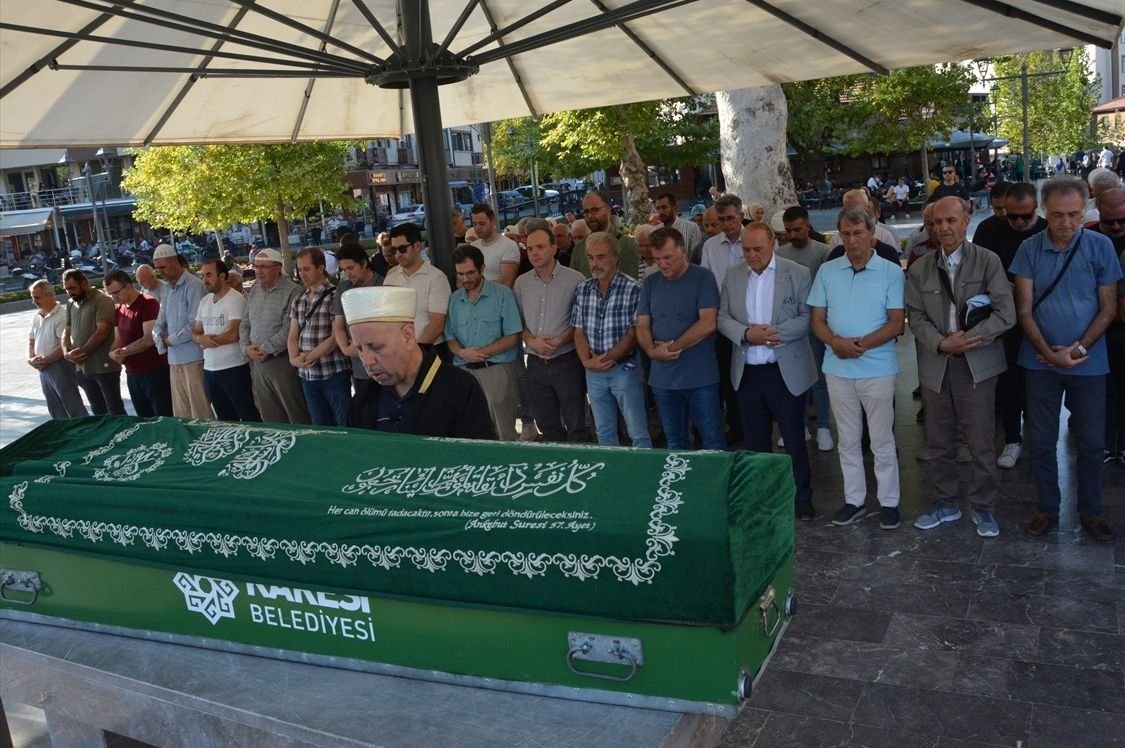
After the washing, the body is wrapped in a simple white burial shroud called a kefen. The use of plain white cloth symbolizes equality before God, regardless of wealth or social status. The shrouded body is then placed in a wooden coffin. The coffin is typically covered with a green cloth, a color traditionally associated with Islam. If the deceased is recognized as a martyr, the coffin is draped with the Turkish national flag as a mark of honor and gratitude.
Announcing the Death
Traditionally, the death is announced from the minaret of the local mosque by the müezzin (caller to prayer). Along with verses from the Qur’an, the announcement includes the deceased’s name as well as the time and location of the funeral prayer. Although modern communication methods are now widely used, mosque announcements remain an important tradition in many towns and villages.
The Funeral Prayer
The coffin is carried on the shoulders of relatives, friends, and members of the community to the mosque. It is placed on a raised platform in the mosque courtyard before the funeral prayer.
As the funeral procession moves through the streets, people traditionally stand in silence as a gesture of respect. It is considered improper to walk ahead of the funeral procession, emphasizing that everyone ultimately shares the same human destiny.
Following the regular congregational prayer, worshippers gather outside for the funeral prayer (Salat al-Janazah), led by the imam. Unlike regular daily prayers, this prayer is performed while standing and includes supplications asking God to forgive the deceased and grant them mercy.
Traditionally, only men participate in the funeral prayer at the mosque in many parts of Turkey, although practices may vary today depending on local customs and individual communities. Women commonly attend the burial itself and offer condolences to the family.
At the conclusion of the funeral prayer, the imam addresses the congregation and asks whether they knew the deceased to be a good person. The customary response is always affirmative, with expressions such as:
- “He was a good person.”
- “May God have mercy on his soul.”
- “May God forgive him.”
- “May he rest in peace.”
These responses reflect the Islamic principle of speaking kindly of the deceased and praying for God’s mercy.
Burial
The deceased is then taken to the cemetery, where the body is carefully lowered into the grave, usually positioned on its right side facing Mecca. Family members and close friends often participate by placing handfuls of earth into the grave before it is completely filled.
After the burial, prayers from the Qur’an are recited, and mourners offer condolences to the family. In many regions of Turkey, relatives continue receiving visitors for several days following the funeral, while prayers are often held on the third, seventh, fortieth, and fifty-second days after death, depending on local traditions.
Cultural Traditions
Beyond the religious rituals, Turkish funeral customs emphasize solidarity, compassion, and community support. Neighbors, relatives, and friends frequently prepare meals for the grieving family, assist with funeral arrangements, and offer emotional support during the mourning period.
Hospitality remains an important aspect of mourning, and visitors often gather to recite prayers, share memories of the deceased, and express sympathy. These customs reinforce strong family ties and the communal values that have characterized Anatolian society for centuries.
Today, while funeral practices may vary slightly between urban and rural areas or among different cultural communities, the core principles of dignity, respect, simplicity, and faith remain central to death and burial traditions throughout Turkey.
Leave a Reply
You must be logged in to post a comment.