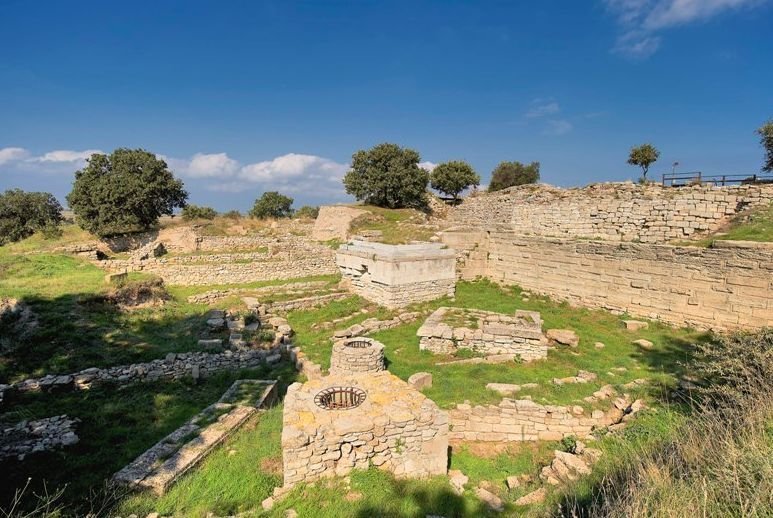
Category: Archaeology

  • Ancient City of Kyzikos (Cyzicus), Balikesir, Turkey

    The Ancient City of Kyzikos, also known as Cyzicus, is one of northwestern Turkey’s most fascinating yet underrated archaeological treasures. Located near the village of Belkıs, approximately 10 kilometers west of Bandırma in Balıkesir Province, the city occupies the narrow isthmus connecting the beautiful Kapıdağ Peninsula to mainland Anatolia.

    Founded more than 2,500 years ago, Kyzikos flourished as one of the greatest commercial ports of the ancient Mediterranean. Its strategic location on the Sea of Marmara made it an important crossroads between Europe and Asia, attracting traders, emperors, philosophers, and travelers from across the ancient world.

    Today, visitors can wander among impressive ruins including the monumental Temple of Hadrian, ancient theatres, aqueducts, city walls, and Roman roads while enjoying spectacular views over the Marmara coastline. Combined with the nearby Kuş Cenneti National Park (Bird Paradise National Park), Kyzikos offers an unforgettable blend of archaeology, nature, and history.


    History

    Kyzikos was established around the 8th century BC by Greek settlers from Miletus. Thanks to its excellent natural harbors, the city quickly became one of the wealthiest trading centers in the ancient world.

    Throughout its history, Kyzikos came under the rule of the Persians, Alexander the Great, the Kingdom of Pergamon, and eventually the Roman Empire. During Roman times, it reached its golden age, rivaling cities such as Ephesus and Pergamon in wealth and prestige.

    The city was famous for minting its own highly valued gold coins, which circulated throughout the Mediterranean.

    Several devastating earthquakes between the 6th and 11th centuries AD severely damaged Kyzikos. As trade routes shifted and its harbor gradually silted up, the once-prosperous metropolis slowly declined. Stones from many of its monuments were later reused in nearby settlements and even in the construction of buildings in Constantinople.

    Today, archaeological excavations continue to reveal new discoveries that shed light on this remarkable ancient civilization.


    Geography

    Kyzikos is situated on the southern coast of the Sea of Marmara, at the entrance to the Kapıdağ Peninsula.

    The surrounding landscape combines fertile plains, olive groves, vineyards, forests, and coastal scenery, making the area attractive for both cultural tourism and outdoor recreation.

    Nearby Lake Manyas, home to the famous Kuş Cenneti National Park, provides one of Europe’s richest wetland ecosystems.


    Top Attractions

    Temple of Hadrian

    The city’s most famous monument is the enormous Temple of Hadrian, one of the largest Roman temples ever constructed in Anatolia.

    Originally measuring approximately 115 meters long and 60 meters wide, the temple featured gigantic Corinthian columns rising over 20 meters high. Even today, visitors can admire impressive standing columns and massive architectural blocks that hint at its former grandeur.


    Ancient Amphitheatre

    The Roman theatre once accommodated thousands of spectators for dramatic performances, music festivals, and public ceremonies.

    Although partially ruined, the seating terraces still reveal the impressive engineering skills of Roman architects.


    Roman Aqueducts

    The remains of the aqueduct system demonstrate the sophisticated water engineering that supplied fresh water to fountains, baths, and homes throughout the city.


    City Walls

    Sections of Kyzikos’ defensive walls remain visible, illustrating how the city protected itself from naval attacks and invading armies.


    Ancient Harbor

    Although largely silted up today, the harbor once welcomed merchant ships from every corner of the Mediterranean, making Kyzikos one of antiquity’s busiest commercial ports.


    Archaeological Excavation Areas

    Ongoing excavations continue to uncover temples, public buildings, mosaics, sculptures, inscriptions, and residential neighborhoods.

    Visitors often have the opportunity to observe archaeologists at work during excavation seasons.


    Kuş Cenneti National Park (Bird Paradise)

    Only a short drive from Kyzikos lies Kuş Cenneti National Park, located beside Lake Manyas.

    This internationally important wetland is among Turkey’s finest birdwatching destinations.

    Highlights include:

    • More than 270 recorded bird species
    • Over 3 million migratory birds passing through annually
    • White pelicans
    • Dalmatian pelicans
    • Herons
    • Spoonbills
    • Cormorants
    • Flamingos (seasonally)
    • White storks
    • Numerous birds of prey

    Observation towers and walking trails allow visitors to enjoy exceptional wildlife photography.

    The best months for birdwatching are April, May, September, and October during the migration seasons.


    Things to Do

    Visitors to Kyzikos can enjoy a variety of activities:

    • Explore ancient Roman and Greek ruins
    • Photograph the Temple of Hadrian
    • Walk among centuries-old archaeological remains
    • Visit the nearby Bird Paradise National Park
    • Observe migratory birds
    • Enjoy nature walks around Lake Manyas
    • Discover local villages
    • Taste regional seafood
    • Visit nearby beaches on the Kapıdağ Peninsula
    • Watch unforgettable Marmara Sea sunsets

    Excursions and Nearby Attractions

    Kyzikos makes an excellent base for exploring northwestern Turkey.

    Popular day trips include:

    Bandırma

    A lively coastal city offering ferry connections to Istanbul, museums, shopping, restaurants, and a scenic waterfront promenade.

    Kapıdağ Peninsula

    Known for its secluded beaches, fishing villages, pine forests, hiking trails, and crystal-clear waters.

    Erdek

    One of Turkey’s oldest seaside resorts, famous for sandy beaches and summer holidays.

    Manyas Lake

    Perfect for nature lovers, birdwatchers, and photographers.

    Daskyleion Ancient City

    Located near Lake Manyas, this ancient Persian administrative center contains fascinating archaeological remains.


    Food and Drink

    Balıkesir Province is renowned for its rich culinary traditions.

    Local specialties include:

    • Fresh Marmara Sea fish
    • Grilled sea bass
    • Sardines
    • Octopus
    • Olive oil dishes
    • Balıkesir lamb
    • Keşkek
    • Cheese varieties
    • Homemade village bread
    • Honey from Kapıdağ Peninsula
    • Seasonal olives
    • Traditional Turkish desserts

    Many restaurants in Bandırma and Erdek specialize in fresh seafood overlooking the sea.


    Accommodation

    Accommodation options are available mainly in nearby Bandırma and Erdek.

    Choices include:

    • Luxury hotels
    • Boutique hotels
    • Beach resorts
    • Family pensions
    • Holiday apartments
    • Business hotels
    • Guesthouses

    Many visitors combine their stay with excursions to Kapıdağ Peninsula and Bird Paradise National Park.


    Climate

    Kyzikos enjoys a transitional climate between the Mediterranean and Marmara regions.

    Spring (March–May)

    Ideal weather for sightseeing and birdwatching.

    Summer (June–September)

    Warm and sunny with temperatures between 28°C and 34°C.

    Autumn (September–November)

    Comfortable temperatures and excellent photography conditions.

    Winter (December–February)

    Cool and occasionally rainy, with relatively mild coastal temperatures.


    Getting There

    By Car

    Kyzikos lies approximately:

    • 10 km from Bandırma
    • 115 km from Balıkesir
    • 160 km from Bursa
    • 250 km from Istanbul (via ferry or highway)

    By Ferry

    Regular ferries connect Istanbul with Bandırma, making Kyzikos easily accessible from Turkey’s largest city.

    By Bus

    Frequent long-distance buses operate to Bandırma from Istanbul, Bursa, İzmir, Ankara, and many other Turkish cities.

    By Air

    The nearest airports include:

    • Balıkesir Koca Seyit Airport
    • Bursa Yenişehir Airport
    • Istanbul Airport
    • Sabiha Gökçen International Airport

    Rental cars are available for the onward journey.


    Best Time to Visit

    The ideal months are:

    • April
    • May
    • June
    • September
    • October

    These months offer pleasant temperatures, vibrant landscapes, excellent archaeological exploration, and spectacular bird migration.


    Travel Tips

    • Wear comfortable walking shoes, as archaeological sites cover a large area.
    • Bring sun protection during summer.
    • Carry drinking water when exploring the ruins.
    • A camera with a telephoto lens is recommended for bird photography.
    • Combine Kyzikos with visits to Erdek, Kapıdağ Peninsula, and Lake Manyas for a full-day or weekend itinerary.
    • Early morning and late afternoon provide the best lighting for photography.

    Why Visit Kyzikos?

    Although less famous than Ephesus or Troy, Ancient Kyzikos offers an authentic archaeological experience without large tourist crowds. Its monumental Roman ruins, fascinating history, scenic Marmara coastline, and proximity to one of Turkey’s most important bird sanctuaries make it one of the hidden gems of Balıkesir Province. Whether you are passionate about ancient civilizations, wildlife, photography, or cultural exploration, Kyzikos promises a memorable journey into Turkey’s rich historical heritage.

  • The Acropolis of Assos: A Timeless Ancient City Overlooking the Aegean

    The Acropolis of Assos, located in the historic village of Behramkale on the Aegean coast of Turkey, is one of the best-preserved and most extensively researched ancient sites of Asia Minor. Rising approximately 238 meters above sea level, the acropolis offers breathtaking views across the Gulf of Edremit, the Aegean Sea, and the distant shores of the Greek island of Lesbos.

    Dominating the summit of the ancient city is the magnificent Temple of Athena, built during the 6th century BC. This remarkable Doric-style temple was constructed from local andesite stone and once served as a powerful symbol of the city’s religious and cultural importance. Today, ongoing restoration work continues to preserve the remains of this exceptional monument, allowing visitors to experience the grandeur of one of the most impressive ancient sanctuaries of the Aegean world.

    The Temple of Athena: Guardian of the Biga Peninsula

    Standing at the highest point of the acropolis, the Temple of Athena commands a spectacular position overlooking the Biga Peninsula and the Edremit Gulf. The location was carefully chosen by ancient builders, combining spiritual significance with strategic advantages.

    Visitors who arrive at sunset can witness the ruins glowing beneath the changing colors of the sky, while early morning visitors are rewarded with the peaceful sight of dawn spreading across the Aegean landscape. The panoramic view from the temple platform explains why this extraordinary location was considered sacred thousands of years ago.

    Ancient Structures of Assos

    The ancient city of Assos developed along terraces descending from the acropolis toward the sea. Among the most important remains are:

    • The Agora – The commercial and social heart of ancient Assos, where citizens gathered for trade, politics, and public events.
    • The Gymnasium – A center for education, athletics, and philosophical discussion.
    • The Theatre – Built on the hillside, this ancient theatre offered impressive views toward the sea while hosting performances and public gatherings.
    • The City Walls – Massive fortifications surrounding the settlement, demonstrating the city’s strategic importance.

    Together, these remains provide visitors with a fascinating glimpse into daily life in an ancient Greek city.

    Ottoman Heritage of Behramkale

    From the northern side of the acropolis, visitors can admire several important Ottoman monuments built during the 14th century under Ottoman Sultan Murad I. These include a historic mosque, a stone bridge, and a fortress that reflect the transformation of the area from an ancient Greek settlement into an Ottoman-era village.

    The modern village of Behramkale preserves much of its traditional character, with stone houses, narrow streets, and a peaceful atmosphere that blends ancient history with rural Aegean life.

    The Ancient Harbor of Assos

    Below the acropolis lies the charming ancient harbor of Assos, once a busy maritime center connecting the city with other ports throughout the Aegean and Mediterranean worlds. Today, the small harbor area is one of the most picturesque spots on the Turkish Aegean coast, featuring traditional stone buildings, restaurants, and a relaxed seaside atmosphere.

    The harbor is an ideal place to enjoy fresh seafood, watch fishing boats, and experience the unique combination of history and natural beauty that defines Assos.

    Assos: A Haven for Artists and Travelers

    Over the years, Assos has become known as a favorite destination for artists, writers, and travelers seeking inspiration. Its peaceful environment, spectacular scenery, and bohemian atmosphere have transformed the village into one of the most charming cultural destinations in western Turkey.

    Unlike many crowded coastal resorts, Assos maintains a quiet and authentic character. Visitors can explore ancient ruins in the morning, swim in crystal-clear Aegean waters during the afternoon, and enjoy a peaceful evening surrounded by history and nature.

    Chryse and the Temple of Apollo Smintheus

    Approximately 25 kilometers west of Behramkale, near the village of Gülpınar, lies another important ancient site: Chryse. The city is famous for the Temple of Apollo Smintheus, built in the 2nd century BC.

    Dedicated to Apollo Smintheus, a local form of the god Apollo associated with protection from disease and agriculture, the temple is notable for its impressive architectural design and detailed reliefs depicting scenes from the Trojan War.

    The site provides an excellent addition to an Assos visit, allowing travelers to explore another remarkable example of ancient Anatolian civilization.

    Visiting Assos Today

    The Acropolis of Assos is one of Turkey’s most rewarding historical destinations, combining archaeological treasures, dramatic landscapes, and authentic village life. Whether exploring the ancient Temple of Athena, walking through Ottoman streets, relaxing at the old harbor, or discovering nearby ruins, visitors experience a unique journey through thousands of years of history.

    For travelers interested in archaeology, photography, culture, and peaceful Aegean escapes, Assos remains one of the most unforgettable destinations on Turkey’s western coast.

  • Ancient Troy (Truva): The Legendary City of the Trojan War

    Ancient Troy (Truva): The Legendary City of the Trojan War

    Few archaeological sites have captured the world’s imagination as profoundly as Ancient Troy. Immortalized in Homer’s Iliad and Odyssey, Troy is where history, archaeology, and mythology merge into one of humanity’s greatest stories. Today, the ancient city stands as one of Turkey’s most significant cultural treasures and is recognized as a UNESCO World Heritage Site, attracting hundreds of thousands of visitors each year.

    Located near the village of Tevfikiye in Çanakkale Province, northwestern Turkey, the archaeological site occupies the mound of Hisarlık, overlooking the fertile plain of the Scamander (Karamenderes) River, close to the entrance of the Dardanelles Strait where Europe and Asia nearly meet.

    Whether you visit because of the legendary Trojan Horse, Homer’s epic poems, or the remarkable archaeological discoveries, Troy offers an unforgettable journey through more than 4,000 years of civilization.


    Troy: Between Myth and History

    The story of Troy became famous through the epic poems attributed to the ancient Greek poet Homer, who described the legendary Trojan War, fought between the Greeks and the Trojans over the beautiful Helen of Sparta.

    According to legend, Prince Paris of Troy abducted Helen, wife of the Spartan king Menelaus, provoking a ten-year war. Unable to conquer the city by force, the Greeks devised the famous Trojan Horse, a gigantic wooden horse hiding Greek soldiers inside. Once brought into the city as a supposed peace offering, the hidden warriors emerged during the night, opened Troy’s gates, and allowed the Greek army to capture the city.

    Although many elements remain legendary, archaeological discoveries suggest that Troy was indeed a wealthy and strategically important city that experienced several destructions, one of which may have inspired Homer’s epic.


    Discovery of Ancient Troy

    For centuries, many scholars believed Troy existed only in myth. That changed in the 19th century when German businessman and amateur archaeologist Heinrich Schliemann began excavating the mound of Hisarlık in 1871, convinced that Homer’s descriptions reflected a real place.

    Schliemann uncovered remarkable remains and discovered what he called “Priam’s Treasure.” Although later research showed that the treasure actually belonged to a much earlier period than the Trojan War, his excavations proved that numerous ancient cities had existed on the same site.

    Modern archaeology later revealed that Schliemann’s methods were often destructive, as he dug through later layers to reach what he believed was Homer’s Troy. Subsequent excavations led by Wilhelm Dörpfeld, Carl W. Blegen, and more recently Manfred Korfmann greatly improved our understanding of the site.

    Today archaeologists recognize nine major cities (Troy I–IX), divided into more than 40 archaeological layers, representing nearly four millennia of continuous occupation.


    UNESCO World Heritage Site

    Ancient Troy was inscribed on the UNESCO World Heritage List in 1998 because of its exceptional archaeological importance and its enormous influence on literature, art, and Western civilization.

    The site demonstrates continuous human settlement from approximately 3000 BC until the Byzantine period, making it one of the longest-inhabited archaeological sites in the eastern Mediterranean.


    The Nine Cities of Troy

    Troy I (c. 3000–2550 BC)

    The earliest Bronze Age settlement occupied a relatively small fortified hilltop. Houses were constructed using sun-dried mud bricks on stone foundations. Despite its modest size, impressive defensive walls suggest that the settlement already held regional importance.


    Troy II (c. 2550–2300 BC)

    Troy II expanded considerably and became a prosperous commercial center. Carefully planned streets, large megaron-style houses, and impressive fortifications characterized this phase.

    Schliemann mistakenly believed this was the Troy of King Priam and discovered the famous “Priam’s Treasure” here. Modern dating, however, shows that Troy II existed nearly one thousand years before the legendary Trojan War.

    The city was eventually destroyed by a devastating fire.


    Troy III, IV and V (2300–1750 BC)

    Following the destruction of Troy II, several successive settlements arose.

    During these periods:

    • Houses became larger and more sophisticated.
    • Stone construction techniques improved.
    • Residential neighborhoods expanded.
    • Defensive walls were repeatedly rebuilt and strengthened.

    These centuries reflect gradual cultural development rather than dramatic historical events.


    Troy VI (c. 1750–1300 BC)

    Many archaeologists consider Troy VI to represent the city’s greatest architectural achievement.

    The city featured:

    • Massive limestone defensive walls
    • Monumental gates
    • Well-planned streets
    • Multi-room stone houses
    • Sophisticated drainage systems

    Its imposing fortifications suggest that Troy had become a wealthy and powerful regional kingdom controlling important trade routes through the Dardanelles.

    Around 1300 BC, much of the city appears to have been destroyed, possibly by a major earthquake.


    Troy VIIa (c. 1300–1180 BC)

    Built directly upon the ruins of Troy VI, this settlement is considered by many archaeologists—including Carl Blegen—to be the strongest candidate for the Troy described in Homer’s Iliad.

    Evidence includes:

    • Houses crowded closely together.
    • Large storage jars (pithoi) buried beneath floors for food supplies.
    • Signs of hurried rebuilding.
    • Burn layers and evidence of violent destruction.

    These findings suggest a city under siege, matching aspects of the legendary Trojan War.


    Troy VIIb (1180–950 BC)

    New settlers introduced different architectural styles after Troy VIIa’s destruction. Buildings became simpler, and cultural influences from southeastern Europe became more apparent.

    Eventually this settlement also declined following another destructive fire.


    Troy VIII (700–85 BC)

    Although often overlooked, Troy flourished again during the Greek period.

    The city became an important religious center dedicated to Athena, with pilgrims visiting the sanctuary from across the Greek world.

    Alexander the Great reportedly visited Troy in 334 BC before launching his campaign against Persia, paying homage at the supposed tomb of Achilles.


    Troy IX (85 BC – AD 500)

    Under Roman rule, Troy—known as Ilion—experienced its final great period of prosperity.

    The Romans believed they descended from the Trojan hero Aeneas, making Troy an important symbolic city throughout the Roman Empire.

    Major public buildings included:

    • The Temple of Athena
    • A large Roman theatre
    • The Bouleuterion (Council House)
    • Public baths
    • An odeon
    • Monumental gateways
    • Expanded defensive walls

    The city remained inhabited well into the Byzantine era before gradually being abandoned.


    What to See at Ancient Troy

    Although much of Troy consists of archaeological foundations, visitors can still appreciate the scale and significance of this extraordinary city.

    Highlights include:

    • The famous wooden Trojan Horse replica near the entrance.
    • The mighty defensive walls of Troy VI.
    • The East Gate and South Gate.
    • Ancient city walls spanning several periods.
    • The Temple of Athena.
    • Roman theatre remains.
    • The Bouleuterion.
    • Excavated residential quarters.
    • Ancient stone ramps and gateways.
    • Information panels explaining each archaeological layer.

    Walking through the site allows visitors to literally move through over four thousand years of history.


    Troy Museum

    Just a short distance from the archaeological site is the award-winning Troy Museum, one of Turkey’s finest archaeological museums.

    Its modern exhibitions display:

    • Gold jewelry
    • Pottery
    • Marble sculptures
    • Weapons
    • Coins
    • Ceramics
    • Interactive digital reconstructions
    • Finds from Troy and the surrounding Troad region

    The museum provides essential context before or after exploring the ruins and greatly enhances the visitor experience.


    The Legendary Trojan Horse

    Although no archaeological evidence confirms the existence of the Trojan Horse, it remains one of the most recognizable symbols in world literature.

    Visitors will find a large wooden reconstruction standing near the entrance to the archaeological site. Another famous wooden horse, built for the 2004 Hollywood film Troy, is displayed along the Çanakkale waterfront.

    Together they celebrate one of history’s most enduring legends.


    Visiting Ancient Troy

    The archaeological site lies approximately:

    • 30 km southwest of Çanakkale
    • Around 5 hours by road from Istanbul
    • Easily accessible by car or organized tours

    Most visitors combine Troy with nearby attractions such as Gallipoli, Assos, Bozcaada Island, or the city of Çanakkale.

    Allow at least 2–3 hours to explore the ruins and another 1–2 hours for the Troy Museum.


    Why Visit Ancient Troy?

    Ancient Troy is far more than the setting of an epic poem. It represents thousands of years of human civilization, trade, warfare, architecture, and cultural exchange. Every layer tells the story of a different era, from the Bronze Age to the Roman Empire.

    Whether you are fascinated by archaeology, Greek mythology, ancient history, or simply wish to stand where one of the world’s greatest legends was born, Troy offers an unforgettable experience. Walking among its ancient walls, visitors discover not only the remains of a remarkable city but also the origins of stories that have inspired humanity for nearly three thousand years.

  • Evkaya, Rock tomb-houses in the village of Kasaba, Kastamonu

    While Kastamonu is renowned for its well-preserved Ottoman heritage and magnificent natural landscapes, it also boasts remarkable archaeological and architectural treasures that span more than 2,500 years. Among its lesser-known attractions are the Evkaya Rock Tombs and the Mahmut Bey Mosque in the village of Kasaba, two fascinating sites that reflect the rich cultural heritage of northern Anatolia.

    Together, these monuments offer visitors a unique journey from the ancient civilizations of the Iron Age to the artistic achievements of the Anatolian Beylik period.

    Evkaya Rock Tombs

    Located just a few kilometers from the center of Kastamonu, the Evkaya Rock Tombs are among the city’s oldest surviving monuments. Carved directly into a steep rocky cliff overlooking the surrounding valley, these impressive tombs are believed to date back to the 6th century BC, during the period when the region was influenced by the Paphlagonian Kingdom and later the Persian Achaemenid Empire.

    The tombs were cut into solid limestone and served as burial chambers for members of the local aristocracy or ruling elite. Their elevated position symbolized both prestige and protection, a common characteristic of ancient Anatolian funerary architecture.

    Although weathering has softened many of the original details, visitors can still observe the carefully carved entrances, burial chambers, and traces of ancient craftsmanship. The panoramic views over Kastamonu and the surrounding countryside make Evkaya an excellent destination for photography as well as history enthusiasts.

    Today, the Evkaya Rock Tombs remain one of Kastamonu’s most important archaeological sites, offering a fascinating glimpse into the region’s pre-Classical civilizations.

    Visiting Evkaya and Kasaba

    Both attractions can easily be visited on a half-day excursion from Kastamonu city.

    Distance from Kastamonu city center:

    • Evkaya Rock Tombs: approximately 2–3 km
    • Kasaba Mahmut Bey Mosque: approximately 18 km

    Combining the two sites offers visitors an enriching experience that spans over two thousand years of Anatolian history—from the mysterious rock-cut tombs of ancient Paphlagonia to one of the finest masterpieces of medieval Turkish wooden architecture.

    Why Visit?

    The Evkaya Rock Tombs and Mahmut Bey Mosque are among Kastamonu’s most rewarding hidden gems. Together they showcase the remarkable diversity of civilizations that have flourished in this region, from ancient Anatolian kingdoms to the Turkish principalities of the Middle Ages.

    Whether you are interested in archaeology, architecture, photography, or cultural heritage, these two remarkable landmarks provide an unforgettable glimpse into the rich historical legacy of Kastamonu and northern Turkey.

  • Ancient City of Loryma (Bozukkale), Mugla, Turkey

    Hidden at the southern tip of the spectacular Bozburun Peninsula, the Ancient City of Loryma is one of the most secluded and fascinating archaeological sites along Turkey’s Aegean coast. Surrounded by crystal-clear waters, rugged mountains, and untouched coves, Loryma combines breathtaking natural beauty with thousands of years of maritime history. Today, the site is better known as Bozukkale (“Ruined Castle”), named after its impressive ancient fortress that still dominates the entrance to the sheltered harbor.

    Accessible primarily by boat, Loryma is a favorite destination for Blue Cruise yachts, sailing enthusiasts, history lovers, and travelers seeking one of the hidden gems of the Turkish Riviera. Its peaceful setting, dramatic ruins, and strategic coastal location make it an unforgettable stop on any voyage through the Gulf of Hisarönü and the Bozburun Peninsula.

    Loryma was an important ancient harbor city in the historical region of Caria. Thanks to its naturally protected bay, it became a strategic naval base for several civilizations, including the Carians, Persians, Greeks, Romans, and Byzantines.

    Although only fragments of the ancient settlement survive today, the remarkably well-preserved fortress walls overlooking the harbor remain among the finest examples of ancient military architecture on Turkey’s southwest coast.

    Visitors are rewarded with spectacular views across the Aegean Sea, peaceful anchorages, and an atmosphere that has changed little over the centuries.

    History of Loryma

    The history of Loryma dates back to antiquity when it served as one of the most important defensive harbors along the Carian coastline. Its strategic position allowed ships to control maritime routes connecting the Aegean and eastern Mediterranean.

    One of the city’s most significant historical moments occurred during the Peloponnesian War in the late 5th century BC. According to the renowned archaeologist and historian Professor George E. Bean, the Athenian fleet assembled in the sheltered harbor of Loryma around 400 BC before undertaking military operations in the region.

    During the Hellenistic and Roman periods, Loryma continued to function as a protected harbor, while under Byzantine rule it became an important naval station and military arsenal.

    The Byzantine Emperor Constantine VII Porphyrogenitus referred to the harbor as an arsenal in his writings, and for many centuries the bay was known locally as Opsolika (Arsenal Bay), reflecting its long-standing military importance.

    The Fortress of Bozukkale

    The most striking monument at Loryma is the magnificent fortress overlooking the narrow entrance to the bay.

    Although parts of the castle were rebuilt during different historical periods, much of its construction dates to the Hellenistic era. Massive defensive walls, imposing towers, and carefully cut stone blocks still stand proudly above the harbor, demonstrating the military engineering skills of the ancient world.

    The fortress was strategically designed to monitor and defend ships entering the protected anchorage, making it one of the strongest coastal fortifications in ancient Caria.

    Walking among the castle walls provides visitors with panoramic views of the turquoise sea, nearby islands, and the rugged Bozburun Peninsula.

    Archaeological Remains

    While the fortress is the principal attraction, visitors can also discover scattered remains of the ancient settlement, including:

    • Sections of the original city walls.
    • Defensive towers.
    • Stone foundations of ancient buildings.
    • Rock-cut structures.
    • Ancient pathways leading toward the harbor.
    • Fragments of fortification walls surrounding the settlement.

    Although relatively little of the city remains above ground, the surrounding landscape preserves the atmosphere of this once-important naval outpost.

    Natural Beauty

    One of Loryma’s greatest attractions is its exceptional natural environment.

    The bay is surrounded by pine-covered hills, rocky cliffs, and crystal-clear waters that shimmer in shades of turquoise and deep blue. The untouched coastline is dotted with small islands, hidden coves, and quiet beaches that are accessible only by sea.

    The calm waters provide excellent conditions for swimming, snorkeling, paddleboarding, kayaking, and simply relaxing aboard a yacht.

    Because of its sheltered location, Bozukkale Bay has long served as a favorite overnight anchorage for Blue Cruise gulets and private sailing boats.

    Blue Cruise Destination

    Loryma is one of the classic stops on Turkey’s famous Blue Cruise itineraries departing from Marmaris, Bozburun, Datça, and Göcek.

    Most yacht cruises include time for:

    • Exploring the ancient fortress.
    • Swimming in the protected bay.
    • Snorkeling in crystal-clear waters.
    • Hiking to panoramic viewpoints.
    • Enjoying dinner aboard traditional wooden gulets.
    • Watching spectacular sunsets over the Aegean Sea.

    The peaceful atmosphere makes Bozukkale one of the most memorable overnight anchorages along the Turkish coast.

    Things to Do

    Visitors can enjoy a variety of activities during their visit to Loryma, including:

    • Explore the impressive Hellenistic fortress.
    • Walk along the ancient defensive walls.
    • Discover the archaeological remains of the ancient city.
    • Swim in the calm waters of Bozukkale Bay.
    • Snorkel among rocky coves rich in marine life.
    • Photograph the dramatic coastal scenery.
    • Enjoy hiking through the surrounding hills.
    • Visit as part of a Blue Cruise itinerary.
    • Relax aboard a yacht while surrounded by untouched nature.

    Nearby Attractions

    Loryma’s location on the Bozburun Peninsula makes it easy to combine with several outstanding destinations.

    Bozburun

    A charming seaside town renowned for traditional wooden gulet construction, boutique hotels, seafood restaurants, and a relaxed atmosphere.

    Selimiye

    One of the peninsula’s most picturesque villages, Selimiye is famous for its waterfront restaurants, peaceful harbor, and crystal-clear sea.

    Söğüt Village

    A quiet coastal village offering beautiful sea views, authentic Turkish hospitality, and access to hidden coves.

    Serçe Limanı

    Known for its sheltered harbor and the discovery of a famous Byzantine shipwreck, Serçe Limanı is another popular stop for Blue Cruise yachts.

    Marmaris

    Approximately 45 kilometers away by road (or reachable by sea), Marmaris offers a lively marina, shopping, nightlife, beaches, and numerous historical attractions.

    Best Time to Visit

    The ideal time to visit Loryma is between April and October, when warm temperatures and calm seas make boat excursions especially enjoyable.

    • Spring (April–June): Pleasant weather, blooming landscapes, and fewer visitors.
    • Summer (July–September): Excellent conditions for sailing, swimming, and Blue Cruises.
    • Autumn (September–October): Warm sea temperatures, quieter anchorages, and ideal sightseeing conditions.

    Winter visits are possible but are generally limited due to less frequent boat services and changing sea conditions.

    Getting There

    Because of its remote location, Loryma is most easily reached by sea.

    Visitors commonly arrive by:

    • Blue Cruise gulets.
    • Private yachts.
    • Sailing boats.
    • Organized boat tours departing from Marmaris or Bozburun.

    Experienced hikers can also reach the site via trails across the Bozburun Peninsula, although access by land is considerably more challenging.

    Visitor Tips

    • Wear comfortable walking shoes suitable for uneven ancient stone paths.
    • Bring drinking water, sun protection, and a hat, especially during summer.
    • Visit early in the day to avoid the strongest afternoon heat.
    • Carry snorkeling equipment to explore the exceptionally clear waters.
    • Combine your visit with nearby villages such as Selimiye, Söğüt, and Bozburun for a full day of exploration.

    Why Visit Ancient Loryma?

    Ancient Loryma offers an extraordinary combination of archaeology, history, sailing, and natural beauty. Its magnificent fortress, tranquil harbor, and secluded location provide visitors with a rare opportunity to experience one of the best-preserved hidden treasures of the Bozburun Peninsula.

    Whether you arrive aboard a traditional gulet, a private yacht, or as part of a Blue Cruise, Loryma promises unforgettable scenery, fascinating history, and the timeless charm that has attracted sailors and travelers for more than two thousand years.