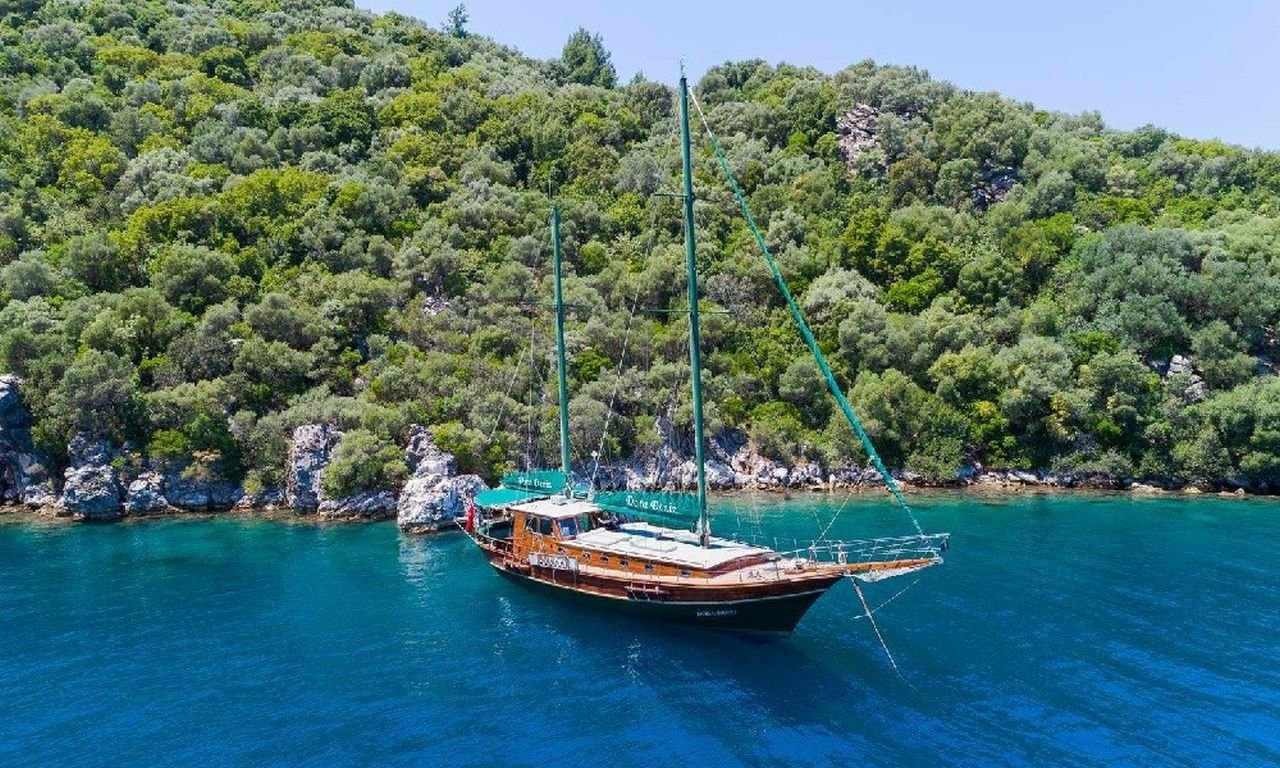
Antalya is one of Türkiye’s most remarkable historical destinations, where thousands of years of civilization meet the stunning landscapes of the Mediterranean coast. Often referred to as the Turkish Riviera, the province is renowned not only for its beautiful beaches and luxury resorts but also for its extraordinary collection of ancient cities, Roman theaters, Byzantine churches, Ottoman architecture, and archaeological museums.
The region has been home to the Lycians, Pamphylians, Pisidians, Greeks, Romans, Byzantines, Seljuks, and Ottomans, each leaving behind an impressive cultural legacy. Today, visitors can explore remarkably preserved archaeological sites, many set against breathtaking mountain and coastal scenery.
Kaleiçi (Antalya Old Town)
At the heart of modern Antalya lies Kaleiçi, the city’s beautifully preserved historic quarter. Enclosed by ancient Roman walls, its narrow cobbled streets are lined with restored Ottoman mansions, boutique hotels, cafés, and artisan shops.
Highlights include:
- Ottoman-era houses
- Ancient city walls
- Traditional courtyards
- Historic mosques
- Boutique museums
- Small harbors
- Local restaurants
Kaleiçi perfectly combines history with modern Mediterranean charm.
Hadrian’s Gate
One of Antalya’s most iconic landmarks, Hadrian’s Gate was built in 130 AD to commemorate the visit of the Roman Emperor Hadrian.
This magnificent triumphal gate features:
- Three marble arches
- Corinthian columns
- Decorative carvings
- Ancient towers
- Original Roman stone pavement
It once served as the ceremonial entrance to the ancient city of Attaleia and remains one of the finest examples of Roman architecture in Türkiye.
Yivli Minaret (Fluted Minaret)
The Yivli Minaret is one of Antalya’s best-known symbols. Constructed during the 13th century by the Seljuk Sultan Alaeddin Keykubad I, the distinctive brick minaret rises approximately 38 meters above the old city.
The adjoining mosque and complex include:
- Islamic art
- Historic tombs
- Religious schools
- Beautiful courtyards
The minaret represents one of the finest examples of early Seljuk architecture.
Hıdırlık Tower
Standing at the edge of Kaleiçi overlooking the Mediterranean Sea, Hıdırlık Tower dates to the 2nd century AD.
Historians believe it served as either:
- A Roman watchtower
- A defensive fortification
- A lighthouse
- A mausoleum
Today it offers spectacular sunset views over Antalya’s harbor.
Antalya Archaeological Museum
One of Türkiye’s most important museums, the Antalya Archaeological Museum houses thousands of artifacts recovered from ancient cities across the region.
Highlights include:
- Roman statues
- Greek sculptures
- Sarcophagi
- Mosaics
- Coins
- Byzantine artifacts
- Lycian inscriptions
- Children’s museum
The museum provides an excellent introduction to Antalya’s rich archaeological heritage.
Ancient City of Perge
Located approximately 18 kilometers east of Antalya, Perge was once the capital of ancient Pamphylia.
Founded during the Hellenistic period and flourishing under Roman rule, the city features remarkably preserved ruins including:
- Monumental Roman gates
- Colonnaded streets
- Roman baths
- Agora
- Stadium
- Theater
- Gymnasium
- Fountains
Perge is considered one of the finest archaeological sites in the Mediterranean.
Aspendos Ancient City
The ancient city of Aspendos is world-famous for its exceptionally preserved Roman theatre.
Built during the reign of Emperor Marcus Aurelius in the 2nd century AD, the theatre could accommodate approximately 15,000 spectators and is still used today for concerts and international festivals thanks to its outstanding acoustics.
Other attractions include:
- Roman aqueducts
- Basilica
- Agora
- Stadium
- Ancient bridges
Side Ancient City
Located on a picturesque peninsula east of Antalya, Side combines archaeological treasures with beautiful beaches.
Major attractions include:
- Temple of Apollo
- Roman Theatre
- Ancient harbor
- Agora
- Roman baths
- City walls
- Monumental Gate
- Nymphaeum
The Temple of Apollo overlooking the Mediterranean is among Türkiye’s most photographed historical landmarks.
Termessos Ancient City
Hidden high in the Taurus Mountains within Güllük Mountain National Park, Termessos is one of Türkiye’s most spectacular archaeological sites.
Unlike many ancient cities, Termessos was never conquered by Alexander the Great due to its naturally fortified mountain location.
Visitors can explore:
- Mountain theatre
- Necropolis
- Agora
- Temples
- Gymnasium
- Ancient cisterns
- Defensive walls
The dramatic scenery makes Termessos a favorite among hikers and photographers.
Phaselis Ancient City
Situated between Kemer and Tekirova, Phaselis was an important Lycian and Roman port city.
The site uniquely combines archaeology with nature.
Visitors enjoy:
- Three ancient harbors
- Roman aqueduct
- Theatre
- Agora
- Baths
- Forest walking paths
- Beaches
Swimming among ancient ruins makes Phaselis one of Antalya’s most memorable destinations.
Olympos Ancient City
Nestled within a lush valley near Çıralı, Olympos was one of the principal cities of the Lycian League.
Its atmospheric ruins include:
- Roman baths
- Necropolis
- Theatre
- Byzantine churches
- Sarcophagi
- Ancient harbor remains
The nearby beach is also an important nesting site for endangered loggerhead sea turtles.
Myra Ancient City
Located near Demre, Myra was one of the greatest cities of ancient Lycia.
Its most famous features include:
- Rock-cut Lycian tombs
- Roman theatre
- Ancient acropolis
- Agora
- Byzantine remains
The elaborate cliffside tombs are among the finest examples of Lycian funerary architecture.
Church of St. Nicholas (Demre)
Demre is home to the Church of St. Nicholas, dedicated to the 4th-century bishop who inspired the legend of Santa Claus.
The beautifully preserved Byzantine church features:
- Frescoes
- Marble floors
- Sarcophagus
- Religious mosaics
- Pilgrimage history
It attracts thousands of visitors each year.
Xanthos
Located near the western border of Antalya Province, Xanthos was the capital of ancient Lycia and is recognized as a UNESCO World Heritage Site.
Visitors can explore:
- Lycian pillar tombs
- Roman theatre
- Agora
- Acropolis
- Monumental inscriptions
- Byzantine basilicas
Xanthos played a central role in Lycian history and culture.
Letoon Sanctuary
Just a few kilometers from Xanthos lies Letoon, the principal religious sanctuary of ancient Lycia.
Dedicated to:
- Leto
- Apollo
- Artemis
The sanctuary includes:
- Ancient temples
- Sacred spring
- Roman theatre
- Inscriptions in Lycian, Greek, and Aramaic
Together with Xanthos, Letoon forms a UNESCO World Heritage Site.
Arykanda Ancient City
Built dramatically on mountain terraces near Finike, Arykanda offers spectacular views and exceptionally preserved ruins.
Highlights include:
- Roman baths
- Theatre
- Stadium
- Bouleuterion
- Agora
- Residential quarters
The hillside setting makes Arykanda one of Antalya’s most scenic archaeological sites.
Limyra Ancient City
Once an important Lycian capital, Limyra contains:
- Rock tombs
- Theatre
- Byzantine church
- Roman bridge
- Monumental gates
The site is surrounded by natural springs and fertile countryside.
Simena (Kaleköy)
Accessible mainly by boat, Simena is a charming ancient settlement overlooking the sunken city of Kekova.
Visitors can explore:
- Medieval castle
- Lycian sarcophagi
- Ancient harbor
- Coastal ruins
- Panoramic sea views
It is one of the highlights of Blue Cruise itineraries.
Kekova Sunken City
One of Türkiye’s most fascinating archaeological attractions, the Sunken City of Kekova preserves the submerged remains of an ancient Lycian settlement partially destroyed by earthquakes.
Visitors explore the site by:
- Boat tours
- Sea kayaking
- Private yacht excursions
The underwater ruins are visible through the crystal-clear Mediterranean waters.
Selge Ancient City
Located in the Taurus Mountains near Köprülü Canyon National Park, Selge was an important Pisidian city.
Its remains include:
- Theatre
- Temple ruins
- City walls
- Ancient streets
- Roman bridge
The surrounding canyon also offers excellent hiking and rafting opportunities.
Alara Han and Alara Castle
Located west of Alanya, these Seljuk monuments once protected important caravan routes.
Visitors can discover:
- Medieval caravanserai
- Mountain fortress
- Defensive towers
- Panoramic viewpoints
They provide insight into medieval trade along the Silk Road.
Alanya Castle
Perched on a rocky peninsula overlooking the Mediterranean, Alanya Castle is one of Türkiye’s best-preserved medieval fortresses.
Built largely during the Seljuk period, it includes:
- Massive defensive walls
- Red Tower (Kızıl Kule)
- Shipyard (Tersane)
- Historic mosques
- Cisterns
- Scenic viewpoints
The castle offers breathtaking views of Alanya’s coastline and harbor.
UNESCO World Heritage Sites in Antalya
Antalya Province is home to several UNESCO-recognized cultural treasures, including:
- Xanthos-Letoon – UNESCO World Heritage Site
- Aspendos – On UNESCO’s Tentative List
- Perge – On UNESCO’s Tentative List
- Termessos – Located within Güllük Mountain National Park and on UNESCO’s Tentative List
These sites reflect the province’s outstanding archaeological significance and its role in the ancient civilizations of Lycia, Pamphylia, and Pisidia.
Tips for Visiting Antalya’s Historical Sites
- Visit during spring (April–May) or autumn (September–October) for pleasant weather.
- Wear comfortable footwear, as many archaeological sites involve walking over uneven stone paths.
- Carry water, sunscreen, and a hat, especially during the summer months.
- Combine visits to historical sites with nearby beaches, national parks, and traditional villages.
- Consider renting a car or joining guided tours to explore sites spread across the province.
Antalya is far more than a beach destination—it is one of the world’s richest open-air museums. From the Roman grandeur of Aspendos and Perge to the mountain citadel of Termessos, the Lycian tombs of Myra, and the medieval fortifications of Alanya, the province offers an extraordinary journey through more than 2,500 years of history. Whether wandering the cobbled streets of Kaleiçi, discovering ancient ports along the Turquoise Coast, or exploring UNESCO-listed archaeological sites, visitors will find that Antalya’s historical treasures are among the most remarkable and rewarding cultural experiences in Türkiye.