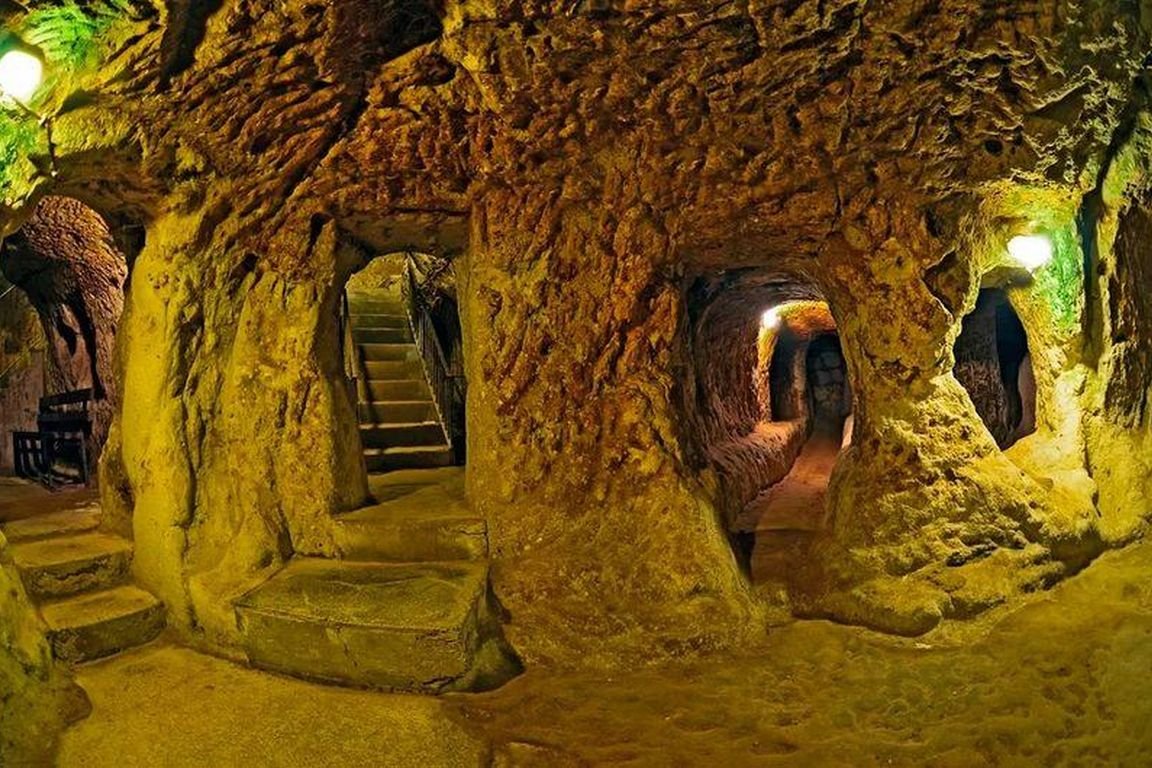
Kaymakli Underground City is one of the largest and most fascinating underground settlements in Cappadocia. Located approximately 20 km south of Nevsehir and near the town of Kaymakli, this extraordinary subterranean city extends deep beneath the volcanic landscape of central Anatolia.
Carved into soft volcanic tuff rock, Kaymakli served as a refuge for local populations during periods of invasion and religious persecution. Although eight levels have been identified, only four levels are currently open to visitors. The underground city could once accommodate thousands of people along with their livestock, food supplies, and valuables.
History
The earliest sections of Kaymaklı are believed to date back to the Hittite period, although the city was significantly expanded during the Byzantine era between the 6th and 10th centuries.
Early Christians used the underground complex as a secure refuge from Arab raids and other threats. The interconnected chambers, tunnels, storage rooms, churches, ventilation shafts, and defensive systems allowed entire communities to survive underground for extended periods.
Kaymakli is connected through a network of tunnels to other underground settlements in Cappadocia, illustrating the sophisticated defensive strategies developed by the region’s inhabitants.
What to See
Ventilation Shafts
One of the engineering marvels of Kaymaklı is its extensive ventilation system. Deep vertical shafts provided fresh air to the underground levels and also served as water wells.
Living Quarters
Visitors can explore rooms that once served as homes, kitchens, communal areas, and workshops.
Storage Rooms
Large chambers were used to store grain, wine, oil, and other provisions, enabling residents to remain underground for months if necessary.
Wine Cellars
Cappadocia has a long wine-making tradition, and Kaymakli contains several underground wine production and storage areas.
Stables
Animals were housed in designated chambers near the upper levels, reducing the need for residents to surface frequently.
Churches and Chapels
Several religious spaces reveal the importance of Christianity in Cappadocia during the Byzantine period.
Defensive Stone Doors
Massive circular stone doors could be rolled into place to seal passages against intruders. These iconic doors remain among the most impressive features of the underground city.
Things to Do
- Explore the underground tunnels and chambers.
- Learn about early Christian history in Cappadocia.
- Photograph the unique architecture and engineering.
- Join a guided archaeological tour.
- Combine your visit with other underground cities.
- Experience Cappadocia’s cultural heritage firsthand.
Nearby Attractions
Derinkuyu Underground City
The deepest underground city in Cappadocia, descending approximately 85 meters below ground.
Göreme Open Air Museum
A UNESCO World Heritage Site featuring rock-cut churches and Byzantine frescoes.
Avanos
Famous for traditional pottery workshops and its location on the Kızılırmak River.
Ürgüp
Known for cave hotels, wineries, and historic architecture.
Göreme
The tourism hub of Cappadocia and departure point for hot-air balloon flights.
Ihlara Valley
A scenic canyon featuring hiking trails and rock-cut churches.
Excursions and Tours
Cappadocia Green Tour
Typically includes:
- Kaymakli Underground City
- Ihlara Valley
- Selime Monastery
- Pigeon Valley
Underground Cities Tour
A full-day excursion visiting both Kaymakli and Derinkuyu, offering insight into Cappadocia’s remarkable subterranean civilization.
Hot-Air Balloon Experience
Many visitors combine an underground city visit with a sunrise balloon flight over Cappadocia’s fairy chimneys and valleys.
Food & Drink Nearby
After exploring underground, visitors can enjoy traditional Cappadocian cuisine in nearby towns.
Popular local specialties include:
- Testi Kebabı
- Mantı
- Gözleme
- Lamb dishes
- Local Cappadocian wines
- Turkish tea and coffee
Visitor Information
Best Time to Visit
- Spring (April–May): Mild temperatures and beautiful scenery.
- Autumn (September–October): Pleasant weather and fewer crowds.
- Summer: Busy tourist season but cool temperatures underground.
- Winter: Quiet and atmospheric, often with snow-covered landscapes above ground.
Visit Duration
Allow approximately 1–2 hours to explore the accessible sections thoroughly.
What to Bring
- Comfortable walking shoes
- Light jacket (temperatures underground remain cool)
- Camera
- Water
Accessibility
Some passages are narrow, steep, and low-ceilinged. Visitors with mobility issues or severe claustrophobia should consider this before entering.
Why Visit Kaymakli?
Kaymakli Underground City is one of Cappadocia’s most extraordinary archaeological treasures. It offers a rare opportunity to walk through a vast underground world where thousands of people once lived, worshipped, stored food, and protected themselves from danger. Combined with Cappadocia’s fairy chimneys, cave churches, and spectacular landscapes, a visit to Kaymakli provides an unforgettable journey into one of Turkey’s most remarkable historical regions.
Leave a Reply
You must be logged in to post a comment.