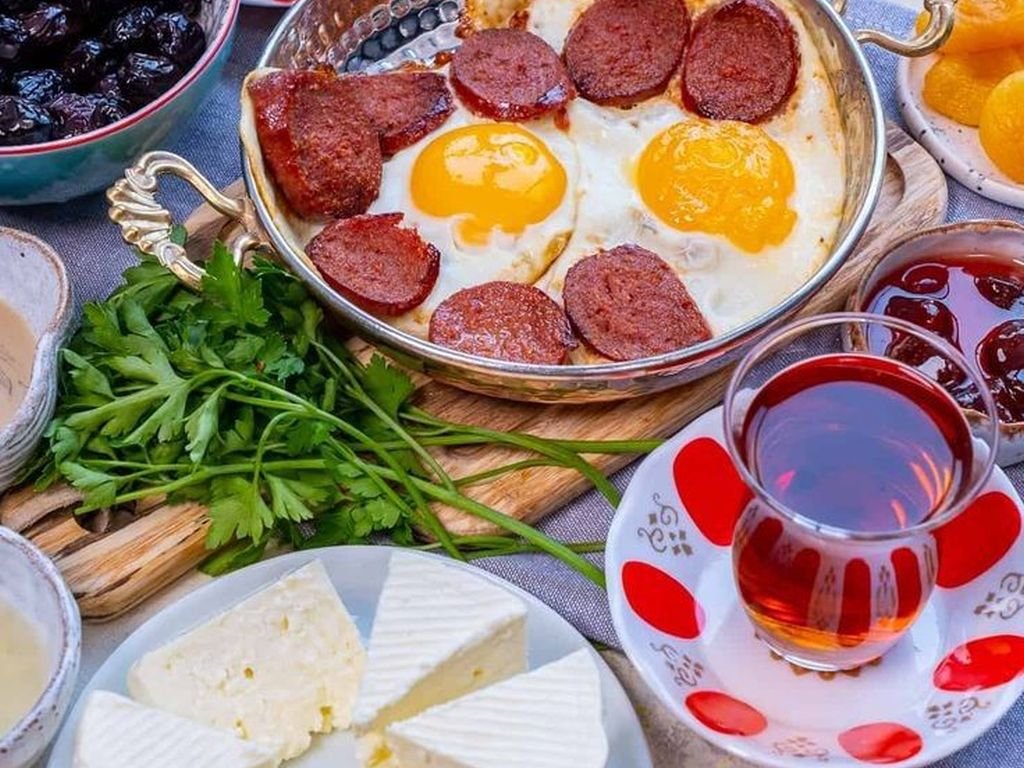
Turkish cuisine is widely regarded as one of the world’s great culinary traditions. Rich in history, shaped by geography, and refined over centuries, it offers an extraordinary variety of flavors, ingredients, and cooking techniques that continue to delight food lovers from around the globe.
Positioned at the crossroads of Europe, Asia, and the Middle East, Turkey has absorbed culinary influences from numerous civilizations while preserving a distinctive identity of its own. The result is a cuisine that is both diverse and deeply rooted in tradition, where every region contributes unique specialties and every meal reflects centuries of cultural heritage.
Whether dining in a family home, enjoying fresh seafood along the Aegean coast, sampling street food in Istanbul, or savoring authentic dishes in the villages of Anatolia, visitors quickly discover that food is much more than nourishment in Turkey—it is an essential part of everyday life, hospitality, and celebration.
A Cuisine Born from History
The foundations of Turkish cuisine reach back thousands of years to the nomadic Turkic peoples of Central Asia. Their diet relied heavily on livestock, dairy products, grains, and simple methods of cooking suited to a mobile lifestyle. Yogurt, fermented dairy products, grilled meats, and flatbreads formed the basis of everyday meals long before the Turks migrated westward.
When the Seljuk Turks settled in Anatolia during the 11th century, they encountered an astonishing abundance of new ingredients. Fertile plains, productive orchards, rich forests, and three surrounding seas introduced them to olive oil, fresh vegetables, fruits, herbs, seafood, and a wide variety of grains.
Rather than replacing their traditional cuisine, these new ingredients enriched it. Over the centuries, Central Asian cooking techniques blended seamlessly with the culinary traditions of Anatolia, the Mediterranean, the Balkans, the Caucasus, Persia, and the Middle East, creating one of the most sophisticated cuisines in the world.
The Legacy of the Ottoman Empire
No discussion of Turkish cuisine would be complete without acknowledging the profound influence of the Ottoman Empire.
For more than six centuries, the imperial kitchens of Istanbul served not only the sultans and their courts but also acted as culinary laboratories where hundreds of specialist chefs perfected recipes that would eventually spread throughout the empire.
The kitchens of Topkapı Palace employed experts devoted to specific dishes—soups, pilafs, kebabs, pastries, desserts, seafood, confectionery, breads, and beverages. Every meal prepared for the royal household demanded the finest ingredients and meticulous presentation.
As the empire expanded across southeastern Europe, North Africa, the Middle East, and the eastern Mediterranean, new ingredients and cooking techniques flowed into the imperial capital. In return, Ottoman culinary traditions spread throughout these regions, influencing countless local cuisines that still bear traces of their Turkish heritage today.
Many dishes now enjoyed across the Balkans, the Middle East, and parts of Eastern Europe share their roots with Ottoman cooking, demonstrating the lasting legacy of this remarkable culinary tradition.
The Art of Simplicity
One of the defining characteristics of Turkish cuisine is its respect for natural flavors.
Rather than masking ingredients with heavy sauces or excessive seasoning, Turkish cooks strive to enhance the natural taste of each component. Fresh vegetables retain their character, meats are seasoned with restraint, and herbs are used to complement rather than overpower a dish.
Parsley, mint, dill, thyme, oregano, cumin, sumac, and paprika are among the most commonly used herbs and spices, each carefully selected to suit particular ingredients.
Olive oil, yogurt, butter, tomatoes, onions, garlic, and lemon are essential elements of countless traditional recipes, creating dishes that are both flavorful and remarkably balanced.
This philosophy of simplicity allows the exceptional quality of Turkey’s agricultural products to shine through in every meal.
A Land of Extraordinary Abundance
Turkey’s geography plays an essential role in shaping its cuisine.
The country stretches across multiple climate zones, producing an astonishing variety of agricultural products. Fertile river valleys, high mountain pastures, Mediterranean coastlines, fertile plains, and rich forests each contribute their own distinctive ingredients.
Turkey is one of the world’s leading producers of hazelnuts, apricots, cherries, figs, olives, pistachios, grapes, tea, and many other crops. Seasonal fruits and vegetables are widely available throughout the year, while fresh seafood arrives daily from the Black Sea, the Aegean, and the Mediterranean.
This abundance allows regional cuisines to flourish, each reflecting the landscape, climate, and traditions of its people.
Regional Culinary Traditions
Every region of Turkey offers its own distinctive flavors, making culinary exploration an exciting part of any journey through the country.
Marmara Region
Home to Istanbul, the Marmara Region represents the meeting point of many culinary traditions. Here, visitors enjoy elegant Ottoman dishes, fresh seafood from the Bosphorus, delicate pastries, and some of Turkey’s finest restaurants.
The nearby city of Bolu has long been famous for producing many of the country’s most accomplished chefs, a tradition dating back to the Ottoman imperial kitchens.
Aegean Region
The Aegean coast is celebrated for its healthy Mediterranean cuisine. Olive oil dominates local cooking, while artichokes, wild herbs, fresh vegetables, seafood, and aromatic herbs create light, flavorful dishes that perfectly reflect the region’s mild climate.
Meals are often accompanied by locally produced olive oils, wines, and fresh seasonal produce.
Mediterranean Region
Along Turkey’s southern coast, citrus fruits, pomegranates, bananas, and fragrant herbs thrive in the warm climate. Fresh fish, grilled meats, colorful salads, and refreshing meze are staples of the local table.
The cuisine combines Mediterranean freshness with influences from neighboring regions, creating dishes that are both vibrant and satisfying.
The Regional Flavors of Turkey
One of the greatest pleasures of traveling through Turkey is discovering how dramatically the cuisine changes from one region to another. Geography, climate, history, and local traditions have created a remarkable culinary mosaic in which every province offers its own specialties.
Central Anatolia
The vast plains of Central Anatolia have long been Turkey’s breadbasket. Wheat has been cultivated here for thousands of years, making bread, pastries, and bulgur fundamental to the regional diet.
The historic city of Konya is especially renowned for its rich culinary heritage, which dates back to the Seljuk Empire. Traditional clay-oven (tandır) cooking remains popular, producing succulent roasted lamb and slow-cooked meats that are exceptionally tender.
Other regional favorites include flaky börek, hearty meat stews, savory pastries, and the famous etli ekmek, a thin, crisp flatbread topped with seasoned minced meat that is often compared to pizza but has a character entirely of its own.
The Black Sea Region
The lush Black Sea coast enjoys a mild, rainy climate that supports dense forests, fertile valleys, and abundant agriculture.
Tea plantations blanket the hills around Rize, producing virtually all of Turkey’s famous black tea. Hazelnut orchards dominate much of the coastline, making Turkey the world’s leading producer of hazelnuts.
Fresh fish plays a central role in local cuisine, especially hamsi (Black Sea anchovy), which is celebrated almost as a cultural icon. It is grilled, fried, baked into bread, cooked with rice, made into soups, and even incorporated into unusual regional recipes that surprise first-time visitors.
Cornbread, kale dishes, local cheeses, and rich butter are also characteristic of Black Sea cooking.
Eastern Anatolia
Eastern Anatolia is a land of rugged mountains, high plateaus, and long winters. The cuisine reflects both the challenging climate and the region’s pastoral traditions.
Livestock farming has shaped local cooking for centuries, resulting in hearty meals featuring lamb, beef, dairy products, and grains.
Rich soups, slow-cooked meat dishes, handmade dumplings, aromatic herbs, and robust cheeses are common throughout the region. Honey produced from mountain wildflowers is particularly prized, while breakfast tables often feature locally produced butter, yogurt, and village cheeses.
Warm hospitality accompanies every meal, with generous portions designed to sustain families through the harsh winters.
Southeastern Anatolia
Southeastern Turkey is considered one of the country’s great culinary capitals.
Cities such as Gaziantep, Şanlıurfa, Adana, and Mardin have developed distinctive cuisines famous for their bold flavors, expertly grilled meats, pistachios, spices, and world-renowned desserts.
The region is the birthplace of numerous varieties of kebabs, many prepared over charcoal using carefully seasoned lamb or beef. Spices such as isot pepper, sumac, cumin, and red pepper flakes add depth without overwhelming the natural flavor of the meat.
Gaziantep, internationally recognized for its culinary heritage, is particularly celebrated for producing what many consider the finest baklava in the world.
Bread – The Foundation of Every Meal
Bread occupies a special place in Turkish culture and accompanies almost every meal.
Fresh loaves are purchased daily from neighborhood bakeries, filling streets with the irresistible aroma of warm bread each morning.
The variety is remarkable. Visitors will encounter crusty village loaves, soft white bread, wholegrain varieties, sesame-covered simit, thin lavaş, balloon-like bazlama, and numerous regional flatbreads baked in traditional stone ovens.
Bread is valued so highly that wasting it is generally discouraged, reflecting a deep cultural respect for food.
Rice, Bulgur and Grains
Grains have formed the backbone of Turkish cuisine since ancient times.
Rice is commonly prepared as pilav, often cooked with butter, vermicelli, herbs, or vegetables to accompany meat and seafood dishes.
Equally important is bulgur, a nutritious whole grain that has been cultivated in Anatolia for millennia. Used in salads, soups, stuffed vegetables, meatballs, and pilafs, bulgur remains one of the healthiest and most versatile ingredients in Turkish cooking.
Many rural communities continue to prepare traditional grain-based dishes using recipes passed down through generations.
Yogurt – Turkey’s Culinary Treasure
Few ingredients are as closely associated with Turkey as yogurt.
Believed to have originated among the nomadic Turkic peoples of Central Asia, yogurt remains indispensable in Turkish kitchens today.
It is served alongside grilled meats, stirred into soups, transformed into refreshing sauces, or simply enjoyed with herbs, cucumbers, and olive oil.
One of Turkey’s most beloved drinks is ayran, a refreshing mixture of yogurt, water, and a pinch of salt that perfectly complements spicy dishes during the hot summer months.
Numerous regional specialties also combine yogurt with grains, vegetables, or herbs, demonstrating its extraordinary versatility.
The World of Kebabs
Outside Turkey, the word “kebab” often refers to a single dish. In reality, Turkish cuisine features hundreds of regional kebab variations.
Each style reflects local traditions, available ingredients, and cooking techniques.
Among the best-known are Adana Kebab, famous for its spicy minced lamb; Urfa Kebab, a milder version; İskender Kebab, served with slices of bread, tomato sauce, yogurt, and melted butter; and Cağ Kebab, slowly roasted on a horizontal spit in Eastern Anatolia.
Equally popular are skewered lamb, chicken, vegetables, liver, meatballs, and seafood grilled over charcoal.
Each region proudly claims its own unique recipes, making kebab tasting an enjoyable culinary adventure throughout the country.
The Tradition of Meze
A Turkish meal often begins not with the main course but with an impressive selection of meze.
These small appetizer dishes encourage conversation, sharing, and leisurely dining.
Typical meze include hummus, eggplant purée, stuffed vine leaves, white bean salad, spicy tomato dip (acılı ezme), yogurt with herbs, marinated seafood, roasted peppers, olives, cheeses, and numerous seasonal vegetable dishes.
Rather than being rushed, meze are intended to be enjoyed slowly among family and friends, reflecting the social nature of Turkish dining.
For many visitors, an evening spent sharing meze beside the Bosphorus or overlooking the Aegean Sea becomes one of the highlights of their journey.
Sweet Traditions – The Art of Turkish Desserts
No exploration of Turkish cuisine is complete without experiencing its extraordinary desserts. Developed over centuries in palace kitchens, family homes, and neighborhood bakeries, Turkish sweets are celebrated for their craftsmanship, rich flavors, and beautiful presentation.
The undisputed king of Turkish desserts is baklava—layers of paper-thin filo pastry filled with finely chopped pistachios, walnuts, or hazelnuts, baked until golden and finished with a delicate syrup. Although found throughout the country, the city of Gaziantep is internationally renowned for producing what many consider the finest baklava in Turkey.
Another beloved dessert is künefe, a specialty of southern Turkey made with shredded pastry, melted cheese, and fragrant syrup, served warm and topped with crushed pistachios.
Traditional pudding shops (muhallebici) offer an impressive selection of milk-based desserts, including sütlaç (rice pudding), kazandibi, tavuk göğsü, and muhallebi, each known for its smooth texture and delicate sweetness.
Other popular treats include lokum (Turkish delight), helva, candied fruits, pumpkin dessert, stuffed dried fruits, and dozens of regional pastries prepared for religious festivals and family celebrations.
Tea – The Heart of Turkish Hospitality
If one drink symbolizes everyday life in Turkey, it is undoubtedly tea.
Known locally as çay, Turkish tea is served from morning until late at night in homes, workplaces, cafés, markets, and village squares. Brewed in a traditional double teapot (çaydanlık), it is poured into elegant tulip-shaped glasses that have become an icon of Turkish culture.
Offering tea is an expression of friendship and hospitality. Visitors are frequently invited to share a glass while shopping in bazaars, visiting historic sites, or simply chatting with locals.
Whether concluding a meal or beginning a conversation, tea plays an essential role in bringing people together.
The Tradition of Turkish Coffee
Turkish coffee is far more than a beverage—it is an enduring cultural ritual.
Prepared slowly in a small copper pot known as a cezve, the finely ground coffee is served unfiltered in small cups, producing its distinctive rich aroma and velvety texture.
Traditionally accompanied by a glass of water and often a piece of Turkish delight, it is enjoyed slowly while conversation unfolds.
For centuries, Turkish coffee has been associated with hospitality, engagement ceremonies, fortune-telling, and social gatherings. Its preparation and cultural significance have earned international recognition as part of humanity’s intangible cultural heritage.
Street Food – The Flavors of Everyday Turkey
One of the greatest pleasures of traveling through Turkey is discovering its vibrant street food culture.
Bustling squares, waterfront promenades, and neighborhood markets are filled with vendors preparing fresh snacks throughout the day.
Among the most popular are simit, the sesame-covered bread ring enjoyed for breakfast; döner kebab wrapped in flatbread; lahmacun, a thin crispy flatbread topped with seasoned minced meat; pide, Turkey’s famous boat-shaped bread; and kokoreç, a favorite late-night specialty in many cities.
Coastal towns tempt visitors with grilled fish sandwiches, stuffed mussels, roasted chestnuts, boiled corn, and freshly squeezed fruit juices.
Street food offers not only affordable meals but also an authentic glimpse into everyday Turkish life.
Markets and Bazaars
Turkey’s markets are among the country’s most colorful cultural experiences.
Every town hosts weekly farmers’ markets where local producers sell seasonal fruits, vegetables, cheeses, olives, herbs, spices, honey, and freshly baked bread.
In larger cities, traditional bazaars remain vibrant centers of commerce. Istanbul’s historic Spice Bazaar overflows with fragrant herbs, dried fruits, teas, nuts, coffees, and confectionery, while countless neighborhood markets provide visitors with an opportunity to experience the lively atmosphere of daily shopping.
The sounds of bargaining, the aromas of freshly ground spices, and the colorful displays of produce create an unforgettable sensory experience.
Dining as a Social Tradition
Meals in Turkey are rarely hurried affairs.
Family members and friends often gather around a table filled with numerous dishes intended to be shared. Conversation is as important as the food itself, and guests are encouraged to help themselves generously.
Hospitality occupies a central place in Turkish culture. Visitors are commonly offered tea, coffee, sweets, or fresh fruit, and refusing hospitality repeatedly may even be considered impolite.
Traditional meals frequently conclude with seasonal fruit, Turkish coffee, or tea, allowing conversation to continue long after the plates have been cleared.
A Culinary Experience for Every Traveler
Exploring Turkey through its cuisine is one of the country’s greatest travel experiences.
Cooking classes introduce visitors to traditional recipes handed down through generations, while village breakfasts showcase homemade cheeses, olives, jams, fresh bread, eggs, honey, and local herbs.
Wine enthusiasts can discover vineyards in the Aegean and Thrace, seafood lovers can dine in charming fishing villages along the Mediterranean, and food markets offer opportunities to sample regional delicacies directly from local producers.
Every destination reveals new flavors, traditions, and stories waiting to be discovered.
Why Turkish Cuisine Is One of the World’s Great Culinary Traditions
Few national cuisines combine such remarkable history, regional diversity, agricultural abundance, and cultural continuity as Turkish cuisine.
Its foundations were laid by the nomadic peoples of Central Asia, enriched by the civilizations of Anatolia, refined in the magnificent kitchens of the Ottoman Empire, and preserved through generations of family traditions.
Today, Turkish cuisine continues to evolve while remaining true to its heritage. Its emphasis on fresh ingredients, seasonal produce, balanced flavors, generous hospitality, and communal dining creates an experience that is as meaningful as it is delicious.
Whether savoring an elegant Ottoman-inspired feast in Istanbul, enjoying freshly grilled seafood on the Aegean coast, sampling spicy kebabs in southeastern Anatolia, or sharing homemade dishes with a village family, every meal tells a story of a nation whose history has been shaped around the table.
For travelers, discovering Turkey means far more than visiting ancient monuments or beautiful landscapes—it means experiencing one of the world’s most celebrated culinary traditions, where every dish reflects centuries of culture, craftsmanship, and hospitality.
From bustling city markets to quiet mountain villages, Turkish cuisine offers an unforgettable journey through the flavors, history, and soul of an extraordinary country.
Leave a Reply
You must be logged in to post a comment.