Discover One of the Best Preserved Roman Cities in the Mediterranean
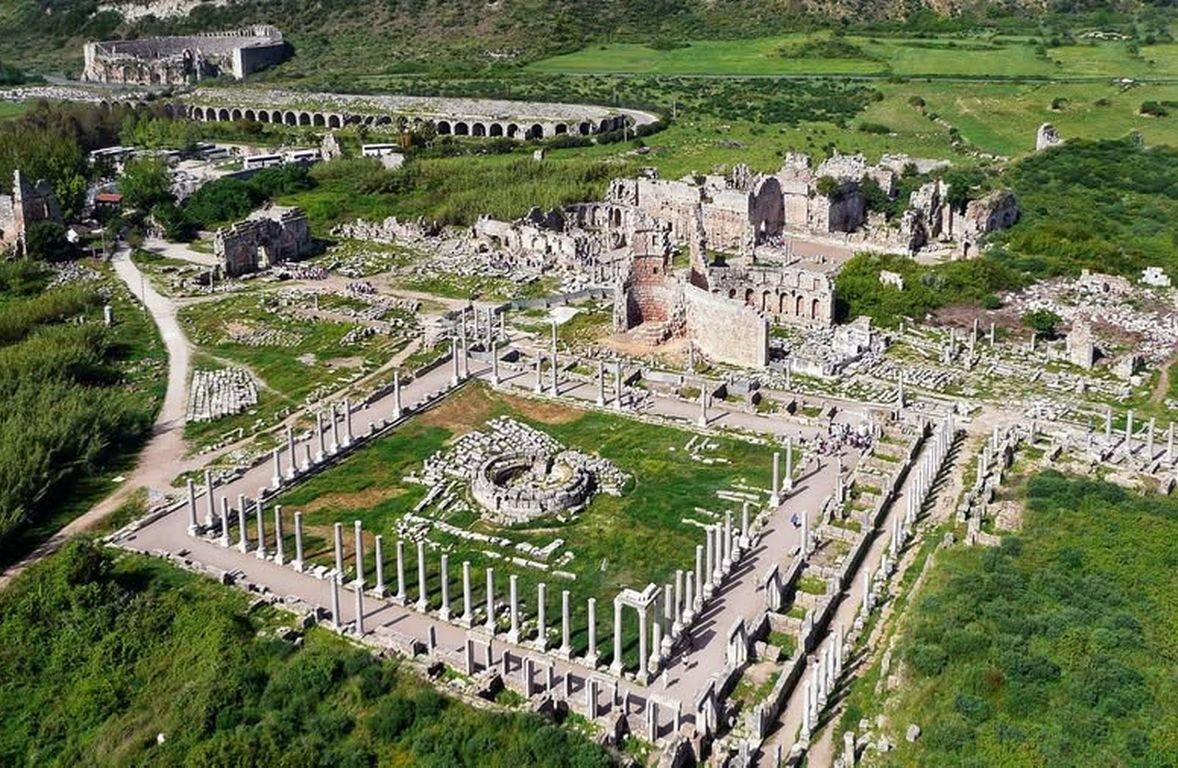
Located just 17 kilometers (11 miles) east of Antalya, the Ancient City of Perge is one of Turkey’s most impressive archaeological treasures. Once the prosperous capital of ancient Pamphylia, Perge flourished for more than a thousand years under Hellenistic, Roman, and Byzantine rule. Today, visitors can wander through remarkably preserved colonnaded streets, monumental gates, Roman baths, one of the largest ancient stadiums in Anatolia, and a magnificent theatre that once echoed with the voices of thousands of spectators.
Unlike many ancient cities where only scattered ruins survive, Perge still preserves the original layout of a classical Roman city. Its wide avenues, sophisticated water system, elegant public buildings, and monumental architecture offer an extraordinary glimpse into urban life nearly two thousand years ago.
For history lovers, photographers, archaeologists, and travelers exploring the Turkish Riviera, Perge is an essential stop and one of the highlights of any visit to Antalya.
Perge was among the most influential cities of ancient Pamphylia, a fertile coastal region along Turkey’s Mediterranean coast. Situated approximately 15 kilometers inland from the sea beside the Kestros River (today’s Aksu River), the city occupied a strategic location that allowed it to benefit from maritime trade while remaining protected from pirate attacks that frequently threatened coastal settlements.
Its fertile surroundings made Perge an important agricultural center, while access to the Mediterranean transformed it into a thriving commercial hub. Merchants, craftsmen, philosophers, and travelers passed through its gates for centuries, helping create one of the wealthiest cities in southern Anatolia.
Today, Perge is considered one of Turkey’s finest examples of Roman urban planning and is included on UNESCO’s Tentative World Heritage List, reflecting its outstanding historical and archaeological significance.
History of Perge
Legendary Origins
Ancient tradition attributes the founding of Perge to Greek colonists who arrived after the Trojan War around the 12th century BC. According to ancient historians such as Strabo, legendary heroes including Mopsus and Calchas established the settlement after migrating from the Greek mainland.
Although these stories blend mythology with history, archaeological discoveries indicate that the region had already been inhabited long before Greek colonization. Evidence suggests settlements existed during the Late Bronze Age, making Perge one of the oldest continuously occupied sites in southwestern Anatolia.
Persian Rule
During the 6th century BC, Perge became part of the vast Persian Empire. Unlike many neighboring cities that experienced repeated conflicts, Perge enjoyed relative stability while maintaining much of its local administration.
Trade continued to flourish, and the city’s strategic location ensured its continued prosperity throughout the Achaemenid period.
Alexander the Great
In 333 BC, Alexander the Great entered Pamphylia during his campaign against the Persian Empire.
Unlike many fortified cities that resisted his advance, Perge surrendered peacefully without battle. This decision spared the city from destruction and allowed it to continue prospering under Macedonian rule.
After Alexander’s death, Perge became part of the territories controlled by his successors, eventually falling under the Seleucid Kingdom before later becoming associated with the Kingdom of Pergamon.
Roman Prosperity
The city’s golden age began under Roman rule.
From the 1st to the 3rd centuries AD, Perge underwent an extraordinary transformation. Wealth generated through agriculture, commerce, and regional administration financed ambitious construction projects that reshaped the city into one of the grandest urban centers in Asia Minor.
During this period, many of the monuments visible today were built, including:
- The Roman Theatre
- The Stadium
- Monumental Gates
- Agora
- Colonnaded Streets
- Roman Baths
- Nymphaeums (Monumental Fountains)
- Extensive Water Supply System
Roman engineers created an exceptionally organized city featuring paved streets, drainage systems, public fountains, shopping arcades, and sophisticated bath complexes.
Christianity and St. Paul
Perge occupies an important place in Christian history.
According to the Acts of the Apostles, Saint Paul and Barnabas arrived at Perge during Paul’s First Missionary Journey in the first century AD after sailing from Cyprus. Although they initially continued toward Pisidian Antioch, they later returned to Perge, where Paul preached Christianity before traveling onward to Attaleia (modern Antalya).
This connection has made Perge an important destination for Christian pilgrims following the footsteps of Saint Paul throughout Anatolia.
Byzantine Era and Decline
As Christianity spread throughout the Roman Empire, Perge became an important episcopal center during the Byzantine period.
Numerous churches were constructed, and the city remained prosperous for several centuries.
However, beginning in the 7th century, repeated Arab raids, earthquakes, changing trade routes, and the gradual silting of the Kestros River weakened Perge’s economy. Residents slowly abandoned the city in favor of nearby Antalya, whose protected harbor became increasingly important.
Eventually, Perge disappeared beneath layers of earth until archaeological excavations revealed its remarkable remains during the twentieth century.
Archaeological Excavations
Scientific excavations at Perge began in 1946 under Turkish archaeologist Professor Arif Müfid Mansel.
Since then, decades of meticulous archaeological work have uncovered large sections of the ancient city, revealing one of the best-preserved Roman urban landscapes in the eastern Mediterranean.
Thousands of remarkable discoveries have been made, including:
- Marble statues
- Relief sculptures
- Inscriptions
- Coins
- Decorative mosaics
- Ceramics
- Public monuments
- Religious artifacts
Many of these masterpieces are now exhibited in the Antalya Archaeological Museum, whose renowned Hall of Perge contains one of the world’s finest collections of Roman sculpture.
Excavations continue today, with new discoveries regularly enhancing our understanding of life in ancient Pamphylia.
The Magnificent Hellenistic Gate
One of Perge’s most iconic landmarks is its monumental Hellenistic Gate, constructed during the 3rd century BC.
Unlike ordinary city entrances, this impressive gateway features two massive circular towers connected by defensive walls surrounding a horseshoe-shaped courtyard.
During the Roman period, the gateway was transformed into an elegant ceremonial entrance decorated with:
- Corinthian columns
- Marble facades
- Niches containing statues of gods and emperors
- Honorary inscriptions
- Sculptural reliefs
The renovations were largely financed by Plancia Magna, one of the wealthiest and most influential women of Roman Anatolia. Her generous patronage helped beautify much of Perge, earning her recognition as one of the city’s greatest benefactors.
Even today, the monumental entrance creates an unforgettable first impression for visitors entering the ancient city.
The Roman Theatre of Perge
Among the finest surviving Roman theatres in Turkey, the Theatre of Perge stands as a masterpiece of ancient engineering and artistic achievement. Built during the 2nd century AD on the southern slope of a hill outside the city walls, it could accommodate approximately 15,000 spectators, making it one of the largest theatres in Asia Minor.
Unlike Greek theatres, which were usually carved into natural hillsides, Perge’s theatre follows the Roman architectural tradition, featuring an impressive stage building (scaenae frons) richly decorated with marble columns, statues, niches, and elaborate reliefs.
The stage façade originally rose to several stories and formed a magnificent architectural backdrop for theatrical performances, musical concerts, religious ceremonies, and civic celebrations.
One of its greatest artistic treasures is the remarkable series of marble reliefs illustrating the life of Dionysus, the Greek god of wine and theatre. These beautifully carved panels narrate the god’s birth, childhood, adventures, and triumphs, demonstrating the extraordinary craftsmanship of Roman sculptors.
During the 3rd century AD, when gladiatorial games and wild animal combats became increasingly popular, the orchestra was modified into an arena protected by a marble barrier.
Although earthquakes caused significant damage over the centuries, the theatre remains one of Perge’s most spectacular monuments and offers visitors an excellent impression of Roman entertainment architecture.
Perge Stadium
A short walk from the theatre stands one of the best-preserved Roman stadiums in the Mediterranean world.
Measuring approximately 234 meters long and 34 meters wide, the horseshoe-shaped stadium could accommodate nearly 12,000 spectators.
Unlike many ancient stadiums where only foundations remain, Perge’s stadium preserves much of its original seating arrangement and structural design.
Its seating rested upon a remarkable system of approximately 70 vaulted chambers built beneath the grandstands.
These chambers served multiple purposes:
- Shops
- Storage rooms
- Workshops
- Vendor stalls during festivals
Visitors attending sporting events could purchase food, drinks, and merchandise before taking their seats, demonstrating that commercial activity surrounding sporting events is far from a modern invention.
Athletic competitions, chariot displays, wrestling matches, and later gladiatorial contests filled the stadium with excitement throughout the Roman period.
Its outstanding preservation makes it one of the finest examples of Roman sports architecture anywhere in Turkey.
The Colonnaded Street
The heart of ancient Perge is its magnificent colonnaded avenue, one of the city’s defining features.
Stretching for nearly 300 meters, this broad boulevard connected the city’s principal monuments and formed the main axis of daily life.
Elegant marble columns lined both sides of the avenue, creating shaded arcades that protected citizens from the intense Mediterranean sun.
Behind these colonnades stood:
- Shops
- Workshops
- Government offices
- Meeting places
- Public buildings
Perhaps the most remarkable feature of the street is the water channel running directly through its center.
Fed by fresh spring water from the monumental nymphaeum at the northern end of the city, this canal continuously supplied clean water while simultaneously cooling the surrounding streets during the hot Pamphylian summers.
The combination of flowing water, marble architecture, statues, fountains, and shaded walkways created one of the most elegant urban landscapes in the Roman Empire.
Monumental Fountains (Nymphaeums)
Water played a central role in the beauty and functionality of Perge.
The city possessed several magnificent nymphaeums, monumental public fountains that celebrated both engineering and art.
The largest stood near the northern entrance beneath the acropolis.
This enormous two-story structure featured:
- Marble columns
- Sculptures
- Decorative niches
- Ornamental pools
- Flowing water cascading into large basins
At its center stood the statue of the river god Kestros, representing the life-giving river that sustained the city.
These fountains served not only as water distribution points but also as symbols of civic prosperity and architectural sophistication.
Their impressive remains still provide a vivid impression of Perge’s former grandeur.
Roman Baths
The public baths of Perge rank among the largest and most luxurious bath complexes discovered in ancient Pamphylia.
Roman baths were much more than places for bathing—they functioned as social clubs, business centers, libraries, gyms, and meeting places.
Visitors followed a carefully planned sequence through different rooms:
- Apodyterium (changing room)
- Frigidarium (cold room)
- Tepidarium (warm room)
- Caldarium (hot room)
A sophisticated underground hypocaust system circulated heated air beneath the floors and inside the walls, creating comfortable temperatures throughout the complex.
Adjacent to the baths lay a spacious palaestra, or exercise courtyard, where citizens wrestled, trained, and socialized before bathing.
The baths illustrate the advanced engineering skills of Roman architects and the importance of public leisure in ancient urban life.
The Agora
The commercial heart of Perge was its spacious Agora, a large square marketplace surrounded by elegant colonnades.
Merchants from across Pamphylia gathered here to trade goods from throughout the Mediterranean.
Among the products sold were:
- Olive oil
- Wine
- Grain
- Textiles
- Pottery
- Jewelry
- Spices
- Imported luxury goods
The marketplace also served as a center for politics and social interaction.
Philosophers debated ideas, officials conducted civic business, and citizens met friends while shopping beneath the shaded porticoes.
The paved floors, shop foundations, and surrounding colonnades remain clearly visible today, allowing visitors to imagine the bustling commercial life that once filled the square.
The Cult of Artemis Pergaia
Perge was famous throughout the ancient world for the worship of Artemis Pergaia, the city’s patron goddess.
Although identified with the Greek goddess Artemis, her origins likely trace back to an earlier Anatolian mother goddess whose cult predated Greek settlement.
Artemis Pergaia symbolized:
- Fertility
- Nature
- Protection
- Prosperity
- The city’s identity
Ancient coins frequently depict her distinctive cult statue, and inscriptions found throughout the city testify to her immense importance.
Roman statesman Cicero even recorded that the temple of Artemis Pergaia was among the wealthiest sanctuaries in the region.
Although archaeologists have not yet conclusively identified the temple itself, evidence suggests it ranked among the grandest religious monuments in ancient Pamphylia.
Sophisticated Urban Planning
Perge is admired not only for its monumental buildings but also for its remarkably advanced urban design.
The city demonstrates the principles of Roman planning through:
- Wide, straight streets
- Underground drainage systems
- Sophisticated water distribution
- Public fountains
- Planned residential districts
- Monumental public squares
- Defensive walls
- Efficient sewage infrastructure
Running water flowed continuously through the city, providing sanitation and improving the comfort of residents.
Such advanced engineering explains why Perge is considered one of the finest surviving examples of Roman city planning in the eastern Mediterranean.
Plancia Magna: The Woman Who Shaped Perge
One of the most remarkable figures associated with Perge is Plancia Magna, a wealthy Roman noblewoman who lived during the 2nd century AD.
Unlike many women of her time, Plancia Magna held extraordinary influence in civic affairs. As a priestess of Artemis Pergaia and a prominent benefactor, she financed major construction and restoration projects that transformed the appearance of the city.
Under her patronage, the monumental Hellenistic Gate was converted into a magnificent ceremonial entrance adorned with marble, statues, and inscriptions honoring emperors, gods, and the legendary founders of Perge.
Her generosity extended to fountains, public spaces, and civic monuments, earning her lasting respect from the people of Perge. Numerous inscriptions and statues erected in her honor testify to the exceptional role she played in the city’s prosperity.
Today, Plancia Magna is remembered as one of the most influential women in Roman Anatolia, and her legacy remains visible throughout the archaeological site.
Antalya Museum: Home to Perge’s Greatest Treasures
While the ruins of Perge are spectacular, many of its finest discoveries are preserved in the Antalya Archaeological Museum, located about 18 kilometers from the site.
The museum houses one of the world’s most important collections of Roman sculpture, much of it excavated from Perge. Visitors can admire beautifully preserved statues of emperors, gods, goddesses, philosophers, athletes, and civic leaders that once decorated the city’s streets, baths, fountains, and public squares.
Highlights include magnificent marble statues of:
- Zeus
- Athena
- Aphrodite
- Hermes
- Artemis
- Heracles
- Nemesis
- Roman emperors
- Portraits of prominent citizens
The Hall of Perge is widely regarded as one of Turkey’s finest archaeological exhibitions and provides valuable context for understanding the city’s former splendor. Visiting both Perge and the Antalya Museum offers a complete picture of one of the Roman Empire’s most elegant provincial capitals.
UNESCO World Heritage Status
Perge is included on UNESCO’s Tentative World Heritage List, recognizing its exceptional historical, architectural, and archaeological value.
The city is considered one of the best-preserved examples of Roman urban planning in the eastern Mediterranean. Its monumental architecture, sophisticated water management system, extensive public buildings, and remarkable sculptures demonstrate the cultural richness of ancient Pamphylia.
Ongoing archaeological excavations and conservation projects continue to reveal new discoveries, further strengthening Perge’s importance as one of Turkey’s premier archaeological destinations.
Best Things to See in Perge
Although visitors can spend several hours exploring the site, several monuments stand out as absolute highlights:
Hellenistic Gate
The impressive twin towers and ceremonial courtyard create one of the most iconic entrances in ancient Anatolia.
Roman Theatre
Admire the monumental stage building and imagine performances that entertained thousands of spectators nearly two thousand years ago.
Stadium
One of the best-preserved Roman stadiums anywhere in the Mediterranean, capable of seating around 12,000 people.
Colonnaded Street
Walk along the marble-paved avenue where water once flowed through the center beneath elegant colonnades.
Agora
Explore the ancient marketplace where merchants traded goods from across the Roman Empire.
Roman Baths
Discover the sophisticated heating systems and spacious bathing complexes that formed the social heart of the city.
Monumental Fountains
Marvel at the impressive nymphaeums that supplied water while showcasing Roman engineering and artistic excellence.
City Walls and Towers
The defensive fortifications reveal Perge’s strategic importance throughout antiquity.
Things to Do at Perge
A visit to Perge offers much more than simply viewing ancient ruins.
Popular activities include:
- Walking the entire Roman city plan.
- Photographing monumental architecture.
- Exploring ancient engineering and water systems.
- Learning about Roman urban life.
- Following the route of Saint Paul.
- Visiting the Antalya Archaeological Museum afterward.
- Joining guided archaeological tours.
- Combining Perge with nearby ancient cities such as Aspendos, Side, and Termessos.
History enthusiasts often dedicate half a day to fully appreciate the site.
How to Get to Perge
Perge lies approximately 17 km east of Antalya city center and is easily accessible by several means of transportation.
By Car
Driving is the most convenient option. The journey from central Antalya takes around 20–30 minutes, and parking is available near the entrance.
By Tram and Bus
Take the AntRay tram from Antalya to Aksu Station, then continue by taxi or local minibus to the archaeological site.
By Guided Tour
Many travel agencies in Antalya offer full-day excursions combining Perge with Aspendos, Side, or Kursunlu Waterfall, making it an excellent option for first-time visitors.
Opening Hours and Admission
Perge is generally open throughout the year, with extended visiting hours during the summer season.
Because entrance fees and operating hours may change, visitors should check the latest information from the Turkish Ministry of Culture and Tourism before traveling.
Museum Pass Turkey holders can usually enter the site without purchasing an additional ticket.
Best Time to Visit
Perge can be visited year-round, but the most comfortable seasons are:
Spring (March–May)
Pleasant temperatures, blooming wildflowers, and excellent lighting make spring ideal for photography and sightseeing.
Autumn (September–November)
Warm days and fewer crowds provide excellent conditions for exploring the extensive ruins.
Summer (June–August)
Summer temperatures in Antalya frequently exceed 35°C (95°F). If visiting during this period, arrive early in the morning or late in the afternoon, wear a hat, apply sunscreen, and carry plenty of water.
Winter offers quieter surroundings and mild weather, though occasional rainfall is possible.
Photography Tips
Perge is one of the most photogenic archaeological sites in Turkey.
For the best images:
- Visit shortly after sunrise or before sunset.
- Use a wide-angle lens to capture monumental architecture.
- Photograph the colonnaded street from ground level for dramatic perspective.
- Capture the theatre from the upper seating tiers.
- Visit in spring for vibrant greenery and wildflowers.
- Include people in your compositions to emphasize the immense scale of the ruins.
Nearby Attractions
Perge is perfectly positioned for exploring several of Antalya’s most famous historical and natural attractions.
- Aspendos Ancient Theatre – One of the best-preserved Roman theatres in the world.
- Kurşunlu Waterfall Nature Park – A peaceful oasis surrounded by pine forests.
- Ancient City of Side – A coastal archaeological site with temples, theatre, and harbor.
- Termessos – A spectacular mountain city often called the “Machu Picchu of Turkey.”
- Antalya Old Town (Kaleiçi) – Historic streets, Ottoman houses, marina, and lively cafés.
- Antalya Archaeological Museum – Essential for viewing sculptures excavated from Perge.
Together, these attractions create one of Turkey’s richest cultural itineraries.
Travel Tips
- Allow at least 3–4 hours to explore the site thoroughly.
- Wear comfortable walking shoes, as paths are uneven.
- Bring water, especially during summer.
- A hat and sunscreen are highly recommended.
- Consider hiring a licensed guide to gain deeper insight into the city’s history.
- Visit the Antalya Museum either before or after your tour to see the original sculptures from Perge.
- Early morning visits provide cooler temperatures and the best photography conditions.
Why Visit Perge?
Perge is more than an archaeological site—it is a journey through over two millennia of human history. From its legendary foundation after the Trojan War to its flourishing Roman streets and its role in the spread of early Christianity, every corner of the city tells a story.
Its grand theatre, expansive stadium, elegant colonnaded avenues, sophisticated water system, and richly decorated public buildings reveal the ingenuity and ambition of one of the Roman Empire’s most prosperous cities. Unlike many ancient sites, Perge preserves not just isolated monuments but the fabric of an entire urban landscape, allowing visitors to imagine daily life in remarkable detail.
Whether you are passionate about archaeology, fascinated by classical civilizations, interested in biblical history, or simply seeking one of the most rewarding cultural experiences in Turkey, Perge offers an unforgettable glimpse into the ancient world.
Frequently Asked Questions (FAQ)
Is Perge worth visiting?
Absolutely. Perge is considered one of Turkey’s finest archaeological sites thanks to its exceptional preservation, monumental architecture, and rich history.
How much time do I need at Perge?
Plan to spend 3–4 hours exploring the site. History enthusiasts may wish to allow even more time.
Can you visit Perge without a guide?
Yes. Informational signs are available throughout the site, though a licensed guide can greatly enrich your understanding.
Is Perge suitable for children?
Yes. Families often enjoy exploring the wide streets, theatre, and stadium, but supervision is important due to uneven surfaces.
What should I wear?
Comfortable walking shoes, light clothing in summer, a hat, sunscreen, and plenty of water are recommended.
Can Perge and Aspendos be visited on the same day?
Yes. Many visitors combine Perge, Aspendos, and Kurşunlu Waterfall into a full-day excursion.
Leave a Reply
You must be logged in to post a comment.