Author: tur

  • Settlements in Türkiye: Villages, Towns, Cities, and Traditional Anatolian Architecture

    The settlement patterns of Türkiye reflect the country’s long history, diverse geography, and changing social structure. From small rural villages to modern metropolitan cities, Turkish settlements have developed according to population size, economic activities, administrative importance, and cultural traditions.

    Anatolia has been home to many civilizations for thousands of years, and its settlements preserve influences from ancient, Byzantine, Seljuk, and Ottoman periods. Today, Türkiye’s settlements can generally be classified as villages, towns, and cities according to population size and function.


    Classification of Settlements in Türkiye

    Traditionally, settlements in Türkiye have been classified according to their population:

    Villages (Köy)

    Settlements with fewer than 2,000 inhabitants are traditionally classified as villages.

    Villages are mainly associated with:

    • Agriculture
    • Livestock farming
    • Traditional crafts
    • Rural lifestyles
    • Close community relationships

    Turkish villages are often surrounded by agricultural land, forests, mountains, or coastal landscapes. Many villages preserve traditional houses, local customs, and regional cuisines.


    Towns (Kasaba / İlçe Merkezleri)

    Settlements with populations between 2,000 and 20,000 inhabitants are traditionally classified as towns.

    Towns function as service centers for nearby villages and usually provide:

    • Local markets
    • Schools
    • Health services
    • Government offices
    • Small businesses
    • Transportation connections

    Many Turkish towns have developed around agriculture, trade, handicrafts, or historical routes.


    Cities (Şehir)

    Settlements with populations above 20,000 inhabitants are traditionally classified as cities.

    Cities generally offer:

    • Advanced healthcare services
    • Universities
    • Industrial areas
    • Large commercial centers
    • Cultural institutions
    • Modern transportation networks

    Major cities such as Istanbul, Ankara, İzmir, Bursa, and Antalya serve as economic, cultural, and administrative centers both nationally and internationally.


    Cities of Türkiye

    Modern Turkish cities combine historical heritage with contemporary urban development.

    Large cities often contain:

    • Historic districts
    • Modern residential areas
    • Shopping centers
    • Business districts
    • Museums and cultural venues
    • Universities

    Examples include:

    • Istanbul – Türkiye’s largest city and a historic bridge between Europe and Asia
    • Ankara – The capital and administrative center
    • İzmir – A major Aegean port city
    • Bursa – A historic Ottoman capital and industrial center
    • Antalya – A leading Mediterranean tourism destination

    Many Turkish cities have expanded rapidly due to migration from rural areas, industrial growth, and tourism development.


    Towns of Türkiye

    Turkish towns have traditionally served as connections between villages and larger cities.

    They are important for:

    • Regional trade
    • Agricultural markets
    • Local administration
    • Cultural activities

    Many towns maintain strong traditional identities and are known for:

    • Local foods
    • Handicrafts
    • Historic buildings
    • Festivals
    • Traditional markets

    Historic towns such as Safranbolu, Beypazarı, Birgi, Midyat, and Şirince demonstrate the cultural richness of smaller settlements in Türkiye.


    Villages of Türkiye

    Villages represent an important part of Türkiye’s cultural heritage. Although many people have moved toward urban areas, rural settlements continue to preserve traditional lifestyles.

    Village life is often based on:

    • Farming
    • Animal husbandry
    • Seasonal activities
    • Family cooperation
    • Local traditions

    Village architecture varies according to geography:

    • Stone houses in southeastern Anatolia
    • Wooden houses in the Black Sea region
    • Whitewashed houses on the Aegean coast
    • Earth and stone structures in central Anatolia

    The Old Anatolian House

    The traditional Anatolian house is one of the most important elements of Türkiye’s architectural heritage.

    These houses were designed according to:

    • Climate conditions
    • Family structure
    • Local materials
    • Social traditions

    Common features include:

    • Inner courtyards
    • Wooden construction
    • Stone foundations
    • Large windows
    • Wide roof eaves
    • Upper floors extending over streets

    Traditional houses often separated public and private spaces. The ground floor was commonly used for storage and service areas, while the upper floors contained living rooms and guest areas.

    Famous examples of traditional Anatolian houses can be found in:

    • Safranbolu
    • Mardin
    • Midyat
    • Bursa
    • Beypazarı
    • Odunpazarı (Eskişehir)

    The Traditional Turkish Street

    Traditional streets in Türkiye developed around the needs of local communities and environmental conditions.

    Historic streets were often:

    • Narrow
    • Stone-paved
    • Winding
    • Shaded by buildings

    Their design helped:

    • Protect residents from heat and wind
    • Manage rainwater
    • Create social interaction

    Many streets included public fountains, small shops, neighborhood bakeries, and communal spaces.

    In Ottoman towns, streets were not only transportation routes but also places where daily social life took place.


    Settlement Heritage of Türkiye

    The settlements of Türkiye represent the meeting point of geography, history, and culture. From ancient cities and Ottoman towns to rural villages and traditional houses, each settlement type reflects the lifestyle of the people who built and developed it.

    Exploring Turkish settlements offers visitors the opportunity to discover:

    • Historical architecture
    • Traditional lifestyles
    • Regional cultures
    • Local cuisine
    • Centuries-old customs

    Together, cities, towns, villages, old Anatolian houses, and traditional streets form an important part of Türkiye’s rich cultural landscape.

  • Interment and Funeral Traditions in Türkiye

    Funeral and burial traditions in Türkiye are deeply influenced by Islamic customs, local culture, and centuries-old social practices. The passing of a family member is marked by religious ceremonies, community support, and remembrance rituals that bring together relatives, neighbors, and friends.

    Although practices may vary slightly between regions and communities, traditional Muslim burial customs remain an important part of Turkish cultural life.

    Funeral Procession

    After the death of a person, the funeral ceremony is usually organized according to Islamic traditions. The deceased is prepared for burial through ritual washing (gasil) and is wrapped in a simple white burial cloth known as a kefen (shroud).

    The coffin containing the shrouded body is usually transported to the cemetery by a hearse. Family members, friends, neighbors, and members of the community often follow behind in a funeral procession as a sign of respect.

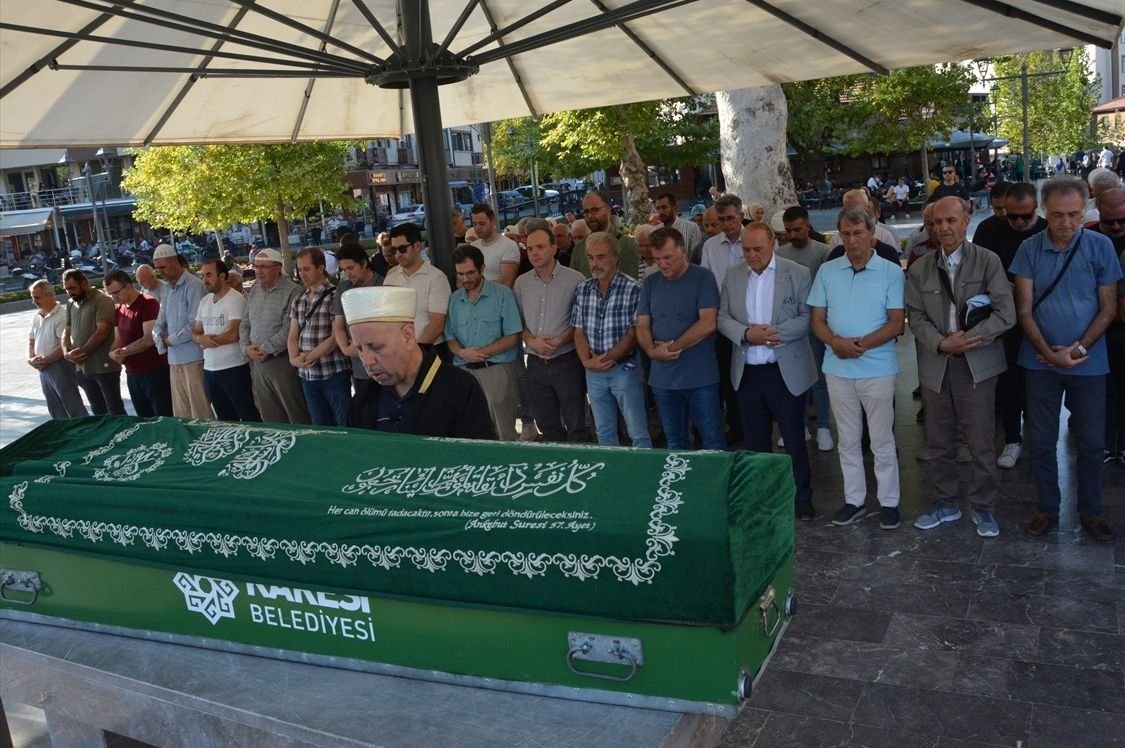
    Before burial, funeral prayers (cenaze namazı) are performed, generally in the courtyard of a mosque or at a designated prayer area near the cemetery. The Imam leads the prayer and the community participates in honoring the deceased.

    Traditional Burial Practices

    In traditional Islamic burials in Türkiye, the deceased is buried without the coffin, wrapped only in the shroud.

    Graves are generally:

    • Rectangular in shape
    • Designed for one person
    • Marked with a headstone
    • Positioned according to Islamic tradition

    The body is placed on the right side, facing the direction of the Qibla (the direction of Mecca).

    The tombstone is placed at the head of the grave and usually includes:

    • The name of the deceased
    • Date of birth and death
    • Religious expressions
    • Personal information or family details

    In some regions, additional stones or grave markers may be placed according to local traditions.

    The Role of the Imam

    The Imam plays an important role during the funeral ceremony by leading prayers and offering religious guidance.

    The funeral prayer and final supplications symbolize the completion of the burial process and express hope for mercy and peace for the deceased.

    Remembrance Ceremonies

    In Turkish Muslim tradition, the deceased is often remembered through religious gatherings after the burial.

    Two important remembrance occasions are:

    Seventh Day (Yedinci Gün)

    On the seventh day after death, family members and relatives may gather for prayers and Islamic readings.

    Fifty-Second Day (Elli İkinci Gün)

    The fifty-second day is another traditional period of remembrance in many parts of Türkiye. Religious readings, especially mevlit ceremonies, may be organized to honor the memory of the deceased.

    A mevlit is a religious gathering where passages praising the Prophet Muhammad are recited, along with prayers for the soul of the departed.

    Community Support and Funeral Meals

    Funeral traditions in Türkiye also emphasize solidarity and helping others.

    In many communities, families may prepare and distribute:

    • Funeral meals
    • Halva (helva)
    • Food packages for neighbors and guests

    These offerings are often shared with relatives, neighbors, and people in need as an expression of charity and remembrance.

    Traditionally, neighbors and community members also support the grieving family by preparing meals and assisting with funeral arrangements.

    Cultural Importance of Burial Traditions

    Interment customs in Türkiye reflect the importance of family, faith, and community connections. Funeral practices provide a way for people to express respect for the deceased while supporting those who remain.

    From the funeral procession and burial ceremony to later remembrance gatherings, these traditions represent a combination of Islamic beliefs and Turkish cultural values that have continued for generations.

  • Death and Burial in Turkiye

    Death and Burial in Turkiye

    Death has always held profound spiritual and cultural significance in Anatolia. Throughout thousands of years, the region has been home to numerous civilizations, each leaving its own customs and beliefs regarding death and burial. Archaeological discoveries reveal a remarkable variety of burial practices, including graves beneath the floors of homes, wooden burial chambers, tumuli (burial mounds), rock-cut tombs, chamber tombs, sarcophagi, mausoleums, and the domed or conical tombs known as türbe and kümbet.

    Although death is a painful experience for family and friends, it is generally regarded as a natural part of life’s journey. Many people, particularly in later life, make practical preparations for their own funerals by purchasing cemetery plots, setting aside money to cover funeral expenses, or keeping a burial shroud (kefen) ready in accordance with Islamic tradition.

    Islamic Beliefs and the Significance of Martyrdom

    The overwhelming majority of people in Turkey follow Islam, and Islamic teachings strongly influence funeral customs. One of the highest honors in Islam is to die as a martyr (şehit). According to Islamic belief, martyrs are granted immediate entry into Paradise because they sacrificed their lives for a noble cause. For this reason, the funerals of martyrs receive special recognition and are conducted with great respect and national honor.

    Preparing the Deceased

    When a person passes away, the body is respectfully laid on a bed in a separate room. The head is turned toward Mecca, the eyelids are gently closed, the arms are placed alongside the body, and the big toes are tied together to help keep the legs straight.

    Islam encourages burial as soon as reasonably possible, usually on the same day if the death occurs early enough. If a person dies late in the afternoon or evening, the funeral generally takes place the following day. In certain circumstances, such as when close relatives are traveling from distant locations, the body may remain temporarily in a mortuary or another cool place until the family can gather.

    Ritual Washing and Shrouding

    Before burial, the deceased undergoes a ritual washing known as ghusl. This cleansing is considered an essential religious duty. Traditionally, the washing is performed by trained individuals of the same gender as the deceased—women wash women, and men wash men.

    After the washing, the body is wrapped in a simple white burial shroud called a kefen. The use of plain white cloth symbolizes equality before God, regardless of wealth or social status. The shrouded body is then placed in a wooden coffin. The coffin is typically covered with a green cloth, a color traditionally associated with Islam. If the deceased is recognized as a martyr, the coffin is draped with the Turkish national flag as a mark of honor and gratitude.

    Announcing the Death

    Traditionally, the death is announced from the minaret of the local mosque by the müezzin (caller to prayer). Along with verses from the Qur’an, the announcement includes the deceased’s name as well as the time and location of the funeral prayer. Although modern communication methods are now widely used, mosque announcements remain an important tradition in many towns and villages.

    The Funeral Prayer

    The coffin is carried on the shoulders of relatives, friends, and members of the community to the mosque. It is placed on a raised platform in the mosque courtyard before the funeral prayer.

    As the funeral procession moves through the streets, people traditionally stand in silence as a gesture of respect. It is considered improper to walk ahead of the funeral procession, emphasizing that everyone ultimately shares the same human destiny.

    Following the regular congregational prayer, worshippers gather outside for the funeral prayer (Salat al-Janazah), led by the imam. Unlike regular daily prayers, this prayer is performed while standing and includes supplications asking God to forgive the deceased and grant them mercy.

    Traditionally, only men participate in the funeral prayer at the mosque in many parts of Turkey, although practices may vary today depending on local customs and individual communities. Women commonly attend the burial itself and offer condolences to the family.

    At the conclusion of the funeral prayer, the imam addresses the congregation and asks whether they knew the deceased to be a good person. The customary response is always affirmative, with expressions such as:

    • “He was a good person.”
    • “May God have mercy on his soul.”
    • “May God forgive him.”
    • “May he rest in peace.”

    These responses reflect the Islamic principle of speaking kindly of the deceased and praying for God’s mercy.

    Burial

    The deceased is then taken to the cemetery, where the body is carefully lowered into the grave, usually positioned on its right side facing Mecca. Family members and close friends often participate by placing handfuls of earth into the grave before it is completely filled.

    After the burial, prayers from the Qur’an are recited, and mourners offer condolences to the family. In many regions of Turkey, relatives continue receiving visitors for several days following the funeral, while prayers are often held on the third, seventh, fortieth, and fifty-second days after death, depending on local traditions.

    Cultural Traditions

    Beyond the religious rituals, Turkish funeral customs emphasize solidarity, compassion, and community support. Neighbors, relatives, and friends frequently prepare meals for the grieving family, assist with funeral arrangements, and offer emotional support during the mourning period.

    Hospitality remains an important aspect of mourning, and visitors often gather to recite prayers, share memories of the deceased, and express sympathy. These customs reinforce strong family ties and the communal values that have characterized Anatolian society for centuries.

    Today, while funeral practices may vary slightly between urban and rural areas or among different cultural communities, the core principles of dignity, respect, simplicity, and faith remain central to death and burial traditions throughout Turkey.

  • Divorce in Turkiye

    Divorce in Turkey has traditionally been less common than in many Western countries, largely due to the importance placed on family life, cultural traditions, religious values, and social expectations. However, attitudes toward divorce have gradually changed over recent decades, particularly in urban areas, and divorce has become increasingly common.

    Many couples choose to remain together despite marital difficulties for a variety of reasons. These may include concern for their children’s well-being, family expectations, emotional ties, financial dependence, or the social stigma that divorce can still carry in some communities. While these factors affect both men and women, women who are not financially independent may face additional challenges when considering divorce.

    Economic security is often one of the most significant concerns. Individuals who have spent many years outside the workforce may find it difficult to secure employment after a divorce, particularly later in life. As a result, financial considerations frequently play an important role in decisions about ending a marriage.

    Legal Grounds for Divorce

    Divorce in Turkey is governed by the Turkish Civil Code. A marriage may be dissolved either through a contested divorce, in which the court resolves disputed issues, or through an uncontested divorce when both spouses mutually agree on the terms of the separation, including matters such as property division, child custody, and financial support.

    The courts may grant a divorce on several legal grounds, including:

    • Irretrievable breakdown of the marriage.
    • Adultery.
    • Cruelty or domestic violence.
    • Abandonment.
    • Criminal conduct or behavior that makes marital life impossible.
    • Serious incompatibility between the spouses.

    When children are involved, the court gives primary consideration to the best interests of the child when determining custody, visitation rights, and child support.

    Division of Property

    Under the current Turkish Civil Code, the default marital property regime is the participation in acquired property system, unless the spouses have signed a different property agreement before or during the marriage.

    Generally, property owned by either spouse before the marriage remains that person’s separate property. Assets acquired during the marriage—including income, savings, and many jointly accumulated assets—are generally subject to equal division when the marriage ends, unless otherwise agreed or excluded by law.

    The court also considers issues such as alimony, compensation, and financial support where appropriate, depending on the circumstances of each case.

    Changing Social Attitudes

    In recent years, Turkey has experienced significant social and economic changes. Higher levels of education, greater participation of women in the workforce, and increasing urbanization have contributed to changing attitudes toward marriage and divorce.

    Although divorce may still be viewed negatively in some conservative communities, it is becoming more socially accepted in many parts of the country. Support services, legal protections, and counseling are also more widely available than in the past, helping individuals navigate the emotional, legal, and financial challenges associated with divorce.

    Today, divorce in Turkey is recognized as a legal process designed to protect the rights of both spouses and any children involved, while ensuring a fair and equitable resolution under the law.

  • Circumcision Ceremony in Turkiye

    Circumcision (sünnet) is one of the most important family celebrations in Turkey. Although it is a medical procedure, it is also regarded as a significant cultural and religious milestone, symbolizing a boy’s transition toward maturity and his inclusion in the Muslim community. While the ceremony is rooted in Islamic tradition, many of the accompanying customs are unique to Turkish culture.

    Preparing for the Celebration

    Once a family chooses the date for the circumcision ceremony, invitations are sent to relatives, friends, neighbors, and colleagues well in advance. Depending on the family’s preferences and financial circumstances, the celebration may be held at home, in a wedding hall, a hotel, or another event venue.

    The boy is traditionally dressed in an elaborate ceremonial costume consisting of a decorated suit, a flowing cape, a ceremonial scepter, and an ornate crown or hat bearing the word Maşallah (“What God has willed”), an expression used to ask for God’s protection and blessings.

    His room is often decorated with balloons, flowers, ribbons, and colorful ornaments, making the occasion resemble a birthday or wedding celebration.

    The Procession

    In many parts of Turkey, particularly in smaller towns and rural areas, the day begins with a festive procession through the neighborhood. The circumcised boy may ride on a beautifully decorated horse, in a horse-drawn carriage, a classic automobile, or another specially decorated vehicle.

    Family members, friends, and neighborhood children accompany the procession while traditional musicians play lively tunes using instruments such as the davul (large bass drum) and zurna (a traditional double-reed wind instrument). Music, dancing, and joyful celebrations create a festive atmosphere throughout the day.

    The Circumcision

    Traditionally, the circumcision took place at home or during the celebration itself, performed by an experienced circumciser or physician. Today, however, the vast majority of circumcisions in Turkey are performed by qualified medical doctors in hospitals or clinics under sterile conditions and appropriate anesthesia, making the procedure considerably safer and more comfortable.

    After the operation, the boy usually wears a loose white robe that allows him to rest comfortably while receiving congratulations from guests.

    The Role of the Kirve

    In many regions of eastern and southeastern Anatolia, an important figure in the ceremony is the kirve. The kirve is typically a close family friend or respected relative who supports the boy during the circumcision and often helps comfort him throughout the event.

    The relationship established through the kirve carries considerable cultural significance. Much like a godparent in some Christian traditions, the kirve often maintains a lifelong bond with the child and family, offering guidance and support during important moments in life.

    In many communities where this custom remains strong, the families of the boy and the kirve become symbolically related. As a result, marriage between their children is traditionally discouraged or prohibited according to local custom, even though there is no biological relationship.

    Gifts and Celebration

    Following the circumcision, relatives and guests present the boy with gifts, which often include money, gold coins, jewelry, watches, bicycles, electronic devices, or clothing. These gifts both celebrate the milestone and help distract the child from any discomfort after the procedure.

    Throughout the celebration, guests enjoy a festive meal featuring traditional Turkish dishes. The menu varies by region and family tradition but commonly includes rice pilaf, meat dishes, desserts such as baklava, and a variety of beverages. Music, dancing, and entertainment continue well into the evening.

    Recovery

    After the festivities, the boy usually rests at home for several days while recovering. Family members and friends often visit during this period, bringing additional gifts and well wishes.

    Modern Circumcision Practices

    While traditional circumcision celebrations remain popular throughout Turkey, modern lifestyles have led to changes in how the event is observed. Many families now choose to have the procedure performed in hospitals or private medical clinics, often before holding a separate celebration with relatives and friends.

    Some parents also prefer circumcision during infancy for medical or personal reasons, in which case the elaborate ceremony may be simplified or omitted altogether. Others continue to celebrate when the child is between the ages of five and twelve, preserving many of the customs that have been passed down through generations.

    Today, circumcision in Turkey continues to combine religious tradition, family values, and cultural celebration. Whether marked by a large public festival or a modest family gathering, it remains one of the most memorable milestones in a Turkish boy’s childhood.