Category: Archaeology

  • Ancient City of Herakleia under Latmus, Milas, Muğla

    herakleia turkey

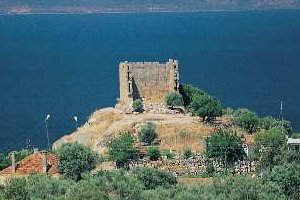
    Located on the northeastern shore of Lake Bafa in Muğla Province, the Ancient City of Herakleia under Latmus (Herakleia ad Latmum) is one of the most fascinating archaeological sites of the Aegean region. Surrounded by dramatic rocky mountains, ancient olive groves, and the peaceful waters of Lake Bafa, Herakleia offers a unique combination of history, mythology, archaeology, and natural beauty.

    Once located on the shores of the Latmian Gulf, an arm of the Aegean Sea, the city gradually became an inland settlement after the Menderes (Maeander) River carried sediment into the gulf and transformed the coastline into what is now Lake Bafa.

    Today, the ruins of Herakleia stand as a remarkable reminder of ancient Carian civilization and the later Christian monastic traditions that flourished among the mountains surrounding the lake.


    From Latmus to Herakleia

    The earliest name of the settlement was Latmus, derived from Mount Latmus, the impressive mountain range overlooking the city and rising to approximately 1,300 meters above sea level.

    Although Herakleia was situated within the cultural region of Ionia, it remained strongly Carian in character. Its history was closely connected with the political developments of ancient Caria rather than the major Ionian coastal cities.

    Unlike nearby cities such as Ephesus and Miletus, Herakleia never became a major commercial center because it was located away from the principal trade route connecting Ephesus and Miletus. Miletus, with its powerful fleet and strategic harbor, dominated maritime commerce in the region.


    The Transformation Under King Mausolus

    During the 4th century BC, the powerful Carian ruler Mausolus of Halicarnassus expanded his influence throughout the region.

    Using political strategy and military tactics, Mausolus gained control over Latmus as part of his efforts to strengthen and Hellenize Caria.

    The city was renamed Herakleia under Latmus to distinguish it from the many other ancient cities named Herakleia throughout the Greek world.

    The new name honored Herakles (Hercules), one of the most celebrated heroes of Greek mythology.


    Lysimachus and the Great City Walls

    After the death of Alexander the Great, his generals divided his vast empire among themselves.

    In 287 BC, Lysimachus, one of Alexander’s most powerful successors, took control of Herakleia and transformed it into a heavily fortified Hellenistic city.

    The most impressive surviving feature of Herakleia is its enormous defensive wall system.

    These fortifications:

    • Extend for nearly 6 kilometers
    • Include approximately 65 towers
    • Follow the difficult mountainous terrain
    • Rise from the lakeshore to elevations of nearly 500 meters

    The massive stone walls remain among the best-preserved examples of Hellenistic military architecture in western Anatolia.

    Walking along these ancient defenses provides spectacular views over Lake Bafa and the surrounding mountains.


    The Temple of Athena

    One of Herakleia’s most important monuments is the Temple of Athena, located on a rocky promontory overlooking the lake.

    Built during the Hellenistic period, the temple was designed in the in antis style, where the walls of the temple extend forward to form a small porch between two columns.

    Dedicated to Athena, the goddess of wisdom and strategic warfare, the temple reflected the city’s Greek cultural influences while remaining part of the Carian landscape.

    Today, visitors can still see the temple foundations, architectural fragments, and column remains against the spectacular backdrop of Lake Bafa.


    Hippodamian City Planning

    Herakleia was designed according to the Hippodamian urban planning system, named after Hippodamus of Miletus, the famous Greek architect and city planner.

    This system organized cities using:

    • Straight streets
    • Rectangular city blocks
    • Planned public areas
    • Functional separation of residential and civic spaces

    The same planning principles were used in several important Greek and Hellenistic cities throughout the Mediterranean world.


    The Decline of Herakleia

    Herakleia enjoyed prosperity during the Hellenistic period, but its importance gradually declined during Roman times.

    The main reason was environmental change.

    The Maeander (Menderes) River deposited large amounts of sediment into the Latmian Gulf, eventually cutting Herakleia off from direct access to the sea.

    The loss of its harbor severely affected trade and reduced the city’s economic importance.

    By the late Roman period, Herakleia had become a quieter regional settlement rather than a major commercial center.


    Byzantine Monastic Heritage of Latmus Mountain

    During the Byzantine period, the region surrounding Herakleia gained new importance as a center of Christian monasticism.

    From the 7th century onward, monks and hermits seeking spiritual isolation settled in the caves and rocky valleys of Mount Latmus.

    The rugged landscape, with hundreds of natural caves and secluded valleys, provided ideal conditions for monastic life.

    Some monks became highly respected spiritual figures, attracting pilgrims from distant regions.

    The monastic tradition of Latmus continued for nearly four centuries, creating a remarkable landscape filled with:

    • Cave churches
    • Rock shelters
    • Monastic settlements
    • Byzantine frescoes

    The Legend of Endymion

    One of the most fascinating legends connected with the region is the story of Endymion, a beautiful shepherd or hunter from Greek mythology.

    According to ancient mythology, Endymion was loved by the moon goddess Selene, who asked Zeus to grant him eternal sleep so that he could remain forever young.

    A local tradition later associated a cave sanctuary on Mount Latmus with the supposed tomb of Endymion.

    Early Christian communities adapted the sacred site, transforming it into a place of Christian worship.

    This blending of pagan mythology and Christian tradition reflects the extraordinary cultural continuity of Anatolia.


    Visiting Herakleia Today

    The Ancient City of Herakleia is located near the modern village of Kapıkırı, beside Lake Bafa.

    Visitors can explore:

    • The massive Hellenistic city walls
    • Defensive towers
    • Temple of Athena
    • Agora remains
    • Ancient harbor structures
    • Necropolis
    • Byzantine churches
    • Rock monasteries
    • Cave settlements

    The surrounding area is equally impressive, offering opportunities for:

    • Hiking on Mount Latmus
    • Birdwatching around Lake Bafa
    • Photography
    • Boat trips
    • Exploring traditional villages
    • Discovering ancient olive groves

    Nearby Attractions

    Herakleia is ideally located for exploring other historical and natural attractions:

    • Lake Bafa Nature Park
    • Latmos Mountains
    • Beşparmak Mountains
    • Ancient City of Miletus
    • Ancient City of Didyma
    • Priene Ancient City
    • Milas
    • Bodrum Peninsula

    A Hidden Gem of Ancient Caria

    The Ancient City of Herakleia under Latmus is one of Turkey’s most atmospheric archaeological destinations. Its powerful Hellenistic walls, sacred Temple of Athena, Carian heritage, and Byzantine cave monasteries reveal a landscape where different civilizations lived, worshipped, and transformed the same mountains for more than two thousand years.

    Standing beside the peaceful waters of Lake Bafa, surrounded by the ancient rocks of Mount Latmus, visitors experience not only an archaeological site but a living cultural landscape where mythology, history, and nature remain deeply connected.

  • Ancient City of Cedrae (Cleopatra Island), Marmaris

    Nestled within the crystal-clear waters of the Gökova Gulf, the Ancient City of Cedrae is one of the most enchanting archaeological sites along Turkey’s Aegean coast. Located on Sedir Island, popularly known as Cleopatra Island, approximately 20 kilometers north of Marmaris, the ancient city combines remarkable historical ruins with one of the Mediterranean’s most famous beaches.

    The island is renowned not only for its well-preserved Hellenistic and Roman remains but also for the legendary Cleopatra Beach, whose unique golden sand has inspired myths for centuries.


    The Ancient City of Cedrae

    Cedrae was an important coastal settlement of ancient Caria, flourishing during the Classical, Hellenistic, and Roman periods. Thanks to its strategic location in the sheltered waters of the Gökova Gulf, the city became an active trading port and naval outpost.

    Today, visitors can still explore impressive remains that reveal the city’s former prosperity and its role in regional commerce, religion, and public life.


    The City Islands

    The archaeological site forms part of a small island group often referred to as the City Islands, consisting primarily of:

    • Sedir (Cleopatra) Island
    • Orta Island
    • Küçük Island

    Together, these islands preserve numerous archaeological remains, ancient fortifications, and burial sites surrounded by the stunning turquoise waters of the Aegean Sea.


    The Legend of Cleopatra

    Cedrae is inseparably linked with one of the Mediterranean’s most enduring legends.

    According to tradition, Queen Cleopatra VII of Egypt visited the island with the Roman general Mark Antony during the 1st century BC.

    Legend tells that Cleopatra admired the beauty of the secluded bay but found its coarse local sand unsuitable. To please her, Mark Antony supposedly ordered ships to transport tons of fine golden sand from the shores of northern Egypt.

    The result is today’s famous Cleopatra Beach, whose distinctive rounded grains are exceptionally rare. Scientific studies have shown that the sand differs significantly from the surrounding beaches and resembles carbonate sands found in parts of the eastern Mediterranean, contributing to the mystery surrounding its origin.

    To preserve this unique natural feature, visitors are prohibited from removing sand, and access to certain parts of the beach is carefully managed.


    Ancient City Walls

    As visitors approach the island by boat, the impressive remains of Cedrae’s defensive walls become visible along the shoreline.

    These massive fortifications once protected the city from pirates and invading fleets, reflecting Cedrae’s strategic importance in antiquity.

    Many sections of the walls remain remarkably well preserved, offering spectacular views over the Gulf of Gökova.


    The Ancient Theatre

    One of Cedrae’s best-preserved monuments is its small Hellenistic theatre, built into the natural slope of the island.

    Although modest in size, the theatre once hosted dramatic performances, musical events, civic meetings, and religious ceremonies. Today, visitors can still distinguish the seating rows and stage area while enjoying panoramic views across the sea.


    Temple of Apollo and the Byzantine Basilica

    Religion played an important role in the life of ancient Cedrae.

    The city was home to a Temple of Apollo, one of the principal deities worshipped throughout Caria.

    During the Byzantine period, a Christian basilica was constructed directly over parts of the earlier temple foundations, reflecting the transition from pagan worship to Christianity that occurred throughout the Eastern Roman Empire.

    The remains of columns, foundations, and architectural fragments from both periods can still be seen on the island.


    The Ancient Agora

    On the western side of Sedir Island lie the remains of Cedrae’s Agora, the city’s commercial and social center.

    Ancient inscriptions discovered here indicate that athletic competitions and religious festivals dedicated to Apollo were regularly held in Cedrae, attracting participants and spectators from surrounding settlements.

    The Agora served not only as a marketplace but also as the heart of civic life.


    Necropolis and Tombs

    Nearby Küçük Island contains the remains of an ancient necropolis, or burial ground.

    Visitors can observe:

    • rock-cut tombs
    • sarcophagi
    • column fragments
    • funerary reliefs
    • architectural remains

    These monuments provide valuable insight into the burial customs and artistic traditions of ancient Caria.


    Cleopatra Beach

    Beyond its archaeological treasures, Sedir Island is famous for Cleopatra Beach, considered one of Turkey’s most beautiful beaches.

    Its crystal-clear turquoise waters, soft golden sand, and surrounding pine-covered hills create an idyllic setting for swimming and relaxation.

    Because of its ecological importance, strict conservation measures are in place to protect the beach’s unique sand. Visitors are asked to shower before leaving the beach, and removing even a small amount of sand is strictly prohibited.


    Visiting Cedrae Today

    The island is accessible by daily excursion boats departing from:

    • Marmaris
    • Çamlı Village
    • Akyaka
    • Gökova Gulf marinas

    Many boat tours combine visits to Cleopatra Island with swimming stops in secluded coves and nearby islands, making it one of the most popular day trips from Marmaris.

    Visitors can enjoy:

    • Exploring ancient ruins
    • Walking along historic city walls
    • Visiting the theatre and Agora
    • Swimming at Cleopatra Beach
    • Snorkeling in crystal-clear waters
    • Photographing spectacular coastal scenery

    A Jewel of History and Nature

    The Ancient City of Cedrae offers an extraordinary blend of archaeology, mythology, and natural beauty. From its Hellenistic fortifications and Roman theatre to the legendary sands of Cleopatra Beach, the island provides visitors with a unique opportunity to experience one of Turkey’s most captivating ancient coastal settlements. Whether you are fascinated by history, inspired by classical legends, or simply seeking one of the Aegean’s most beautiful islands, Cedrae remains an unforgettable destination in the heart of the Gökova Gulf.

  • Ancient City of Bargylia, Milas, Muğla

    Hidden along the tranquil shores of the Güllük Gulf, the Ancient City of Bargylia is one of the lesser-known archaeological treasures of Turkey’s Aegean coast. Located near the village of Boğaziçi, approximately 30 kilometers from Milas and close to Milas-Bodrum Airport, Bargylia offers visitors a fascinating glimpse into the ancient civilization of Caria, surrounded by beautiful coastal scenery, wetlands, and olive groves.

    Although much of the city remains unexcavated, its atmospheric ruins and peaceful setting make Bargylia an appealing destination for history enthusiasts seeking to explore beyond the more famous archaeological sites of the region.


    A City of Ancient Caria

    Bargylia was an important coastal city of ancient Caria, occupying a strategic position on the sheltered waters of the Güllük Gulf. According to Greek mythology, the city was founded by Bargylos, a companion of the legendary hero Bellerophon, after whom the settlement was named.

    Throughout its history, Bargylia flourished under the rule of various civilizations, including the Persians, Hellenistic kingdoms, Romans, and Byzantines. Its protected harbor made it an active trading center and an important link in the maritime network of the Aegean Sea.

    The city reached its greatest prosperity during the Hellenistic and Roman periods, when monumental public buildings, temples, and defensive walls were constructed.


    Archaeological Remains

    Although time and nature have taken their toll, Bargylia still preserves numerous archaeological remains that reveal the city’s former importance.

    Visitors can explore the remains of:

    • Ancient city walls
    • Foundations of public buildings
    • A Roman temple with surviving columns
    • An altar decorated with carved reliefs
    • Sections of a stoa (covered colonnade)
    • A small ancient theatre
    • Roman aqueduct remains
    • Residential structures
    • Ancient necropolis (cemetery)

    Scattered marble blocks, inscriptions, and architectural fragments can still be seen throughout the site, offering clues to the city’s rich past.


    The Roman Temple

    Among Bargylia’s most notable monuments are the remains of a Roman temple, where portions of its walls and columns remain standing.

    Although only fragments survive, the temple once served as one of the city’s principal religious centers and reflected the prosperity enjoyed during the Roman Imperial period.

    Nearby, visitors can also observe an altar decorated with finely carved reliefs, illustrating the artistic craftsmanship of the era.


    Theatre and Public Spaces

    A small section of Bargylia’s ancient theatre is still visible, built into the natural slope overlooking the surrounding landscape.

    Like many classical theatres, it would have hosted dramatic performances, musical events, and civic gatherings.

    The remains of the stoa, a long colonnaded walkway that bordered the city’s marketplace, indicate the importance of commerce and public life in ancient Bargylia.


    Ancient Water System

    Fragments of a Roman aqueduct demonstrate the city’s sophisticated water supply system.

    These engineering works transported fresh water from nearby springs into the settlement, supporting its inhabitants as well as its public baths, fountains, and residential quarters.


    The Necropolis

    Outside the city walls lies Bargylia’s ancient necropolis, where numerous tombs and funerary monuments once honored the city’s inhabitants.

    Although many burial structures have deteriorated over time, the cemetery provides valuable insight into ancient Carian and Roman burial customs.


    A Beautiful Natural Setting

    One of Bargylia’s greatest attractions is its peaceful natural environment.

    The ruins lie near the shores of the Güllük Gulf, surrounded by:

    • Olive groves
    • Salt marshes
    • Coastal wetlands
    • Pine-covered hills
    • Rich birdlife

    The nearby Boğaziçi Wetlands are an important habitat for migratory birds, including flamingos, herons, pelicans, and numerous other species, making the area popular with birdwatchers and nature photographers.


    How to Visit Bargylia

    The archaeological site is located approximately 4 kilometers from the main highway connecting Milas and Bodrum.

    Visitors can reach Bargylia by:

    • Private car
    • Four-wheel-drive vehicle (recommended for some access roads)
    • Taxi from Milas or Boğaziçi
    • Boat from Güllük, offering a scenic approach across the gulf

    Many visitors combine Bargylia with nearby attractions such as Iasos, Euromos, Labranda, or the beaches of the Güllük Gulf.


    Nearby Attractions

    While exploring the region, visitors can also discover:

    • Ancient City of Iasos
    • Temple of Zeus at Euromos
    • Sanctuary of Labranda
    • Lake Bafa
    • Milas Historic Center
    • Boğaziçi Bird Sanctuary
    • Güllük Marina

    Together, these sites reveal the remarkable cultural heritage of ancient Caria.


    A Hidden Treasure of the Aegean

    The Ancient City of Bargylia may not be as famous as Ephesus or Halicarnassus, but its combination of archaeological remains, coastal beauty, and peaceful atmosphere makes it one of the hidden gems of southwestern Turkey. Walking among its ancient walls, temple ruins, theatre, and necropolis offers a fascinating journey through more than two thousand years of history, while the surrounding landscapes of the Güllük Gulf provide an unforgettable setting for exploration and discovery.

  • Ancient Site of Didyma (Didim), Aydın, Turkey

    Didyma: The Sacred Sanctuary of Apollo on the Aegean Coast

    Located on the Aegean coast of Turkey, near the ancient city of Miletus and within the modern district of Didim in Aydın Province, the ancient site of Didyma is one of the most impressive archaeological destinations in western Anatolia.

    Although Didyma is mainly known for a single monumental structure, the Temple of Apollo, this extraordinary sanctuary was one of the most important religious centers of the ancient world. Its enormous columns, sacred atmosphere, and remarkable architectural remains continue to impress visitors more than two thousand years after its construction.

    The site was famous throughout antiquity as a place of prophecy, where pilgrims traveled from across the Greek and Roman worlds to consult the oracle of Apollo.


    Historical Background of Didyma

    Didyma was one of the most important sacred sites of ancient Ionia, a region along the western coast of Anatolia that was home to influential Greek cities.

    The sanctuary was closely connected with the ancient city of Miletus, located approximately 18 kilometers away. Unlike many temples that were located inside city centers, Didyma functioned as a major religious sanctuary outside the city, attracting pilgrims and visitors from distant regions.

    The name Didyma means “twins” in ancient Greek, possibly referring to the twin gods Apollo and Artemis, although the exact origin of the name remains debated.


    The Oracle of Apollo at Didyma

    The Temple of Apollo at Didyma was one of the most famous oracle centers of the ancient world, comparable in importance to the Oracle of Delphi in Greece.

    Priests and priestesses delivered prophecies believed to come from Apollo himself. Ancient rulers, generals, and ordinary pilgrims traveled to Didyma seeking guidance on:

    • Political decisions
    • Military campaigns
    • Religious matters
    • Personal questions

    The oracle played an important role in the religious life of the ancient Mediterranean.


    Temple of Apollo

    The greatest attraction of Didyma is the monumental Temple of Apollo, one of the largest temples built in the ancient Greek world.

    Architectural Features

    The temple was designed as a massive Hellenistic sanctuary with impressive dimensions.

    Highlights include:

    • A huge open-air courtyard
    • Monumental entrance staircase
    • Double rows of columns
    • Giant marble blocks
    • Elaborately decorated architectural elements

    A magnificent portico of double colonnades surrounded the temple, creating a powerful visual effect.


    Construction and Development

    The earliest sanctuary at Didyma dates back to ancient times, but the most impressive temple was begun during the Hellenistic period after the conquests of Alexander the Great.

    Construction continued for centuries, but the temple was never fully completed.

    The enormous scale of the project explains why many architectural elements remained unfinished.


    Destruction and Restoration

    Throughout history, Didyma experienced several periods of destruction and rebuilding.

    The sanctuary was:

    • Damaged during conflicts
    • Looted in different historical periods
    • Affected by political and religious changes

    Despite these challenges, the surviving remains still demonstrate the extraordinary ambition and artistic achievement of ancient architects.


    Main Features to See at Didyma

    Temple of Apollo

    The centerpiece of the site, featuring:

    • Massive columns
    • Sacred courtyard
    • Monumental walls
    • Ancient inscriptions

    Visitors can walk among the enormous remains and experience the scale of the ancient sanctuary.


    Medusa Relief

    One of the most famous decorative elements of Didyma is the carved image of Medusa, the mythological creature whose gaze was believed to turn people into stone.

    The relief demonstrates the artistic quality of ancient Greek and Hellenistic sculpture.


    Sacred Way

    A ceremonial road once connected Didyma with Miletus.

    Pilgrims traveled along this route during religious festivals, accompanied by statues, ceremonies, and processions.


    Archaeological Importance

    Didyma provides valuable information about:

    • Ancient Greek religion
    • Oracle traditions
    • Hellenistic architecture
    • Religious pilgrimage routes
    • Relations between Greek cities and Anatolian cultures

    The site represents one of the finest examples of the interaction between Greek civilization and Anatolian history.


    Visiting Didyma Today

    Today, visitors can explore the remains of the Temple of Apollo and admire the impressive surviving structures.

    The atmosphere of the site is enhanced by:

    • Open archaeological landscapes
    • Ancient marble remains
    • Historical inscriptions
    • Views of the surrounding Aegean region

    Didyma is especially impressive during:

    • Early morning visits
    • Sunset hours
    • Spring and autumn seasons

    Nearby Attractions

    Miletus Ancient City

    Located nearby, Miletus was one of the greatest cities of ancient Ionia.

    Highlights include:

    • Ancient theater
    • Roman baths
    • Agora
    • Byzantine remains

    Priene Ancient City

    A beautifully preserved ancient Greek city famous for:

    • Temple of Athena
    • Grid-planned streets
    • Mountain scenery

    Bafa Lake

    A beautiful natural area offering:

    • Hiking trails
    • Bird watching
    • Monasteries
    • Ancient ruins

    Altınkum Beach, Didim

    A popular Aegean coastal destination known for:

    • Sandy beaches
    • Clear waters
    • Restaurants
    • Water activities

    Getting There

    From İzmir

    Distance:

    • Approximately 160 km

    Travel options:

    • Rental car
    • Bus services
    • Private transfer

    From Bodrum

    Distance:

    • Approximately 110 km

    From Milas-Bodrum Airport

    Distance:

    • Approximately 85 km

    The site is easily accessible from major Aegean tourism centers.


    Travel Tips

    • Allow at least 1 hour to explore the archaeological site.
    • Wear comfortable shoes because the ground is uneven.
    • Visit early in summer to avoid midday heat.
    • Combine Didyma with Miletus and Priene for a complete ancient history tour.
    • Bring water and sun protection during hot months.


    The Ancient Site of Didyma and the Temple of Apollo is one of the most remarkable archaeological treasures of Aydın Province and the Aegean coast of Turkey.

    Although only one major monument dominates the site, its enormous scale, religious importance, and architectural beauty make Didyma unforgettable. As one of antiquity’s greatest oracle centers, it offers visitors a fascinating journey into the spiritual world of ancient Ionia.

  • Ancient City of Seleucia Pieria, Hatay, Turkey

    Ancient City of Seleucia Pieria, Hatay, Turkey

    Seleucia Pieria: The Ancient Port City and Gateway of the Eastern Mediterranean

    Located approximately 6 kilometers south of Samandağ in Hatay Province, the ancient city of Seleucia Pieria was one of the most important harbor cities of the ancient Mediterranean world. Founded as the port of Antioch on the Orontes, Seleucia Pieria played a major role in commerce, military movements, and religious history.

    The city is especially famous for its connection with the early Christian world, as it was the departure point for the first missionary journey of Saint Paul and Barnabas. Today, the impressive remains of the city, including the remarkable Titus–Vespasianus Tunnel, ancient rock tombs, and archaeological structures, make it one of Hatay’s most fascinating historical sites.


    Historical Background of Seleucia Pieria

    Seleucia Pieria was founded around 300 BC by Seleucus I Nicator, one of the generals of Alexander the Great and the founder of the Seleucid Empire.

    The city was named after its founder and the nearby mountain region of Pieria.

    Its strategic location on the Mediterranean coast made it the natural maritime gateway for the inland city of Antioch, one of the greatest cities of the ancient world.

    Through its harbor, goods, armies, travelers, and ideas moved between:

    • Anatolia
    • Syria
    • The Eastern Mediterranean
    • The Roman Empire

    Seleucia Pieria and Antioch

    Although Antioch was located inland along the Orontes River, Seleucia Pieria served as its main seaport.

    The relationship between the two cities was essential:

    • Antioch became a political and cultural center.
    • Seleucia Pieria provided maritime access.

    The port connected the region with major Mediterranean trade routes and contributed greatly to the prosperity of both cities.


    Religious Importance: The Journey of Saint Paul

    Seleucia Pieria holds a special place in Christian history.

    According to the Acts of the Apostles, Saint Paul and Barnabas departed from this port on their first missionary journey around AD 46–48.

    From Seleucia Pieria they sailed to Cyprus, beginning one of the most important missions in the spread of Christianity throughout the Roman world.

    Because of this connection, the ancient harbor is an important destination for visitors interested in early Christian history.


    The Titus–Vespasianus Tunnel

    One of the most remarkable monuments near Seleucia Pieria is the Titus–Vespasianus Tunnel, an extraordinary example of Roman engineering.

    The tunnel was constructed during the reigns of the Roman emperors Vespasian and Titus in the 1st century AD.

    Purpose of the Tunnel

    The surrounding mountains caused seasonal floods that threatened the city and harbor.

    Roman engineers built the tunnel system to:

    • Divert rainwater away from the settlement
    • Protect the harbor area
    • Control flooding

    The project demonstrates the advanced engineering skills of Roman builders.


    Architecture and Engineering Importance

    The Titus Tunnel remains impressive even by modern standards.

    Its construction involved:

    • Cutting through solid rock
    • Creating a long water channel
    • Managing mountain drainage
    • Protecting an important commercial harbor

    The structure reflects the importance of Seleucia Pieria as a major Roman port city.


    Rock Tombs of Seleucia Pieria

    Near the ancient city are approximately 12 rock-cut tombs carved into the surrounding landscape.

    These tombs provide valuable information about ancient burial traditions.

    Features include:

    • Chambers carved into stone
    • Burial niches
    • Decorative elements
    • Evidence of Roman and Hellenistic customs

    The tombs offer visitors a glimpse into the funerary practices of ancient communities in the region.


    Archaeological Remains

    Although much of ancient Seleucia Pieria has been affected by natural changes and historical events, visitors can still explore important remains, including:

    • Ancient harbor areas
    • Rock-cut structures
    • Burial sites
    • Water management systems
    • The Titus Tunnel

    The archaeological landscape reveals the importance of the city as both a commercial and strategic center.


    Things to See and Do

    A visit to Seleucia Pieria can include:

    Explore the Titus Tunnel

    Walk through one of the finest examples of Roman hydraulic engineering.

    Visit the Rock Tombs

    Discover ancient burial chambers carved into the mountainside.

    Explore Samandağ

    The nearby town offers:

    • Mediterranean scenery
    • Local cuisine
    • Coastal landscapes
    • Cultural attractions

    Discover Hatay’s Heritage

    The region is famous for:

    • Ancient civilizations
    • Religious history
    • Gastronomy
    • Multicultural traditions

    Nearby Attractions

    Ancient City of Antioch (Antakya)

    Once one of the largest cities of the Roman Empire, Antioch was famous for:

    • Roman mosaics
    • Early Christian history
    • The Orontes River
    • St. Pierre Church

    St. Pierre Church

    One of the earliest Christian worship sites, associated with the first followers of Christianity in Antioch.

    Hatay Archaeology Museum

    Home to one of the world’s richest collections of Roman mosaics.

    Highlights include:

    • Ancient mosaics
    • Sculptures
    • Archaeological artifacts from the region

    Samandağ Beach

    A long Mediterranean beach known for:

    • Natural landscapes
    • Sea turtle nesting areas
    • Peaceful coastal scenery

    Getting There

    From Hatay (Antakya)

    Distance:

    • Approximately 35 km

    Transportation options:

    • Rental car
    • Taxi
    • Local transport

    From Samandağ

    Distance:

    • Approximately 6 km south

    The site is easily combined with a visit to Samandağ and Antakya.


    Travel Tips

    • Wear comfortable shoes as the terrain around the archaeological areas can be uneven.
    • Bring water during summer visits.
    • Combine the visit with Antioch and Hatay Museum for a complete historical experience.
    • Visit in spring or autumn for comfortable weather.
    • Allow extra time to explore the surrounding natural landscapes.

    The Ancient City of Seleucia Pieria is one of the most significant historical sites on Turkey’s Mediterranean coast. Once a powerful port connecting Antioch with the wider ancient world, it witnessed important events in Hellenistic, Roman, and early Christian history.

    From the remarkable Titus–Vespasianus Tunnel to its ancient harbor and rock tombs, Seleucia Pieria offers visitors a fascinating journey through engineering, trade, and religious heritage in one of Turkey’s most historically rich regions.