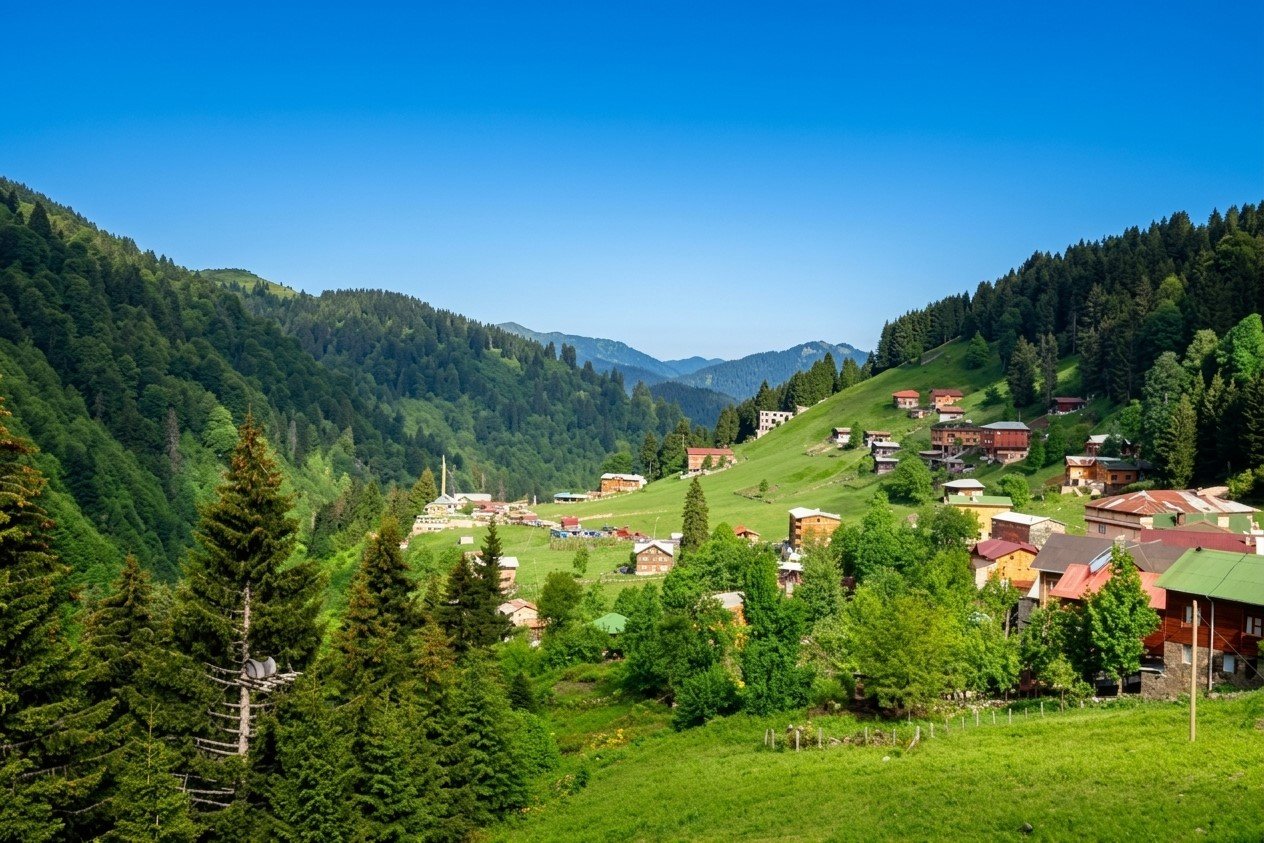
Turkey is home to an extraordinary variety of highland landscapes thanks to its diverse geography, different climate zones, and extensive mountain ranges. From the misty, green plateaus of the Black Sea to the high-altitude meadows of the Taurus Mountains, and from the broad mountain pastures of Eastern Anatolia to the peaceful highland villages of western Turkey, the country offers hundreds of fascinating destinations for nature lovers.
Turkey’s plateaus are important not only because of their natural beauty but also because of their traditional lifestyle, livestock culture, local cuisine, wooden architecture, festivals, and opportunities for outdoor activities.
During the summer months, plateaus provide an attractive alternative to the hot and crowded coastal areas. Visitors can enjoy cool temperatures, fresh mountain air, clear streams, green meadows, hiking trails, and traditional village life.
What Is a Turkish Plateau?
A plateau, known as “yayla” in Turkish, is generally a high-altitude meadow, plain, or mountain settlement where people traditionally spend the warmer months of the year, often together with their livestock.
For centuries, plateau life was closely connected with animal husbandry. During the summer, families moved from warmer lowland areas to higher elevations where the climate was cooler and natural pastures were abundant.
Today, traditional pastoral life continues in some areas, while many plateaus have also become popular destinations for nature tourism, hiking, camping, photography, caravan tourism, and ecotourism.
Highland Culture in Turkey
Plateau culture varies considerably from one region of Turkey to another.
Black Sea Highland Culture
Highland traditions are particularly strong in Rize, Trabzon, Artvin, Giresun, Ordu, and Gümüşhane.
Traditional wooden houses, mist-covered mountains, lush green meadows, mountain streams, and summer festivals are characteristic features of the region.
Taurus Mountain Highland Culture
In the Mediterranean region, highland life is particularly associated with Antalya, Mersin, Adana, Osmaniye, and Kahramanmaraş.
The plateaus of the Taurus Mountains are closely connected with the traditional Yörük culture. Sheep and goat farming, traditional tents, local markets, and regional foods are important elements of this lifestyle.
Eastern Anatolian Highland Culture
Eastern Anatolia has extensive high-altitude meadows and pastures. The provinces of Erzurum, Kars, Ardahan, Ağrı, Bingöl, and Bitlis contain many areas traditionally used for summer grazing.
The region’s high-altitude grasslands become particularly green during the summer and remain important for livestock farming.
The Most Beautiful Plateaus in Turkey
Turkey has hundreds of plateaus, but some stand out because of their scenery, accessibility, cultural importance, and tourism facilities.
1. Ayder Plateau – Rize
Ayder Plateau, located in Çamlıhemşin district of Rize, is one of Turkey’s most famous highland destinations.
Situated on the slopes of the Kaçkar Mountains, Ayder is known for its forests, waterfalls, thermal springs, and lush landscapes. It becomes particularly popular during the summer.
Activities around Ayder include:
- Hiking
- Photography
- Camping
- Waterfall excursions
- Mountaineering
- Rafting
- Highland tours
Ayder is also an important starting point for exploring the Kaçkar Mountains National Park and surrounding plateaus.
2. Pokut Plateau – Rize
Pokut Plateau is one of the most spectacular highland destinations around Çamlıhemşin.
Located at an altitude of approximately 2,000 meters, the plateau is particularly impressive when mist rises through the valleys and surrounds the mountains.
One of Pokut’s most distinctive characteristics is its collection of traditional wooden highland houses.
The plateau is ideal for travelers interested in nature, photography, hiking, and traditional architecture.
3. Sal Plateau – Rize
Located close to Pokut Plateau, Sal Plateau is another excellent destination for experiencing traditional Black Sea highland architecture.
Traditional wooden houses, green meadows, mountain views, and frequent mist create the characteristic atmosphere of the area.
Pokut and Sal plateaus can easily be included in the same trip.
4. Huser Plateau – Rize
Huser Plateau is particularly famous for its spectacular “sea of clouds” views.
On clear days, visitors can enjoy panoramic views of the surrounding Kaçkar Mountains and the Black Sea.
Early morning and sunset are especially attractive times for photography, when clouds often fill the valleys below.
5. Gito Plateau – Rize
Gito Plateau is another popular highland destination around Çamlıhemşin.
Situated at around 2,000 meters above sea level, the plateau offers wide panoramic views and impressive sea-of-clouds landscapes.
It is particularly attractive for sunrise and sunset photography.
6. Anzer Plateau – Rize
Anzer Plateau is located in the İkizdere area of Rize.
The region is particularly famous for Anzer honey, which is associated with the diverse flowering plants found in the high-altitude meadows.
Anzer is also an attractive destination for hiking, mountain tourism, and experiencing traditional highland life.
7. Uzungöl and the Surrounding Plateaus – Trabzon
Uzungöl, located in Çaykara district of Trabzon, is one of Turkey’s best-known natural attractions.
In addition to the famous lake itself, the surrounding mountains contain numerous highland settlements and natural areas.
Haldizen Plateau, Demirkapı Plateau, and other surrounding highlands feature mountain landscapes, alpine meadows, streams, and lakes.
8. Sultan Murat Plateau – Trabzon
Sultan Murat Plateau is located in Çaykara district and reaches an altitude of approximately 2,000 meters.
Its wide meadows and mountain scenery make it a popular summer destination.
Traditional highland events and festivals are also held in the area.
9. Kümbet Plateau – Giresun
Kümbet Plateau, located in Dereli district of Giresun, is one of the important highland tourism destinations of the Black Sea region.
Its extensive meadows, forests, and fresh mountain air attract visitors during the summer.
Accommodation facilities and traditional highland events are available in and around the plateau.
10. Bektaş Plateau – Giresun
Bektaş Plateau is one of the important highland settlements of Giresun.
With an altitude approaching 2,000 meters, it offers a cool climate during the summer.
Visitors can enjoy hiking, camping, photography, and nature excursions in the surrounding area.
11. Perşembe Plateau – Ordu
Perşembe Plateau, located in Aybastı district of Ordu, is particularly famous for its beautiful meandering streams.
Streams wind through extensive green meadows, creating one of the most distinctive landscapes in the Black Sea highlands.
Popular activities include:
- Photography
- Camping
- Hiking
- Highland tourism
- Picnicking
- Nature excursions
12. Çambaşı Plateau – Ordu
Çambaşı Plateau is located in Kabadüz district of Ordu.
At an altitude of approximately 1,850 meters, it is one of the better-developed highland tourism destinations in the Black Sea region.
Its cool summer climate attracts visitors escaping the heat of the coast, while during winter the area also becomes important for skiing and other winter activities.
13. Kafkasör Plateau – Artvin
Kafkasör Plateau is located close to Artvin city center and is known for its natural beauty and cultural traditions.
The famous Kafkasör Festival and traditional bull-wrestling events are important elements of the local cultural identity.
The surrounding forests and mountains also provide opportunities for hiking and nature tourism.
14. Maçahel – Artvin
Maçahel, in the Borçka area of Artvin, is one of northeastern Turkey’s most remarkable natural and cultural landscapes.
The region features dense forests, traditional wooden village houses, mountain streams, and dramatic highlands.
The area is also famous for the Camili Biosphere Reserve, one of Turkey’s most important protected natural areas.
15. Zigana Highlands – Trabzon and Gümüşhane
The highlands around the Zigana Mountains form an important mountain and highland tourism region between Trabzon and Gümüşhane.
During the summer, the area is popular for hiking, camping, and photography.
In winter, heavy snowfall transforms the landscape into an impressive snowy mountain destination.
16. Ovit Plateau – Rize
The Ovit Mountain region contains some of the highest and most impressive landscapes in the Eastern Black Sea region.
During the summer, its extensive mountain pastures become covered in green vegetation.
In winter, heavy snowfall gives the region a completely different character.
17. Aladağlar Highlands – Niğde, Kayseri and Adana
The Aladağlar Mountains form one of the most spectacular sections of the Taurus mountain system.
Stretching across parts of Niğde, Kayseri, and Adana, the region is known for its high peaks, valleys, alpine meadows, and hiking routes.
Aladağlar is particularly important for:
- Trekking
- Mountaineering
- Camping
- Nature photography
- Adventure tourism
18. Gömbe Plateau – Antalya
Gömbe Plateau, in the Kaş area of Antalya, offers a completely different environment from the Mediterranean coast.
The highland provides a cooler climate during the summer and is popular with visitors seeking an escape from the heat of the coastal resorts.
The surrounding mountains, traditional settlements, natural landscapes, and local culture make Gömbe an interesting alternative tourism destination in Antalya Province.
19. Feslikan Plateau – Antalya
The highlands west of Antalya provide a natural escape from the hot summer climate of the city and coastal areas.
Feslikan Plateau is particularly popular because of its relative proximity to Antalya and can be visited as a day-trip destination.
Visitors come here to enjoy cooler temperatures, mountain scenery, traditional food, and nature.
20. Bolu Highlands
Bolu is one of Turkey’s most important destinations for nature tourism because of its extensive forests, lakes, mountains, and highland landscapes.
The plateaus around Bolu are suitable for:
- Camping
- Trekking
- Photography
- Caravan tourism
- Nature walks
- Wildlife and plant observation
The region is particularly beautiful during spring and autumn.
Activities to Enjoy in Turkey’s Highlands
Turkey’s plateaus are not simply places for enjoying mountain scenery. They also offer a wide variety of outdoor activities.
Hiking and Trekking
Mountain plateaus provide numerous short and long-distance hiking routes.
The Kaçkar Mountains, Aladağlar, and Taurus Mountains are particularly attractive for experienced hikers.
Camping
The quiet atmosphere and natural surroundings make many plateaus suitable for camping.
However, visitors should check whether camping is permitted in the specific area, especially inside national parks, protected areas, and conservation zones.
Photography
Mist, cloud formations, traditional wooden houses, wildflowers, mountain peaks, and sunrise and sunset landscapes make Turkey’s highlands excellent destinations for photographers.
Caravan Tourism
Some plateaus in the Black Sea and western regions have become increasingly popular with caravan travelers.
Mountaineering
The Kaçkar Mountains and Aladağlar are among Turkey’s most important destinations for experienced mountaineers.
Highland Festivals
Many highland communities organize traditional festivals during the summer.
These events may include:
- Folk dancing
- Traditional music
- Local food
- Wrestling
- Handicrafts
- Livestock traditions
- Local cultural performances
Such festivals offer visitors an opportunity to experience rural Turkish culture directly.
What to Eat in Turkey’s Highlands
Local cuisine is an important part of the highland experience.
In the Black Sea highlands, visitors can find:
- Muhlama
- Corn bread
- Black cabbage dishes
- Local dairy products
- Butter
- Highland cheese
- Honey
- Kuymak
In the Taurus Mountains, traditional foods include:
- Keşkek
- Gözleme
- Yörük dishes
- Tandır
- Yogurt
- Local cheeses
- Ayran
- Goat products
In Eastern Anatolia, meat and dairy products are particularly important components of the traditional cuisine.
Best Time to Visit Turkey’s Highlands
The best time to visit most Turkish plateaus is generally from late spring through summer and early autumn.
May–June
Nature begins to come alive, wildflowers appear, and the landscapes become increasingly green.
However, high-altitude areas can still be cold.
July–August
These are the busiest months for highland tourism.
The Black Sea plateaus are particularly popular during this period.
September–October
Crowds begin to decrease, while autumn colors start appearing.
This can be one of the best periods for photography and peaceful nature trips.
Winter
Some highlands become difficult to access because of heavy snowfall.
Others, however, become attractive destinations for skiing, snow activities, winter hiking, and enjoying dramatic mountain scenery.
Important Tips for Visiting Turkish Plateaus
Weather conditions can change rapidly in mountainous areas.
Visitors should consider carrying:
- Waterproof clothing
- Warm layers
- Hiking shoes
- Sunscreen
- A hat
- Drinking water
- Basic first-aid supplies
- A power bank
- Offline maps or navigation tools
Mobile phone coverage can also be limited in remote mountain areas, so visitors should avoid relying entirely on their phones for navigation or emergency communication.
The Future of Highland Tourism in Turkey
Highland tourism represents an important part of Turkey’s potential for sustainable and alternative tourism.
While traditional beach tourism is concentrated mainly along the country’s coastal regions, highland tourism can encourage visitors to explore Turkey’s mountainous and rural interior.
In particular, ecotourism, rural tourism, gastronomic tourism, trekking, camping, photography, and cultural tourism can be developed together with highland tourism.
However, environmental protection is essential. Uncontrolled construction, excessive vehicle traffic, waste, and overcrowding can damage the natural and cultural character of highland areas.
The future of highland tourism should therefore focus on limited development, environmental protection, local participation in tourism revenues, and preservation of traditional culture.
Turkey’s highlands are among the country’s most valuable natural and cultural tourism resources.
From the mist-covered Kaçkar plateaus of Rize to the broad green meadows of Ordu, the forested highlands of Artvin, and the traditional Yörük plateaus of the Taurus Mountains, each region offers a unique experience.
Turkey’s plateaus combine nature, fresh mountain air, traditional lifestyles, local cuisine, hiking, camping, photography, and cultural experiences.
For travelers interested in discovering Turkey’s highlands, the best approach is not simply to visit a few famous viewpoints. A richer experience comes from exploring highland villages, meeting local communities, tasting regional foods, discovering traditional architecture, and spending time in the surrounding natural landscapes.
Turkey’s plateaus offer a slower, quieter, and more authentic side of the country—far from the busy coastal resorts and major cities.