Author: tur

  • Religions in Turkiye: A Crossroads of Faith and Civilization

    Turkey occupies a unique position at the crossroads of Europe and Asia, serving for thousands of years as a meeting point of civilizations, cultures, and religions. Throughout its long history, Anatolia has played a central role in the development of the world’s major monotheistic faiths—Judaism, Christianity, and Islam—while also preserving traces of many earlier belief systems.

    Today, Turkey is internationally recognized for its remarkable religious heritage, where ancient synagogues, early Christian churches, Byzantine monasteries, magnificent Ottoman mosques, and sacred archaeological sites stand as enduring symbols of its diverse past.


    A Land of Religious Heritage

    Few countries possess such a rich concentration of sacred sites representing multiple religions. For centuries, Anatolia has welcomed travelers, pilgrims, scholars, and believers from around the world.

    Turkey’s religious heritage reflects:

    • Thousands of years of continuous civilization
    • The coexistence of different religious communities
    • Important events in biblical and Islamic history
    • Outstanding examples of sacred architecture
    • UNESCO World Heritage Sites connected with faith and history

    Judaism in Turkey

    Jewish communities have lived in Anatolia for more than two thousand years. Archaeological discoveries, including ancient synagogues, Hebrew inscriptions, and religious artifacts, testify to a long-established Jewish presence across the region.

    Important Jewish heritage sites include:

    • The ancient synagogue of Sardis
    • Historic synagogues in Istanbul
    • Jewish museums and cultural centers
    • Sephardic heritage dating from the Ottoman Empire

    Following the expulsion of Jews from Spain in 1492, Sultan Bayezid II welcomed thousands of Sephardic Jews to the Ottoman Empire, where many communities flourished for centuries.


    Christianity in Turkey

    Turkey occupies an extraordinary place in Christian history.

    Many of the most significant events of early Christianity occurred in Anatolia, including:

    • The missionary journeys of St. Paul
    • The establishment of the first Christian communities
    • The Seven Churches of Revelation
    • The final home traditionally associated with the Virgin Mary
    • The birthplace of numerous early saints and theologians

    Among Turkey’s most important Christian sites are:

    • Ephesus
    • Antioch (Antakya)
    • Cappadocia’s rock-cut churches
    • Sumela Monastery
    • Hagia Sophia
    • Basilica of St. John
    • Church of St. Peter

    These landmarks continue to attract pilgrims and visitors from around the world.


    Islam in Turkey

    Islam has shaped Turkish culture, architecture, art, and daily life for nearly a thousand years.

    Following the arrival of the Seljuk Turks and later the rise of the Ottoman Empire, magnificent mosques, religious schools, libraries, charitable foundations, and architectural masterpieces were constructed throughout the country.

    Some of Turkey’s finest Islamic monuments include:

    • Blue Mosque (Sultan Ahmed Mosque)
    • Süleymaniye Mosque
    • Selimiye Mosque
    • Green Mosque (Yeşil Cami)
    • Ulu Mosque (Bursa)
    • Mevlana Museum in Konya

    Visitors are welcome to explore many of these historic mosques while respecting local customs and dress codes.


    Other Religious Traditions

    Turkey’s cultural landscape also preserves evidence of numerous earlier religions and belief systems.

    Throughout history, Anatolia was home to:

    • Ancient Anatolian religions
    • Greek and Roman pagan traditions
    • Zoroastrian influences
    • Early monastic communities
    • Sufi traditions
    • Small modern communities practicing Buddhism, Hinduism, and other faiths

    This remarkable diversity illustrates Turkey’s historical role as a bridge between civilizations.


    Religious Tourism in Turkey

    Turkey has become one of the world’s leading destinations for religious and cultural tourism.

    Visitors can follow numerous pilgrimage routes and historical trails, including:

    • The Seven Churches of Revelation
    • St. Paul’s missionary journeys
    • The House of the Virgin Mary
    • Cappadocia’s underground churches
    • Mevlana’s spiritual heritage in Konya
    • Ottoman imperial mosques
    • Ancient Jewish communities of western Anatolia

    These journeys offer valuable insights into the shared heritage of humanity’s great religious traditions.


    A Tradition of Coexistence

    For centuries, communities of different faiths lived together throughout the Ottoman Empire and Anatolia, contributing to the country’s rich cultural mosaic. Historic neighborhoods in cities such as Istanbul, İzmir, Bursa, Antakya, and Edirne preserve churches, synagogues, and mosques located within close proximity, reflecting this diverse heritage.

    Today, the Republic of Turkey is a secular state whose constitution guarantees freedom of religion and belief, while its historic religious monuments continue to welcome visitors from every background.


    Turkey offers one of the world’s richest collections of religious and historical sites, making it a unique destination for pilgrims, historians, archaeologists, and cultural travelers. Whether exploring ancient synagogues, early Christian churches, Byzantine monasteries, or magnificent Ottoman mosques, visitors encounter a remarkable legacy shaped by thousands of years of faith, culture, and civilization.

    This exceptional blend of religious heritage, architectural splendor, and cultural diversity makes Turkey an inspiring destination for anyone interested in the history of the world’s great religions.

  • The Seven Churches of Revelation (Apocalypse) in Asia Minor, Turkey

    Ephesus Turkey

    The Seven Churches of Revelation, also known as the Seven Churches of the Apocalypse, are among the most important biblical and historical heritage sites in Turkey. Mentioned by Saint John the Apostle in the Book of Revelation (Revelation 2–3), these seven early Christian communities were located in the ancient region of Asia Minor, today’s western Turkey.

    The churches represented the spiritual, social, and religious challenges faced by early Christian communities during the Roman period. In his letters, Saint John praised their faith, warned against their weaknesses, and encouraged them to remain committed to their beliefs.

    Today, travelers can follow the Seven Churches of Revelation Route, visiting ancient cities filled with magnificent ruins, Roman architecture, Byzantine remains, and some of the earliest centers of Christianity.

    The seven churches are:

    1. Ephesus (Efes) – near Selçuk, İzmir
    2. Smyrna (Smyrna/İzmir) – modern İzmir
    3. Pergamum (Pergamon/Bergama) – İzmir Province
    4. Thyatira (Akhisar) – Manisa Province
    5. Sardis (Sart) – Salihli, Manisa Province
    6. Philadelphia (Alaşehir) – Manisa Province
    7. Laodicea (Laodikya) – near Denizli

    Tours ranging from one to four days can be organized to visit several or all of these remarkable biblical destinations.


    Historical Background

    The Seven Churches existed during the 1st century AD, when Christianity was spreading throughout the Roman Empire.

    At the time, Asia Minor was one of the most culturally advanced regions of the ancient world, containing wealthy Greek and Roman cities connected by major trade routes.

    According to Christian tradition, after leaving Jerusalem, Saint John spent his later years in the region of Ephesus and wrote the Book of Revelation while in exile on the nearby island of Patmos.

    The seven letters addressed specific communities:

    • Ephesus was praised for perseverance but criticized for losing its first love.
    • Smyrna was encouraged to remain faithful despite persecution.
    • Pergamum was warned against false teachings.
    • Thyatira was encouraged to maintain purity of faith.
    • Sardis was criticized for spiritual weakness.
    • Philadelphia was praised for loyalty and endurance.
    • Laodicea was warned against being spiritually “lukewarm.”

    Beyond their religious significance, these cities were major centers of politics, commerce, philosophy, art, and architecture.


    The Seven Churches of Revelation


    1. Ephesus (Efes), İzmir

    Overview

    The ancient city of Ephesus was the most important of the Seven Churches and one of the greatest cities of the Roman world.

    Located near modern Selçuk in İzmir Province, Ephesus was a major port, commercial center, and religious destination.

    Saint John addressed the Ephesian Christians, praising their patience and dedication while warning them not to abandon their original devotion.


    Top Attractions

    Visitors can explore:

    • Library of Celsus
    • Great Theatre
    • Temple of Artemis
    • Marble Street
    • Curetes Street
    • Terrace Houses
    • Temple of Hadrian
    • Church of Mary
    • Basilica of Saint John

    Ephesus is also associated with the life of the Virgin Mary and Saint Paul.


    2. Smyrna (İzmir)

    Overview

    Ancient Smyrna, located in modern İzmir, was one of the most important cities of the Aegean world.

    The Christian community of Smyrna received one of the most encouraging messages in Revelation, praising its faithfulness during periods of persecution.


    Top Attractions

    Highlights include:

    • Agora of Smyrna
    • Ancient city ruins
    • Kadifekale (Pagos Hill)
    • Archaeological Museum of İzmir
    • Historic waterfront area

    Smyrna continued as an important Christian center for centuries and became one of the major cities of Byzantine Anatolia.


    3. Pergamum (Pergamon), Bergama, İzmir

    Overview

    The ancient city of Pergamum was one of the most powerful cultural centers of the Hellenistic world.

    The Book of Revelation refers to Pergamum as the place “where Satan’s throne is,” often interpreted as a reference to the city’s imperial cult and powerful pagan institutions.


    Top Attractions

    Visitors should see:

    • Acropolis of Pergamon
    • Altar of Zeus
    • Ancient Theatre
    • Temple of Trajan
    • Library of Pergamum
    • Asclepion Medical Center
    • Red Basilica

    Pergamum was also famous for its ancient medical school and the invention of parchment.


    4. Thyatira (Akhisar), Manisa

    Overview

    Located in modern Akhisar, Thyatira was an important commercial city known for textile production, metalworking, and trade guilds.

    The Book of Revelation mentions the Christian community of Thyatira and warns against false teachings.


    Top Attractions

    The archaeological remains include:

    • Roman street remains
    • Ancient foundations
    • Column fragments
    • Basilica remains

    Although less extensive than other sites, Thyatira remains an important stop on the Revelation route.


    5. Sardis (Sart), Manisa

    Overview

    Ancient Sardis was the capital of the wealthy Kingdom of Lydia and later became a major Roman city.

    The city was famous for its wealth, gold resources, and the legendary King Croesus.

    In Revelation, Sardis was criticized for appearing alive outwardly but lacking spiritual strength.


    Top Attractions

    Visitors can explore:

    • Temple of Artemis
    • Roman Gymnasium
    • Synagogue of Sardis
    • Marble-paved streets
    • Ancient theatre
    • Lydian remains

    The synagogue of Sardis is one of the largest and most impressive ancient Jewish worship buildings discovered in the Roman world.


    6. Philadelphia (Alaşehir), Manisa

    Overview

    Ancient Philadelphia was founded in the Hellenistic period and became an important gateway between western Anatolia and the interior regions.

    The Christian community received one of the most positive messages in Revelation, praised for its faith despite difficulties.


    Top Attractions

    Remaining monuments include:

    • St. John’s Basilica
    • Byzantine church ruins
    • Ancient city remains
    • Historic walls

    The modern town of Alaşehir preserves layers of Greek, Roman, Byzantine, and Ottoman history.


    7. Laodicea (Laodikya), Denizli

    Overview

    Located near modern Denizli, Laodicea was one of the richest cities in ancient Asia Minor.

    The city was famous for:

    • Banking
    • Textile production
    • Medical knowledge
    • Trade

    In Revelation, Laodicea was criticized for being spiritually “lukewarm.”


    Top Attractions

    The archaeological site includes:

    • Ancient Theatre
    • Roman Stadium
    • Colonnaded streets
    • Church of Laodicea
    • Monumental fountains
    • Bath complexes

    Recent excavations have revealed impressive structures, making Laodicea one of Turkey’s most exciting archaeological destinations.


    Seven Churches of Revelation Tour Routes

    1-Day Tour

    Suitable for travelers based around İzmir:

    • Ephesus
    • Smyrna
    • Pergamum

    2-Day Tour

    A popular itinerary:

    Day 1

    • Ephesus
    • Smyrna

    Day 2

    • Sardis
    • Philadelphia
    • Thyatira

    3-Day Tour

    A complete western Anatolia route:

    Day 1

    • Ephesus
    • Smyrna

    Day 2

    • Pergamum
    • Thyatira
    • Sardis

    Day 3

    • Philadelphia
    • Laodicea

    4-Day Complete Biblical Heritage Tour

    Includes:

    • All seven churches
    • Archaeological museums
    • Ancient cities
    • Christian heritage sites
    • Local villages
    • Traditional Turkish cuisine

    Nearby Attractions

    The Seven Churches route can be combined with many famous destinations:

    Pamukkale

    Famous for:

    • White travertine terraces
    • Ancient Hierapolis
    • Cleopatra’s Pool

    Aphrodisias

    A magnificent Roman city dedicated to Aphrodite, famous for sculpture schools.

    Bodrum

    Home to:

    • Ancient Halicarnassus
    • Castle of Saint Peter
    • Aegean coastline

    İzmir

    Turkey’s third-largest city, offering:

    • Coastal promenades
    • Historic bazaars
    • Museums
    • Modern restaurants

    Best Time to Visit

    The ideal seasons are:

    Spring (April–June)

    • Mild temperatures
    • Green landscapes
    • Comfortable sightseeing

    Autumn (September–October)

    • Pleasant weather
    • Fewer crowds
    • Excellent photography conditions

    Summer can be very hot, especially at open-air archaeological sites.


    Travel Tips

    • Wear comfortable walking shoes; most sites require extensive walking.
    • Carry water and sun protection.
    • Hire local guides for deeper historical and biblical explanations.
    • Allow enough time at Ephesus, Pergamum, Sardis, and Laodicea.
    • Combine archaeological visits with nearby museums.
    • Consider a private tour for a more flexible experience.

    Why Visit the Seven Churches of Revelation?

    The Seven Churches of Revelation in Turkey offer a unique journey where biblical history, ancient civilizations, archaeology, and Mediterranean landscapes meet. These cities were not only important centers of early Christianity but also some of the greatest urban civilizations of the ancient world.

    Following the footsteps of Saint John through Ephesus, Pergamum, Sardis, Laodicea, and the other churches provides travelers with a deeper understanding of the origins of Christianity and the remarkable cultural heritage of Anatolia. It is one of Turkey’s most meaningful historical routes for pilgrims, history lovers, and cultural travelers.

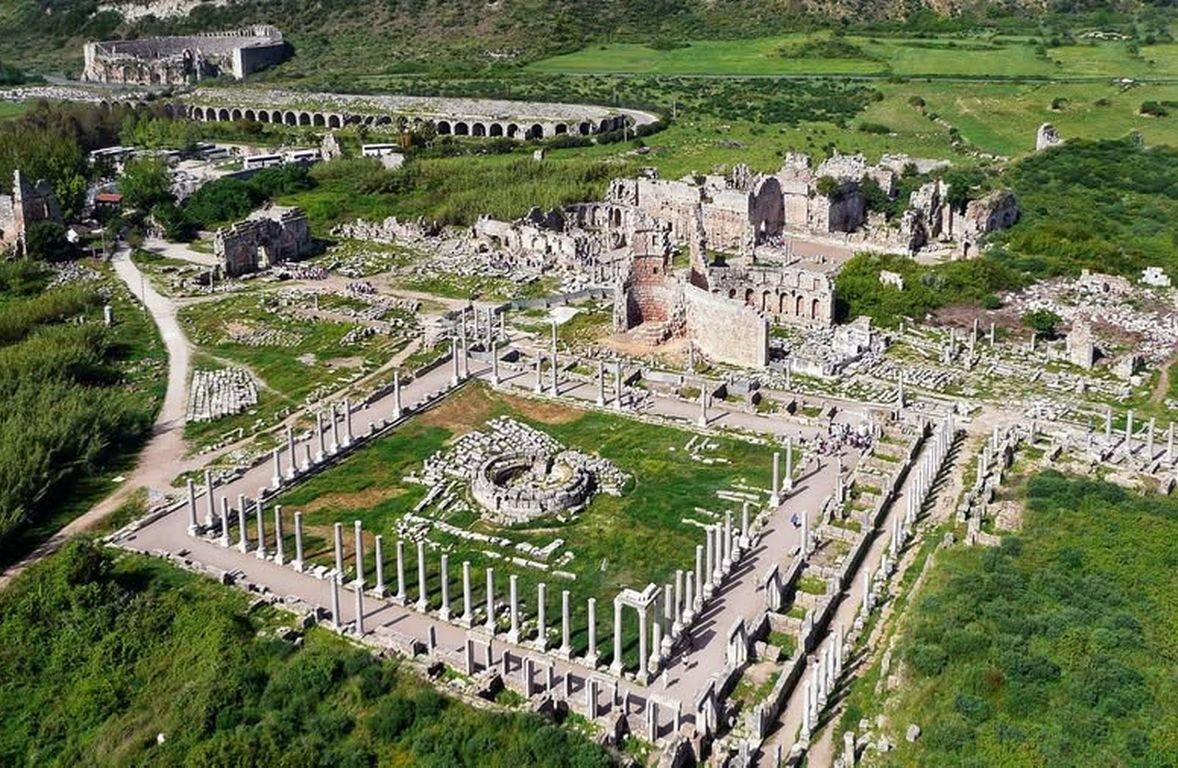
  • Ancient City of Perge, Antalya, Turkey

    Ancient City of Perge, Antalya, Turkey

    Discover One of the Best Preserved Roman Cities in the Mediterranean

    Located just 17 kilometers (11 miles) east of Antalya, the Ancient City of Perge is one of Turkey’s most impressive archaeological treasures. Once the prosperous capital of ancient Pamphylia, Perge flourished for more than a thousand years under Hellenistic, Roman, and Byzantine rule. Today, visitors can wander through remarkably preserved colonnaded streets, monumental gates, Roman baths, one of the largest ancient stadiums in Anatolia, and a magnificent theatre that once echoed with the voices of thousands of spectators.

    Unlike many ancient cities where only scattered ruins survive, Perge still preserves the original layout of a classical Roman city. Its wide avenues, sophisticated water system, elegant public buildings, and monumental architecture offer an extraordinary glimpse into urban life nearly two thousand years ago.

    For history lovers, photographers, archaeologists, and travelers exploring the Turkish Riviera, Perge is an essential stop and one of the highlights of any visit to Antalya.


    Perge was among the most influential cities of ancient Pamphylia, a fertile coastal region along Turkey’s Mediterranean coast. Situated approximately 15 kilometers inland from the sea beside the Kestros River (today’s Aksu River), the city occupied a strategic location that allowed it to benefit from maritime trade while remaining protected from pirate attacks that frequently threatened coastal settlements.

    Its fertile surroundings made Perge an important agricultural center, while access to the Mediterranean transformed it into a thriving commercial hub. Merchants, craftsmen, philosophers, and travelers passed through its gates for centuries, helping create one of the wealthiest cities in southern Anatolia.

    Today, Perge is considered one of Turkey’s finest examples of Roman urban planning and is included on UNESCO’s Tentative World Heritage List, reflecting its outstanding historical and archaeological significance.


    History of Perge

    Legendary Origins

    Ancient tradition attributes the founding of Perge to Greek colonists who arrived after the Trojan War around the 12th century BC. According to ancient historians such as Strabo, legendary heroes including Mopsus and Calchas established the settlement after migrating from the Greek mainland.

    Although these stories blend mythology with history, archaeological discoveries indicate that the region had already been inhabited long before Greek colonization. Evidence suggests settlements existed during the Late Bronze Age, making Perge one of the oldest continuously occupied sites in southwestern Anatolia.


    Persian Rule

    During the 6th century BC, Perge became part of the vast Persian Empire. Unlike many neighboring cities that experienced repeated conflicts, Perge enjoyed relative stability while maintaining much of its local administration.

    Trade continued to flourish, and the city’s strategic location ensured its continued prosperity throughout the Achaemenid period.


    Alexander the Great

    In 333 BC, Alexander the Great entered Pamphylia during his campaign against the Persian Empire.

    Unlike many fortified cities that resisted his advance, Perge surrendered peacefully without battle. This decision spared the city from destruction and allowed it to continue prospering under Macedonian rule.

    After Alexander’s death, Perge became part of the territories controlled by his successors, eventually falling under the Seleucid Kingdom before later becoming associated with the Kingdom of Pergamon.


    Roman Prosperity

    The city’s golden age began under Roman rule.

    From the 1st to the 3rd centuries AD, Perge underwent an extraordinary transformation. Wealth generated through agriculture, commerce, and regional administration financed ambitious construction projects that reshaped the city into one of the grandest urban centers in Asia Minor.

    During this period, many of the monuments visible today were built, including:

    • The Roman Theatre
    • The Stadium
    • Monumental Gates
    • Agora
    • Colonnaded Streets
    • Roman Baths
    • Nymphaeums (Monumental Fountains)
    • Extensive Water Supply System

    Roman engineers created an exceptionally organized city featuring paved streets, drainage systems, public fountains, shopping arcades, and sophisticated bath complexes.


    Christianity and St. Paul

    Perge occupies an important place in Christian history.

    According to the Acts of the Apostles, Saint Paul and Barnabas arrived at Perge during Paul’s First Missionary Journey in the first century AD after sailing from Cyprus. Although they initially continued toward Pisidian Antioch, they later returned to Perge, where Paul preached Christianity before traveling onward to Attaleia (modern Antalya).

    This connection has made Perge an important destination for Christian pilgrims following the footsteps of Saint Paul throughout Anatolia.


    Byzantine Era and Decline

    As Christianity spread throughout the Roman Empire, Perge became an important episcopal center during the Byzantine period.

    Numerous churches were constructed, and the city remained prosperous for several centuries.

    However, beginning in the 7th century, repeated Arab raids, earthquakes, changing trade routes, and the gradual silting of the Kestros River weakened Perge’s economy. Residents slowly abandoned the city in favor of nearby Antalya, whose protected harbor became increasingly important.

    Eventually, Perge disappeared beneath layers of earth until archaeological excavations revealed its remarkable remains during the twentieth century.


    Archaeological Excavations

    Scientific excavations at Perge began in 1946 under Turkish archaeologist Professor Arif Müfid Mansel.

    Since then, decades of meticulous archaeological work have uncovered large sections of the ancient city, revealing one of the best-preserved Roman urban landscapes in the eastern Mediterranean.

    Thousands of remarkable discoveries have been made, including:

    • Marble statues
    • Relief sculptures
    • Inscriptions
    • Coins
    • Decorative mosaics
    • Ceramics
    • Public monuments
    • Religious artifacts

    Many of these masterpieces are now exhibited in the Antalya Archaeological Museum, whose renowned Hall of Perge contains one of the world’s finest collections of Roman sculpture.

    Excavations continue today, with new discoveries regularly enhancing our understanding of life in ancient Pamphylia.


    The Magnificent Hellenistic Gate

    One of Perge’s most iconic landmarks is its monumental Hellenistic Gate, constructed during the 3rd century BC.

    Unlike ordinary city entrances, this impressive gateway features two massive circular towers connected by defensive walls surrounding a horseshoe-shaped courtyard.

    During the Roman period, the gateway was transformed into an elegant ceremonial entrance decorated with:

    • Corinthian columns
    • Marble facades
    • Niches containing statues of gods and emperors
    • Honorary inscriptions
    • Sculptural reliefs

    The renovations were largely financed by Plancia Magna, one of the wealthiest and most influential women of Roman Anatolia. Her generous patronage helped beautify much of Perge, earning her recognition as one of the city’s greatest benefactors.

    Even today, the monumental entrance creates an unforgettable first impression for visitors entering the ancient city.

    The Roman Theatre of Perge

    Among the finest surviving Roman theatres in Turkey, the Theatre of Perge stands as a masterpiece of ancient engineering and artistic achievement. Built during the 2nd century AD on the southern slope of a hill outside the city walls, it could accommodate approximately 15,000 spectators, making it one of the largest theatres in Asia Minor.

    Unlike Greek theatres, which were usually carved into natural hillsides, Perge’s theatre follows the Roman architectural tradition, featuring an impressive stage building (scaenae frons) richly decorated with marble columns, statues, niches, and elaborate reliefs.

    The stage façade originally rose to several stories and formed a magnificent architectural backdrop for theatrical performances, musical concerts, religious ceremonies, and civic celebrations.

    One of its greatest artistic treasures is the remarkable series of marble reliefs illustrating the life of Dionysus, the Greek god of wine and theatre. These beautifully carved panels narrate the god’s birth, childhood, adventures, and triumphs, demonstrating the extraordinary craftsmanship of Roman sculptors.

    During the 3rd century AD, when gladiatorial games and wild animal combats became increasingly popular, the orchestra was modified into an arena protected by a marble barrier.

    Although earthquakes caused significant damage over the centuries, the theatre remains one of Perge’s most spectacular monuments and offers visitors an excellent impression of Roman entertainment architecture.


    Perge Stadium

    A short walk from the theatre stands one of the best-preserved Roman stadiums in the Mediterranean world.

    Measuring approximately 234 meters long and 34 meters wide, the horseshoe-shaped stadium could accommodate nearly 12,000 spectators.

    Unlike many ancient stadiums where only foundations remain, Perge’s stadium preserves much of its original seating arrangement and structural design.

    Its seating rested upon a remarkable system of approximately 70 vaulted chambers built beneath the grandstands.

    These chambers served multiple purposes:

    • Shops
    • Storage rooms
    • Workshops
    • Vendor stalls during festivals

    Visitors attending sporting events could purchase food, drinks, and merchandise before taking their seats, demonstrating that commercial activity surrounding sporting events is far from a modern invention.

    Athletic competitions, chariot displays, wrestling matches, and later gladiatorial contests filled the stadium with excitement throughout the Roman period.

    Its outstanding preservation makes it one of the finest examples of Roman sports architecture anywhere in Turkey.


    The Colonnaded Street

    The heart of ancient Perge is its magnificent colonnaded avenue, one of the city’s defining features.

    Stretching for nearly 300 meters, this broad boulevard connected the city’s principal monuments and formed the main axis of daily life.

    Elegant marble columns lined both sides of the avenue, creating shaded arcades that protected citizens from the intense Mediterranean sun.

    Behind these colonnades stood:

    • Shops
    • Workshops
    • Government offices
    • Meeting places
    • Public buildings

    Perhaps the most remarkable feature of the street is the water channel running directly through its center.

    Fed by fresh spring water from the monumental nymphaeum at the northern end of the city, this canal continuously supplied clean water while simultaneously cooling the surrounding streets during the hot Pamphylian summers.

    The combination of flowing water, marble architecture, statues, fountains, and shaded walkways created one of the most elegant urban landscapes in the Roman Empire.


    Monumental Fountains (Nymphaeums)

    Water played a central role in the beauty and functionality of Perge.

    The city possessed several magnificent nymphaeums, monumental public fountains that celebrated both engineering and art.

    The largest stood near the northern entrance beneath the acropolis.

    This enormous two-story structure featured:

    • Marble columns
    • Sculptures
    • Decorative niches
    • Ornamental pools
    • Flowing water cascading into large basins

    At its center stood the statue of the river god Kestros, representing the life-giving river that sustained the city.

    These fountains served not only as water distribution points but also as symbols of civic prosperity and architectural sophistication.

    Their impressive remains still provide a vivid impression of Perge’s former grandeur.


    Roman Baths

    The public baths of Perge rank among the largest and most luxurious bath complexes discovered in ancient Pamphylia.

    Roman baths were much more than places for bathing—they functioned as social clubs, business centers, libraries, gyms, and meeting places.

    Visitors followed a carefully planned sequence through different rooms:

    • Apodyterium (changing room)
    • Frigidarium (cold room)
    • Tepidarium (warm room)
    • Caldarium (hot room)

    A sophisticated underground hypocaust system circulated heated air beneath the floors and inside the walls, creating comfortable temperatures throughout the complex.

    Adjacent to the baths lay a spacious palaestra, or exercise courtyard, where citizens wrestled, trained, and socialized before bathing.

    The baths illustrate the advanced engineering skills of Roman architects and the importance of public leisure in ancient urban life.


    The Agora

    The commercial heart of Perge was its spacious Agora, a large square marketplace surrounded by elegant colonnades.

    Merchants from across Pamphylia gathered here to trade goods from throughout the Mediterranean.

    Among the products sold were:

    • Olive oil
    • Wine
    • Grain
    • Textiles
    • Pottery
    • Jewelry
    • Spices
    • Imported luxury goods

    The marketplace also served as a center for politics and social interaction.

    Philosophers debated ideas, officials conducted civic business, and citizens met friends while shopping beneath the shaded porticoes.

    The paved floors, shop foundations, and surrounding colonnades remain clearly visible today, allowing visitors to imagine the bustling commercial life that once filled the square.


    The Cult of Artemis Pergaia

    Perge was famous throughout the ancient world for the worship of Artemis Pergaia, the city’s patron goddess.

    Although identified with the Greek goddess Artemis, her origins likely trace back to an earlier Anatolian mother goddess whose cult predated Greek settlement.

    Artemis Pergaia symbolized:

    • Fertility
    • Nature
    • Protection
    • Prosperity
    • The city’s identity

    Ancient coins frequently depict her distinctive cult statue, and inscriptions found throughout the city testify to her immense importance.

    Roman statesman Cicero even recorded that the temple of Artemis Pergaia was among the wealthiest sanctuaries in the region.

    Although archaeologists have not yet conclusively identified the temple itself, evidence suggests it ranked among the grandest religious monuments in ancient Pamphylia.


    Sophisticated Urban Planning

    Perge is admired not only for its monumental buildings but also for its remarkably advanced urban design.

    The city demonstrates the principles of Roman planning through:

    • Wide, straight streets
    • Underground drainage systems
    • Sophisticated water distribution
    • Public fountains
    • Planned residential districts
    • Monumental public squares
    • Defensive walls
    • Efficient sewage infrastructure

    Running water flowed continuously through the city, providing sanitation and improving the comfort of residents.

    Such advanced engineering explains why Perge is considered one of the finest surviving examples of Roman city planning in the eastern Mediterranean.


    Plancia Magna: The Woman Who Shaped Perge

    One of the most remarkable figures associated with Perge is Plancia Magna, a wealthy Roman noblewoman who lived during the 2nd century AD.

    Unlike many women of her time, Plancia Magna held extraordinary influence in civic affairs. As a priestess of Artemis Pergaia and a prominent benefactor, she financed major construction and restoration projects that transformed the appearance of the city.

    Under her patronage, the monumental Hellenistic Gate was converted into a magnificent ceremonial entrance adorned with marble, statues, and inscriptions honoring emperors, gods, and the legendary founders of Perge.

    Her generosity extended to fountains, public spaces, and civic monuments, earning her lasting respect from the people of Perge. Numerous inscriptions and statues erected in her honor testify to the exceptional role she played in the city’s prosperity.

    Today, Plancia Magna is remembered as one of the most influential women in Roman Anatolia, and her legacy remains visible throughout the archaeological site.

    Antalya Museum: Home to Perge’s Greatest Treasures

    While the ruins of Perge are spectacular, many of its finest discoveries are preserved in the Antalya Archaeological Museum, located about 18 kilometers from the site.

    The museum houses one of the world’s most important collections of Roman sculpture, much of it excavated from Perge. Visitors can admire beautifully preserved statues of emperors, gods, goddesses, philosophers, athletes, and civic leaders that once decorated the city’s streets, baths, fountains, and public squares.

    Highlights include magnificent marble statues of:

    • Zeus
    • Athena
    • Aphrodite
    • Hermes
    • Artemis
    • Heracles
    • Nemesis
    • Roman emperors
    • Portraits of prominent citizens

    The Hall of Perge is widely regarded as one of Turkey’s finest archaeological exhibitions and provides valuable context for understanding the city’s former splendor. Visiting both Perge and the Antalya Museum offers a complete picture of one of the Roman Empire’s most elegant provincial capitals.


    UNESCO World Heritage Status

    Perge is included on UNESCO’s Tentative World Heritage List, recognizing its exceptional historical, architectural, and archaeological value.

    The city is considered one of the best-preserved examples of Roman urban planning in the eastern Mediterranean. Its monumental architecture, sophisticated water management system, extensive public buildings, and remarkable sculptures demonstrate the cultural richness of ancient Pamphylia.

    Ongoing archaeological excavations and conservation projects continue to reveal new discoveries, further strengthening Perge’s importance as one of Turkey’s premier archaeological destinations.


    Best Things to See in Perge

    Although visitors can spend several hours exploring the site, several monuments stand out as absolute highlights:

    Hellenistic Gate

    The impressive twin towers and ceremonial courtyard create one of the most iconic entrances in ancient Anatolia.

    Roman Theatre

    Admire the monumental stage building and imagine performances that entertained thousands of spectators nearly two thousand years ago.

    Stadium

    One of the best-preserved Roman stadiums anywhere in the Mediterranean, capable of seating around 12,000 people.

    Colonnaded Street

    Walk along the marble-paved avenue where water once flowed through the center beneath elegant colonnades.

    Agora

    Explore the ancient marketplace where merchants traded goods from across the Roman Empire.

    Roman Baths

    Discover the sophisticated heating systems and spacious bathing complexes that formed the social heart of the city.

    Monumental Fountains

    Marvel at the impressive nymphaeums that supplied water while showcasing Roman engineering and artistic excellence.

    City Walls and Towers

    The defensive fortifications reveal Perge’s strategic importance throughout antiquity.


    Things to Do at Perge

    A visit to Perge offers much more than simply viewing ancient ruins.

    Popular activities include:

    • Walking the entire Roman city plan.
    • Photographing monumental architecture.
    • Exploring ancient engineering and water systems.
    • Learning about Roman urban life.
    • Following the route of Saint Paul.
    • Visiting the Antalya Archaeological Museum afterward.
    • Joining guided archaeological tours.
    • Combining Perge with nearby ancient cities such as Aspendos, Side, and Termessos.

    History enthusiasts often dedicate half a day to fully appreciate the site.


    How to Get to Perge

    Perge lies approximately 17 km east of Antalya city center and is easily accessible by several means of transportation.

    By Car

    Driving is the most convenient option. The journey from central Antalya takes around 20–30 minutes, and parking is available near the entrance.

    By Tram and Bus

    Take the AntRay tram from Antalya to Aksu Station, then continue by taxi or local minibus to the archaeological site.

    By Guided Tour

    Many travel agencies in Antalya offer full-day excursions combining Perge with Aspendos, Side, or Kursunlu Waterfall, making it an excellent option for first-time visitors.


    Opening Hours and Admission

    Perge is generally open throughout the year, with extended visiting hours during the summer season.

    Because entrance fees and operating hours may change, visitors should check the latest information from the Turkish Ministry of Culture and Tourism before traveling.

    Museum Pass Turkey holders can usually enter the site without purchasing an additional ticket.


    Best Time to Visit

    Perge can be visited year-round, but the most comfortable seasons are:

    Spring (March–May)

    Pleasant temperatures, blooming wildflowers, and excellent lighting make spring ideal for photography and sightseeing.

    Autumn (September–November)

    Warm days and fewer crowds provide excellent conditions for exploring the extensive ruins.

    Summer (June–August)

    Summer temperatures in Antalya frequently exceed 35°C (95°F). If visiting during this period, arrive early in the morning or late in the afternoon, wear a hat, apply sunscreen, and carry plenty of water.

    Winter offers quieter surroundings and mild weather, though occasional rainfall is possible.


    Photography Tips

    Perge is one of the most photogenic archaeological sites in Turkey.

    For the best images:

    • Visit shortly after sunrise or before sunset.
    • Use a wide-angle lens to capture monumental architecture.
    • Photograph the colonnaded street from ground level for dramatic perspective.
    • Capture the theatre from the upper seating tiers.
    • Visit in spring for vibrant greenery and wildflowers.
    • Include people in your compositions to emphasize the immense scale of the ruins.

    Nearby Attractions

    Perge is perfectly positioned for exploring several of Antalya’s most famous historical and natural attractions.

    • Aspendos Ancient Theatre – One of the best-preserved Roman theatres in the world.
    • Kurşunlu Waterfall Nature Park – A peaceful oasis surrounded by pine forests.
    • Ancient City of Side – A coastal archaeological site with temples, theatre, and harbor.
    • Termessos – A spectacular mountain city often called the “Machu Picchu of Turkey.”
    • Antalya Old Town (Kaleiçi) – Historic streets, Ottoman houses, marina, and lively cafés.
    • Antalya Archaeological Museum – Essential for viewing sculptures excavated from Perge.

    Together, these attractions create one of Turkey’s richest cultural itineraries.


    Travel Tips

    • Allow at least 3–4 hours to explore the site thoroughly.
    • Wear comfortable walking shoes, as paths are uneven.
    • Bring water, especially during summer.
    • A hat and sunscreen are highly recommended.
    • Consider hiring a licensed guide to gain deeper insight into the city’s history.
    • Visit the Antalya Museum either before or after your tour to see the original sculptures from Perge.
    • Early morning visits provide cooler temperatures and the best photography conditions.

    Why Visit Perge?

    Perge is more than an archaeological site—it is a journey through over two millennia of human history. From its legendary foundation after the Trojan War to its flourishing Roman streets and its role in the spread of early Christianity, every corner of the city tells a story.

    Its grand theatre, expansive stadium, elegant colonnaded avenues, sophisticated water system, and richly decorated public buildings reveal the ingenuity and ambition of one of the Roman Empire’s most prosperous cities. Unlike many ancient sites, Perge preserves not just isolated monuments but the fabric of an entire urban landscape, allowing visitors to imagine daily life in remarkable detail.

    Whether you are passionate about archaeology, fascinated by classical civilizations, interested in biblical history, or simply seeking one of the most rewarding cultural experiences in Turkey, Perge offers an unforgettable glimpse into the ancient world.


    Frequently Asked Questions (FAQ)

    Is Perge worth visiting?

    Absolutely. Perge is considered one of Turkey’s finest archaeological sites thanks to its exceptional preservation, monumental architecture, and rich history.

    How much time do I need at Perge?

    Plan to spend 3–4 hours exploring the site. History enthusiasts may wish to allow even more time.

    Can you visit Perge without a guide?

    Yes. Informational signs are available throughout the site, though a licensed guide can greatly enrich your understanding.

    Is Perge suitable for children?

    Yes. Families often enjoy exploring the wide streets, theatre, and stadium, but supervision is important due to uneven surfaces.

    What should I wear?

    Comfortable walking shoes, light clothing in summer, a hat, sunscreen, and plenty of water are recommended.

    Can Perge and Aspendos be visited on the same day?

    Yes. Many visitors combine Perge, Aspendos, and Kurşunlu Waterfall into a full-day excursion.
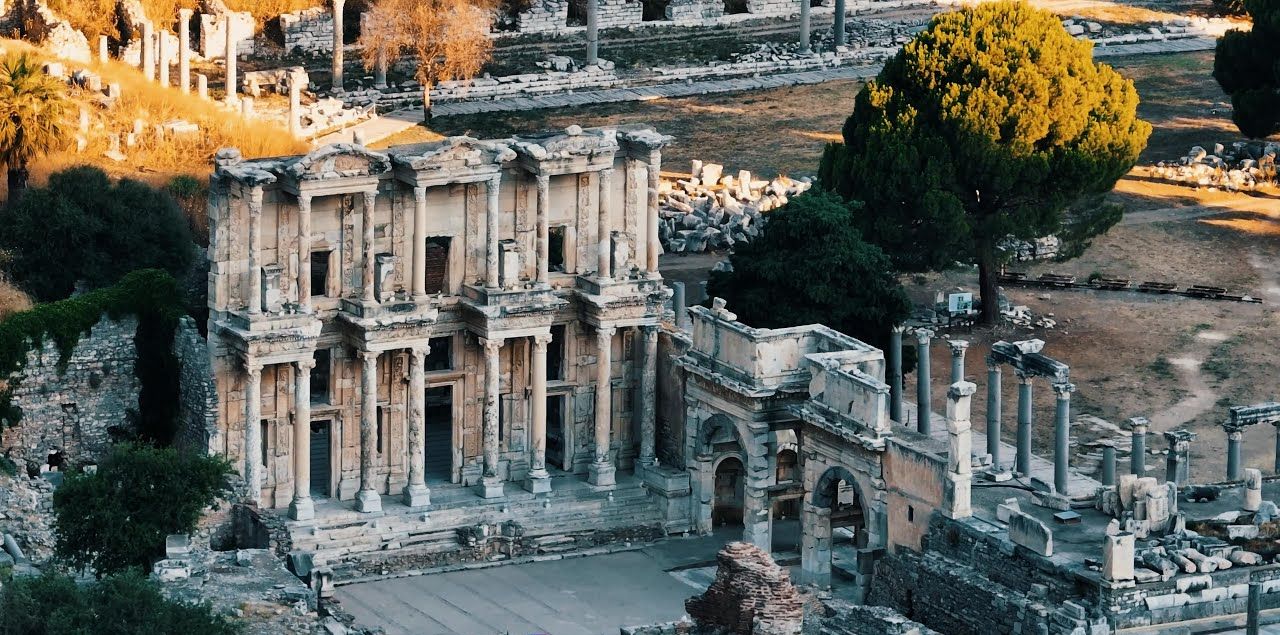
  • Ancient City of Limyra, Antalya, Turkey

    The Ancient City of Limyra is one of the most important archaeological sites of ancient Lycia, located approximately 10 kilometers northeast of Finike in Antalya Province, near the village of Turunçova. Surrounded by the dramatic landscapes of the Taurus Mountains and fertile citrus orchards of the Mediterranean coast, Limyra offers visitors a fascinating journey into the history of one of Anatolia’s most distinctive civilizations.

    Founded more than 2,500 years ago, Limyra became an important political and cultural center of Lycia, especially during the 4th century BC when it served as the capital of the Lycian ruler Pericles of Limyra. The city is famous for its magnificent rock-cut tombs, monumental Pericles Mausoleum, Roman theatre, ancient city walls, Byzantine remains, and thousands of inscriptions that provide valuable information about Lycian culture.

    Less crowded than many of Antalya’s famous archaeological destinations, Limyra provides an authentic experience where visitors can explore ancient ruins surrounded by peaceful Mediterranean scenery.


    History

    Limyra was one of the principal cities of ancient Lycia, a region famous for its unique language, democratic traditions, impressive tomb architecture, and maritime culture.

    The earliest settlement at Limyra dates back to the 5th century BC, although evidence suggests that the surrounding area had been inhabited much earlier.

    The city’s most important historical period came during the 4th century BC, when Pericles of Limyra became the leader of Lycia. He played a major role in the region’s political development and established Limyra as the Lycian capital.

    During this period, the famous Pericles Mausoleum was constructed, decorated with sculptures and reliefs representing Lycian artistic traditions combined with Greek influences.

    After the Lycian League became part of the Roman Empire, Limyra entered another period of prosperity. Romans expanded the city with theatres, baths, temples, roads, and public buildings.

    Later, Limyra became an important Byzantine religious center. Churches and monasteries were constructed, and the city continued to exist until earthquakes, political changes, and economic decline led to its gradual abandonment.


    Geography

    Limyra lies in the fertile Finike Plain, approximately 5 kilometers from the Mediterranean coast.

    The surrounding landscape includes:

    • Taurus Mountain peaks
    • Citrus plantations
    • Pine forests
    • Rocky valleys
    • Mediterranean vegetation
    • Small rural villages

    Its location between the mountains and the sea reflects the typical geography of ancient Lycian cities, which often controlled important agricultural areas and coastal trade routes.


    Top Attractions

    Pericles Mausoleum

    The most famous monument of Limyra is the Mausoleum of Pericles, dating from the 4th century BC.

    This monumental tomb represents one of the finest examples of Lycian funerary architecture. It combines:

    • A high stone base
    • A temple-like upper structure
    • Sculpted reliefs
    • Caryatid figures supporting the monument

    The elegant caryatids and detailed artistic decorations demonstrate the exceptional craftsmanship of Lycian sculptors.


    Ancient Theatre

    The Roman theatre of Limyra is one of the best-preserved structures in the city.

    Built during the Roman period and later modified, it could accommodate thousands of spectators. The theatre hosted:

    • Dramatic performances
    • Musical events
    • Public ceremonies
    • Religious festivals

    Today, visitors can still see the seating rows, stage building, and architectural remains.


    City Walls

    The defensive walls of Limyra reveal the strategic importance of the city.

    Built and expanded over several centuries, they protected the settlement from invasions and demonstrate the city’s military significance during the Lycian and Roman periods.


    Lycian Rock Tombs

    Like many Lycian cities, Limyra is famous for its impressive necropolis.

    Visitors can discover:

    • Rock-cut tombs
    • Temple-style tombs
    • Sarcophagi
    • Family burial monuments

    These tombs provide valuable insight into Lycian beliefs about death and the afterlife.


    Roman Baths

    The remains of Roman bath complexes show the influence of Roman urban culture.

    The baths included:

    • Hot rooms (caldarium)
    • Warm rooms (tepidarium)
    • Cold pools (frigidarium)
    • Marble architectural elements

    Byzantine Churches

    Limyra continued to flourish during the Byzantine era, becoming an important Christian center.

    Several churches and religious buildings remain, reflecting the city’s changing cultural identity.


    Ancient Bridge

    A historic Roman bridge near Limyra is among the remarkable engineering achievements of the area. It demonstrates the advanced infrastructure connecting Lycian cities during Roman times.


    Archaeological Importance

    Limyra is one of the richest archaeological sites in Lycia, containing thousands of inscriptions in:

    • Lycian language
    • Greek
    • Latin

    These inscriptions have helped historians understand Lycian politics, religion, language, and daily life.

    Excavations at Limyra have uncovered:

    • Sculptures
    • Coins
    • Ceramics
    • Architectural fragments
    • Religious artifacts
    • Residential areas

    Archaeological research continues today, revealing new information about this ancient Mediterranean civilization.


    Things to Do

    Visitors to Limyra can enjoy:

    • Exploring ancient Lycian ruins
    • Photographing the Pericles Mausoleum
    • Walking through ancient necropolises
    • Visiting Roman and Byzantine remains
    • Studying Lycian architecture
    • Enjoying peaceful countryside landscapes
    • Combining archaeology with Mediterranean sightseeing
    • Exploring nearby beaches and villages

    Excursions and Nearby Attractions

    Limyra is ideally located for exploring the western Antalya coastline.

    Finike

    A charming Mediterranean town famous for:

    • Orange orchards
    • Harbor views
    • Seafood restaurants
    • Relaxed coastal atmosphere

    Arykanda Ancient City

    Located in the mountains north of Finike, Arykanda is one of Lycia’s most spectacular archaeological sites, featuring terraces, baths, theatres, and monumental buildings.

    Myra Ancient City

    One of Lycia’s most famous cities, known for:

    • Rock-cut tombs
    • Roman theatre
    • The Church of Saint Nicholas

    Demre

    A historic town connected with the legend of Saint Nicholas, offering cultural attractions and coastal scenery.

    Kekova Island

    A spectacular marine destination famous for:

    • Sunken ruins
    • Boat tours
    • Crystal-clear waters
    • Traditional coastal villages

    Olympos and Çıralı

    A beautiful coastal region featuring:

    • Ancient ruins
    • Beaches
    • Hiking trails
    • The eternal flames of Yanartaş

    Food and Drink

    The Finike region offers authentic Mediterranean cuisine.

    Local specialties include:

    • Fresh seafood
    • Grilled fish
    • Shrimp dishes
    • Olive oil vegetables
    • Citrus desserts
    • Local oranges and pomegranates
    • Gözleme
    • Turkish meze
    • Village-style breakfasts

    Finike is especially famous throughout Turkey for its high-quality oranges.


    Accommodation

    Visitors to Limyra usually stay in nearby towns:

    Finike

    Offers:

    • Seaside hotels
    • Boutique accommodations
    • Family pensions
    • Holiday apartments

    Demre and Kaş

    Provide a wider selection:

    • Luxury hotels
    • Boutique resorts
    • Beach accommodations
    • Guesthouses

    Many travelers include Limyra as part of a Lycian Coast road trip.


    Climate

    Limyra enjoys a typical Mediterranean climate.

    Spring (March–May)

    One of the best seasons, with pleasant temperatures and blooming landscapes.

    Summer (June–September)

    Hot and sunny, ideal for combining archaeology with coastal activities.

    Autumn (October–November)

    Warm weather and fewer visitors make it excellent for sightseeing.

    Winter (December–February)

    Mild and rainy, with comfortable temperatures compared with inland regions.


    Getting There

    By Car

    Approximate distances:

    • Finike: 10 km
    • Demre: 25 km
    • Kaş: 60 km
    • Antalya: 120 km

    The site is easily accessible by car along local roads.

    By Bus

    Regular buses connect Antalya, Finike, Demre, and Kaş. Local minibuses can be used to reach nearby villages.

    By Air

    The nearest airport is:

    • Antalya Airport – approximately 130 km away

    Car rental is recommended for exploring the Lycian coast.


    Best Time to Visit

    The best months are:

    • April
    • May
    • June
    • September
    • October

    These periods offer comfortable weather for exploring ruins and hiking.


    Travel Tips

    • Visit early in the morning during summer to avoid heat.
    • Wear comfortable walking shoes.
    • Bring water and sun protection.
    • Combine Limyra with Myra, Arykanda, and Kekova for a complete Lycian heritage itinerary.
    • Allow at least 1–2 hours to explore the main archaeological areas.
    • A guide can greatly enhance the experience by explaining Lycian history and inscriptions.

    Why Visit Limyra?

    The Ancient City of Limyra offers a rare opportunity to experience the heart of ancient Lycia away from the major tourist crowds. Its magnificent Pericles Mausoleum, impressive theatre, ancient walls, rock tombs, and peaceful mountain setting reveal the artistic and political achievements of the Lycian civilization. For travelers interested in ancient history, archaeology, photography, and the authentic Mediterranean atmosphere of Antalya’s western coast, Limyra is an unforgettable hidden treasure.

  • Ancient City of Sagalassos, Burdur, Turkey

    sagalassos turkey

    Nestled high on the southern slopes of Mount Akdağ in the Western Taurus Mountains, the Ancient City of Sagalassos is one of Turkey’s most impressive and best-preserved archaeological sites. Located approximately 7 kilometers north of the town of Ağlasun, between Burdur and Isparta, this magnificent ancient city rises between 1,450 and 1,700 meters above sea level, offering breathtaking panoramic views of the Pisidian countryside.

    Known as the “City of Fountains,” Sagalassos flourished during the Roman Imperial period and became one of the most important cities in the region of Pisidia. Its monumental architecture, sophisticated urban planning, remarkably preserved buildings, and ongoing archaeological excavations have transformed Sagalassos into one of Turkey’s most fascinating open-air museums.

    Today, visitors can explore grand temples, monumental fountains, Roman baths, a magnificent theatre, bustling agoras, and elegant colonnaded streets while enjoying one of the country’s most spectacular mountain landscapes.


    History

    Human activity around Sagalassos dates back to approximately 12,000 BC, while archaeological evidence indicates permanent settlements from around 3000 BC.

    The city became an important center of the ancient Pisidian civilization, whose inhabitants were renowned for their independence and warrior traditions. During the 4th century BC, Alexander the Great conquered Sagalassos after fierce resistance from its defenders during his campaign through Anatolia.

    Under the Roman Empire, especially during the reigns of Emperor Hadrian and Marcus Aurelius, Sagalassos experienced its golden age. It became one of the wealthiest cities in Pisidia, known for its pottery production, trade, agriculture, and monumental public buildings.

    Several powerful earthquakes between the 6th and 7th centuries AD severely damaged the city. Combined with political instability and changing trade routes, these disasters led to its gradual abandonment.

    Because Sagalassos remained largely untouched for centuries, many of its structures have survived in exceptional condition. Since the early 1990s, extensive excavations led by Belgian archaeologists have uncovered remarkable sculptures, inscriptions, mosaics, and restored monuments, making Sagalassos one of the most important archaeological projects in the Mediterranean.


    Geography

    Sagalassos is situated on the eastern slopes of Mount Akdağ, part of the Western Taurus Mountains in southwestern Turkey.

    The mountainous landscape is characterized by:

    • Pine forests
    • Cedar woodlands
    • Limestone cliffs
    • Alpine meadows
    • Deep valleys
    • Crystal-clear mountain springs
    • Rich Mediterranean flora

    Its elevated location provides cool mountain air and spectacular views over the fertile plains of Burdur Province.


    Top Attractions

    Antonine Fountain

    The magnificent Antonine Fountain is the symbol of Sagalassos.

    Dating from the 2nd century AD, this monumental Roman fountain has been painstakingly restored and remains one of the few ancient fountains in the world where water still flows today.

    Its towering columns, marble sculptures, and decorative reliefs make it one of Turkey’s finest Roman monuments.


    Upper Agora

    The Upper Agora served as the city’s political, commercial, and social center.

    Visitors can admire:

    • Marble-paved squares
    • Monumental public buildings
    • Honorary statues
    • Government buildings
    • Ancient inscriptions

    Roman Theatre

    Built into the mountainside at an elevation of approximately 1,600 meters, the theatre ranks among the highest ancient theatres in the Mediterranean.

    With seating for nearly 9,000 spectators, it offers breathtaking panoramic views of the surrounding Taurus Mountains.


    Heroon (Monumental Tomb)

    This beautifully decorated funerary monument demonstrates the wealth and artistic sophistication of Roman Sagalassos.


    Neon Library

    The remains of the city’s impressive library illustrate the importance of education and intellectual life during the Roman era.


    Roman Baths

    Among the largest public buildings in Sagalassos, the baths feature:

    • Heated rooms
    • Cold pools
    • Warm bathing chambers
    • Marble flooring
    • Sophisticated water and heating systems

    Temple of Apollo Klarios

    Dedicated to Apollo, this temple served as one of the city’s principal religious sanctuaries.

    Several columns and architectural fragments remain visible today.


    Bouleuterion (Council House)

    The council house hosted political meetings where local leaders governed the city and discussed civic affairs.


    Colonnaded Streets

    Elegant marble streets lined with columns connected the city’s major public buildings, reflecting Roman urban planning at its finest.


    Potters’ Quarter

    Sagalassos was internationally renowned for producing high-quality Roman ceramics.

    Excavations have revealed numerous pottery workshops, kilns, and production facilities that exported goods throughout the Mediterranean.


    Archaeological Discoveries

    Sagalassos has yielded some of the most significant archaeological finds in Turkey, including:

    • Colossal marble statues of Roman emperors
    • Sculptures of gods and goddesses
    • Beautiful mosaics
    • Coins
    • Pottery workshops
    • Inscriptions
    • Water systems
    • Residential villas
    • Monumental gateways

    Many discoveries are exhibited in the Burdur Archaeological Museum, one of Turkey’s finest regional museums.


    Things to Do

    Visitors to Sagalassos can enjoy:

    • Walking through one of Turkey’s best-preserved Roman cities
    • Photographing the Antonine Fountain
    • Exploring the ancient theatre
    • Hiking mountain trails
    • Discovering Roman baths and temples
    • Visiting archaeological excavation areas
    • Enjoying panoramic viewpoints
    • Birdwatching in the surrounding forests
    • Visiting Burdur Archaeological Museum
    • Exploring nearby traditional villages

    Excursions and Nearby Attractions

    Sagalassos is ideally located for exploring southwestern Turkey.

    Ağlasun

    A charming mountain town known for traditional Turkish village life and local hospitality.

    Burdur Archaeological Museum

    One of Turkey’s richest archaeological museums, housing many masterpieces recovered from Sagalassos.

    Lake Salda

    Often called the “Turkish Maldives,” Lake Salda is famous for its brilliant turquoise waters and striking white mineral-rich beaches.

    Burdur Lake

    A large freshwater lake renowned for birdwatching and peaceful natural scenery.

    Kibyra Ancient City

    An impressive archaeological site featuring one of the world’s finest ancient mosaic floors and a remarkably preserved stadium.

    İnsuyu Cave

    Turkey’s first cave opened to tourism, featuring spectacular stalactites, stalagmites, and underground lakes.


    Food and Drink

    The Burdur region offers delicious Mediterranean and Anatolian cuisine.

    Popular specialties include:

    • Burdur Şiş Kebab
    • Tandır lamb
    • Gözleme
    • Keşkek
    • Stuffed vine leaves
    • Fresh mountain trout
    • Homemade village bread
    • Local cheeses
    • Honey from the Taurus Mountains
    • Walnut desserts
    • Traditional Turkish tea

    Many family-run restaurants in Ağlasun serve authentic regional dishes prepared with locally sourced ingredients.


    Accommodation

    Most visitors stay in:

    • Burdur city
    • Ağlasun
    • Isparta

    Accommodation options include:

    • Boutique hotels
    • Guesthouses
    • Family pensions
    • Mountain lodges
    • Modern city hotels
    • Holiday apartments

    Some visitors combine Sagalassos with overnight stays near Lake Salda or Eğirdir Lake.


    Climate

    Due to its high elevation, Sagalassos enjoys cooler temperatures than much of southern Turkey.

    Spring (April–May)

    Wildflowers bloom across the mountains, making this one of the most beautiful times to visit.

    Summer (June–August)

    Warm days with cool evenings, ideal for sightseeing.

    Autumn (September–October)

    Pleasant weather, colorful landscapes, and excellent photography conditions.

    Winter (November–March)

    Snow frequently covers the archaeological site, creating a spectacular but less accessible landscape.


    Getting There

    By Car

    Sagalassos is located approximately:

    • 7 km from Ağlasun
    • 35 km from Burdur
    • 45 km from Isparta
    • 110 km from Antalya

    Private vehicles provide the easiest access.

    By Bus

    Regular buses operate between Antalya, Burdur, Isparta, and Ağlasun. From Ağlasun, taxis or local transport reach the archaeological site.

    By Air

    The nearest airports include:

    • Isparta Süleyman Demirel Airport (approximately 50 km)
    • Antalya Airport (approximately 110 km)

    Car rental is recommended for maximum flexibility.


    Best Time to Visit

    The ideal months are:

    • April
    • May
    • June
    • September
    • October

    These seasons offer comfortable temperatures, clear mountain views, and ideal conditions for hiking and photography.


    Travel Tips

    • Wear comfortable hiking or walking shoes, as the site covers steep terrain.
    • Bring water and sun protection during warmer months.
    • Allow at least 3–5 hours to fully explore the archaeological park.
    • Visit early in the morning for cooler temperatures and softer light.
    • Don’t miss the Antonine Fountain, especially when the flowing water catches the sunlight.
    • Combine your visit with Burdur Archaeological Museum and Lake Salda for a rewarding full-day or multi-day itinerary.
    • A camera with a wide-angle lens is ideal for capturing the monumental architecture and sweeping mountain landscapes.

    Why Visit Sagalassos?

    The Ancient City of Sagalassos is one of Turkey’s greatest archaeological treasures, offering an extraordinary combination of history, architecture, and natural beauty. Unlike many more crowded classical sites, Sagalassos provides a peaceful and immersive experience where visitors can wander through grand Roman streets, admire restored monuments like the flowing Antonine Fountain, and enjoy breathtaking views over the Taurus Mountains. For history enthusiasts, photographers, hikers, and cultural travelers, Sagalassos is an unforgettable destination that showcases the grandeur of ancient Pisidia and the enduring legacy of the Roman Empire.