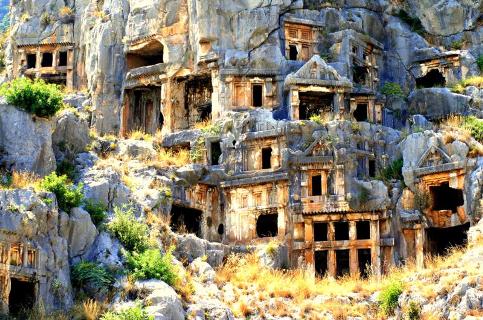
Türkiye is one of the world’s most historically significant countries, where civilizations have flourished for thousands of years. Located at the crossroads of Europe and Asia, it has been home to Hittites, Greeks, Romans, Byzantines, Seljuks, Ottomans, and many other cultures that have shaped world history.
From ancient archaeological treasures and legendary cities to remarkable traditions and world-changing innovations, Türkiye offers an extraordinary cultural legacy that continues to fascinate visitors from around the globe.
1. A Bridge Between Two Continents
Türkiye is the only country that spans both Europe and Asia. The Bosphorus Strait divides the city of Istanbul into European and Asian sides, making it one of the few major cities in the world located on two continents.
2. Istanbul Was the Capital of Three Great Empires
Throughout its remarkable history, Istanbul served as the capital of three powerful empires:
- The Roman Empire (later the Eastern Roman Empire)
- The Byzantine Empire
- The Ottoman Empire
For more than 1,600 years, the city was one of the world’s most influential political, religious, and commercial centers.
3. One of the World’s Oldest Settlements
The Neolithic settlement of Çatalhöyük, dating back to around 7400 BCE, is among the oldest and best-preserved farming communities ever discovered. It provides invaluable insight into early human civilization and is recognized as a UNESCO World Heritage Site.
4. Home to Extraordinary Archaeological Discoveries
Türkiye is one of the richest archaeological regions in the world. Hundreds of archaeological excavations and restoration projects are conducted across the country each year, continually revealing new discoveries from prehistoric, classical, Byzantine, and Ottoman periods.
5. Two Wonders of the Ancient World Were Located Here
Two of the Seven Wonders of the Ancient World stood in present-day Türkiye:
- The Temple of Artemis at Ephesus
- The Mausoleum at Halicarnassus (modern Bodrum)
Although only ruins remain today, both sites continue to attract visitors interested in ancient history.
6. The Legendary City of Troy
The ancient city of Troy, made famous by Homer’s Iliad, is located in northwestern Türkiye. Archaeological excavations have uncovered multiple layers of settlements dating back thousands of years.
A replica of the famous Trojan Horse welcomes visitors to the archaeological site.
7. Birthplace of Influential Historical Figures
Many notable individuals associated with ancient history and literature have connections to Anatolia, including:
- Homer, traditionally associated with the Aegean coast
- Herodotus, often called the “Father of History”
- King Midas of Phrygia
- Aesop, the legendary storyteller
- Diogenes of Sinope, the Cynic philosopher
8. The Ancient City of Ephesus
Ephesus is one of the best-preserved ancient cities in the Mediterranean. Once a major Roman metropolis, it features magnificent monuments including the Library of Celsus, the Great Theatre, marble streets, temples, and early Christian landmarks.
9. Early Christianity Flourished in Anatolia
Türkiye played a central role in the early development of Christianity.
Important sites include:
- The House of the Virgin Mary near Selçuk
- St. Peter’s Church in Antakya
- The Seven Churches of Revelation
- The ancient city of Tarsus, birthplace of St. Paul
- Numerous early monasteries and churches throughout Cappadocia
10. Cappadocia’s Underground Cities
The volcanic landscape of Cappadocia contains remarkable underground cities carved into soft volcanic rock. These underground complexes provided shelter for thousands of people during periods of conflict and religious persecution.
11. The First Ecumenical Council
The First Council of Nicaea was held in İznik in 325 CE and remains one of the most significant events in Christian history.
12. Mount Ararat and Noah’s Ark
Mount Ararat, Türkiye’s highest mountain, has long been associated with traditions concerning Noah’s Ark. While the mountain holds great cultural and religious significance, no definitive archaeological evidence has confirmed the ark’s location.
13. The Story of Santa Claus Began in Türkiye
Saint Nicholas, the historical figure who inspired the modern Santa Claus tradition, served as Bishop of Myra (present-day Demre) on Türkiye’s Mediterranean coast during the 4th century.
His church and tomb remain popular pilgrimage and tourist destinations.
14. Julius Caesar’s Famous Words
According to historical accounts, Julius Caesar declared the famous phrase:
“Veni, Vidi, Vici” (“I came, I saw, I conquered”)
after defeating King Pharnaces II near Zela (modern-day Zile) in northern Anatolia in 47 BCE.
15. Aspendos Has One of the World’s Best-Preserved Roman Theatres
The magnificent Roman theatre at Aspendos is considered one of the finest surviving examples of ancient architecture. Built during the 2nd century CE, it still hosts concerts, operas, and cultural festivals today.
16. Leonardo da Vinci Designed a Bosphorus Bridge
In the early 16th century, Leonardo da Vinci proposed an ambitious bridge spanning the Golden Horn in Istanbul. Although the project was never built, the design remains one of history’s most visionary engineering concepts.
17. Hezârfen Ahmed Çelebi’s Legendary Flight
According to Ottoman historian Evliya Çelebi, Hezârfen Ahmed Çelebi successfully glided from Istanbul’s Galata Tower across the Bosphorus to Üsküdar using artificial wings during the 17th century. While historians debate the story’s accuracy, it remains one of Türkiye’s most celebrated legends.
18. Rich Literary and Cultural Heritage
Ottoman Sultan Süleyman the Magnificent was not only a powerful ruler but also an accomplished poet who wrote under the pen name “Muhibbi,” composing thousands of poems exploring themes of love, justice, and humanity.
19. Ancient Civilizations Shaped the Region
Throughout history, Anatolia has been home to numerous civilizations, including:
- Hittites
- Phrygians
- Urartians
- Lydians
- Lycians
- Greeks
- Romans
- Byzantines
- Seljuks
- Ottomans
Each civilization left behind monuments, traditions, architecture, and cultural influences that continue to enrich Türkiye today.
20. A Land of Legendary Hospitality
Hospitality has long been one of Türkiye’s defining cultural values. Traditional Turkish culture places great importance on welcoming visitors with warmth, generosity, and respect.
A well-known Turkish saying reflects this tradition:
“A guest is a gift from God.”
Offering tea, coffee, or a shared meal to visitors remains an important expression of friendship throughout the country.
21. A Haven for Diverse Communities
Throughout its long history, Anatolia served as a refuge for many communities fleeing war, persecution, or hardship. Different cultures, religions, and ethnic groups have lived together across the region, contributing to Türkiye’s rich and diverse cultural heritage.
22. UNESCO World Heritage Treasures
Türkiye is home to numerous UNESCO World Heritage Sites, including:
- Göbekli Tepe
- Historic Areas of Istanbul
- Cappadocia and Göreme National Park
- Ephesus
- Troy
- Safranbolu
- Pamukkale and Hierapolis
- Hattusha
- Nemrut Dağı
- Pergamon
- Çatalhöyük
- Bursa and Cumalıkızık
- Ani Archaeological Site
- Aphrodisias
- Arslantepe Mound
These extraordinary sites showcase more than 12,000 years of human history.
A Living Museum of Civilizations
Few countries offer such an extraordinary combination of natural beauty, ancient civilizations, religious heritage, archaeological treasures, and vibrant living traditions as Türkiye. From prehistoric settlements and legendary cities to magnificent Ottoman monuments and welcoming local culture, every region tells a unique story, making Türkiye one of the world’s most fascinating destinations for history, archaeology, and cultural exploration.