Author: tur

  • Turkish Cuisine – A Journey Through the Flavors of History

    Turkish Cuisine – A Journey Through the Flavors of History

    Turkish cuisine is widely regarded as one of the world’s great culinary traditions. Rich in history, shaped by geography, and refined over centuries, it offers an extraordinary variety of flavors, ingredients, and cooking techniques that continue to delight food lovers from around the globe.

    Positioned at the crossroads of Europe, Asia, and the Middle East, Turkey has absorbed culinary influences from numerous civilizations while preserving a distinctive identity of its own. The result is a cuisine that is both diverse and deeply rooted in tradition, where every region contributes unique specialties and every meal reflects centuries of cultural heritage.

    Whether dining in a family home, enjoying fresh seafood along the Aegean coast, sampling street food in Istanbul, or savoring authentic dishes in the villages of Anatolia, visitors quickly discover that food is much more than nourishment in Turkey—it is an essential part of everyday life, hospitality, and celebration.

    A Cuisine Born from History

    The foundations of Turkish cuisine reach back thousands of years to the nomadic Turkic peoples of Central Asia. Their diet relied heavily on livestock, dairy products, grains, and simple methods of cooking suited to a mobile lifestyle. Yogurt, fermented dairy products, grilled meats, and flatbreads formed the basis of everyday meals long before the Turks migrated westward.

    When the Seljuk Turks settled in Anatolia during the 11th century, they encountered an astonishing abundance of new ingredients. Fertile plains, productive orchards, rich forests, and three surrounding seas introduced them to olive oil, fresh vegetables, fruits, herbs, seafood, and a wide variety of grains.

    Rather than replacing their traditional cuisine, these new ingredients enriched it. Over the centuries, Central Asian cooking techniques blended seamlessly with the culinary traditions of Anatolia, the Mediterranean, the Balkans, the Caucasus, Persia, and the Middle East, creating one of the most sophisticated cuisines in the world.

    The Legacy of the Ottoman Empire

    No discussion of Turkish cuisine would be complete without acknowledging the profound influence of the Ottoman Empire.

    For more than six centuries, the imperial kitchens of Istanbul served not only the sultans and their courts but also acted as culinary laboratories where hundreds of specialist chefs perfected recipes that would eventually spread throughout the empire.

    The kitchens of Topkapı Palace employed experts devoted to specific dishes—soups, pilafs, kebabs, pastries, desserts, seafood, confectionery, breads, and beverages. Every meal prepared for the royal household demanded the finest ingredients and meticulous presentation.

    As the empire expanded across southeastern Europe, North Africa, the Middle East, and the eastern Mediterranean, new ingredients and cooking techniques flowed into the imperial capital. In return, Ottoman culinary traditions spread throughout these regions, influencing countless local cuisines that still bear traces of their Turkish heritage today.

    Many dishes now enjoyed across the Balkans, the Middle East, and parts of Eastern Europe share their roots with Ottoman cooking, demonstrating the lasting legacy of this remarkable culinary tradition.

    The Art of Simplicity

    One of the defining characteristics of Turkish cuisine is its respect for natural flavors.

    Rather than masking ingredients with heavy sauces or excessive seasoning, Turkish cooks strive to enhance the natural taste of each component. Fresh vegetables retain their character, meats are seasoned with restraint, and herbs are used to complement rather than overpower a dish.

    Parsley, mint, dill, thyme, oregano, cumin, sumac, and paprika are among the most commonly used herbs and spices, each carefully selected to suit particular ingredients.

    Olive oil, yogurt, butter, tomatoes, onions, garlic, and lemon are essential elements of countless traditional recipes, creating dishes that are both flavorful and remarkably balanced.

    This philosophy of simplicity allows the exceptional quality of Turkey’s agricultural products to shine through in every meal.

    A Land of Extraordinary Abundance

    Turkey’s geography plays an essential role in shaping its cuisine.

    The country stretches across multiple climate zones, producing an astonishing variety of agricultural products. Fertile river valleys, high mountain pastures, Mediterranean coastlines, fertile plains, and rich forests each contribute their own distinctive ingredients.

    Turkey is one of the world’s leading producers of hazelnuts, apricots, cherries, figs, olives, pistachios, grapes, tea, and many other crops. Seasonal fruits and vegetables are widely available throughout the year, while fresh seafood arrives daily from the Black Sea, the Aegean, and the Mediterranean.

    This abundance allows regional cuisines to flourish, each reflecting the landscape, climate, and traditions of its people.

    Regional Culinary Traditions

    Every region of Turkey offers its own distinctive flavors, making culinary exploration an exciting part of any journey through the country.

    Marmara Region

    Home to Istanbul, the Marmara Region represents the meeting point of many culinary traditions. Here, visitors enjoy elegant Ottoman dishes, fresh seafood from the Bosphorus, delicate pastries, and some of Turkey’s finest restaurants.

    The nearby city of Bolu has long been famous for producing many of the country’s most accomplished chefs, a tradition dating back to the Ottoman imperial kitchens.

    Aegean Region

    The Aegean coast is celebrated for its healthy Mediterranean cuisine. Olive oil dominates local cooking, while artichokes, wild herbs, fresh vegetables, seafood, and aromatic herbs create light, flavorful dishes that perfectly reflect the region’s mild climate.

    Meals are often accompanied by locally produced olive oils, wines, and fresh seasonal produce.

    Mediterranean Region

    Along Turkey’s southern coast, citrus fruits, pomegranates, bananas, and fragrant herbs thrive in the warm climate. Fresh fish, grilled meats, colorful salads, and refreshing meze are staples of the local table.

    The cuisine combines Mediterranean freshness with influences from neighboring regions, creating dishes that are both vibrant and satisfying.

    The Regional Flavors of Turkey

    One of the greatest pleasures of traveling through Turkey is discovering how dramatically the cuisine changes from one region to another. Geography, climate, history, and local traditions have created a remarkable culinary mosaic in which every province offers its own specialties.

    Central Anatolia

    The vast plains of Central Anatolia have long been Turkey’s breadbasket. Wheat has been cultivated here for thousands of years, making bread, pastries, and bulgur fundamental to the regional diet.

    The historic city of Konya is especially renowned for its rich culinary heritage, which dates back to the Seljuk Empire. Traditional clay-oven (tandır) cooking remains popular, producing succulent roasted lamb and slow-cooked meats that are exceptionally tender.

    Other regional favorites include flaky börek, hearty meat stews, savory pastries, and the famous etli ekmek, a thin, crisp flatbread topped with seasoned minced meat that is often compared to pizza but has a character entirely of its own.

    The Black Sea Region

    The lush Black Sea coast enjoys a mild, rainy climate that supports dense forests, fertile valleys, and abundant agriculture.

    Tea plantations blanket the hills around Rize, producing virtually all of Turkey’s famous black tea. Hazelnut orchards dominate much of the coastline, making Turkey the world’s leading producer of hazelnuts.

    Fresh fish plays a central role in local cuisine, especially hamsi (Black Sea anchovy), which is celebrated almost as a cultural icon. It is grilled, fried, baked into bread, cooked with rice, made into soups, and even incorporated into unusual regional recipes that surprise first-time visitors.

    Cornbread, kale dishes, local cheeses, and rich butter are also characteristic of Black Sea cooking.

    Eastern Anatolia

    Eastern Anatolia is a land of rugged mountains, high plateaus, and long winters. The cuisine reflects both the challenging climate and the region’s pastoral traditions.

    Livestock farming has shaped local cooking for centuries, resulting in hearty meals featuring lamb, beef, dairy products, and grains.

    Rich soups, slow-cooked meat dishes, handmade dumplings, aromatic herbs, and robust cheeses are common throughout the region. Honey produced from mountain wildflowers is particularly prized, while breakfast tables often feature locally produced butter, yogurt, and village cheeses.

    Warm hospitality accompanies every meal, with generous portions designed to sustain families through the harsh winters.

    Southeastern Anatolia

    Southeastern Turkey is considered one of the country’s great culinary capitals.

    Cities such as Gaziantep, Şanlıurfa, Adana, and Mardin have developed distinctive cuisines famous for their bold flavors, expertly grilled meats, pistachios, spices, and world-renowned desserts.

    The region is the birthplace of numerous varieties of kebabs, many prepared over charcoal using carefully seasoned lamb or beef. Spices such as isot pepper, sumac, cumin, and red pepper flakes add depth without overwhelming the natural flavor of the meat.

    Gaziantep, internationally recognized for its culinary heritage, is particularly celebrated for producing what many consider the finest baklava in the world.

    Bread – The Foundation of Every Meal

    Bread occupies a special place in Turkish culture and accompanies almost every meal.

    Fresh loaves are purchased daily from neighborhood bakeries, filling streets with the irresistible aroma of warm bread each morning.

    The variety is remarkable. Visitors will encounter crusty village loaves, soft white bread, wholegrain varieties, sesame-covered simit, thin lavaş, balloon-like bazlama, and numerous regional flatbreads baked in traditional stone ovens.

    Bread is valued so highly that wasting it is generally discouraged, reflecting a deep cultural respect for food.

    Rice, Bulgur and Grains

    Grains have formed the backbone of Turkish cuisine since ancient times.

    Rice is commonly prepared as pilav, often cooked with butter, vermicelli, herbs, or vegetables to accompany meat and seafood dishes.

    Equally important is bulgur, a nutritious whole grain that has been cultivated in Anatolia for millennia. Used in salads, soups, stuffed vegetables, meatballs, and pilafs, bulgur remains one of the healthiest and most versatile ingredients in Turkish cooking.

    Many rural communities continue to prepare traditional grain-based dishes using recipes passed down through generations.

    Yogurt – Turkey’s Culinary Treasure

    Few ingredients are as closely associated with Turkey as yogurt.

    Believed to have originated among the nomadic Turkic peoples of Central Asia, yogurt remains indispensable in Turkish kitchens today.

    It is served alongside grilled meats, stirred into soups, transformed into refreshing sauces, or simply enjoyed with herbs, cucumbers, and olive oil.

    One of Turkey’s most beloved drinks is ayran, a refreshing mixture of yogurt, water, and a pinch of salt that perfectly complements spicy dishes during the hot summer months.

    Numerous regional specialties also combine yogurt with grains, vegetables, or herbs, demonstrating its extraordinary versatility.

    The World of Kebabs

    Outside Turkey, the word “kebab” often refers to a single dish. In reality, Turkish cuisine features hundreds of regional kebab variations.

    Each style reflects local traditions, available ingredients, and cooking techniques.

    Among the best-known are Adana Kebab, famous for its spicy minced lamb; Urfa Kebab, a milder version; İskender Kebab, served with slices of bread, tomato sauce, yogurt, and melted butter; and Cağ Kebab, slowly roasted on a horizontal spit in Eastern Anatolia.

    Equally popular are skewered lamb, chicken, vegetables, liver, meatballs, and seafood grilled over charcoal.

    Each region proudly claims its own unique recipes, making kebab tasting an enjoyable culinary adventure throughout the country.

    The Tradition of Meze

    A Turkish meal often begins not with the main course but with an impressive selection of meze.

    These small appetizer dishes encourage conversation, sharing, and leisurely dining.

    Typical meze include hummus, eggplant purée, stuffed vine leaves, white bean salad, spicy tomato dip (acılı ezme), yogurt with herbs, marinated seafood, roasted peppers, olives, cheeses, and numerous seasonal vegetable dishes.

    Rather than being rushed, meze are intended to be enjoyed slowly among family and friends, reflecting the social nature of Turkish dining.

    For many visitors, an evening spent sharing meze beside the Bosphorus or overlooking the Aegean Sea becomes one of the highlights of their journey.

    Sweet Traditions – The Art of Turkish Desserts

    No exploration of Turkish cuisine is complete without experiencing its extraordinary desserts. Developed over centuries in palace kitchens, family homes, and neighborhood bakeries, Turkish sweets are celebrated for their craftsmanship, rich flavors, and beautiful presentation.

    The undisputed king of Turkish desserts is baklava—layers of paper-thin filo pastry filled with finely chopped pistachios, walnuts, or hazelnuts, baked until golden and finished with a delicate syrup. Although found throughout the country, the city of Gaziantep is internationally renowned for producing what many consider the finest baklava in Turkey.

    Another beloved dessert is künefe, a specialty of southern Turkey made with shredded pastry, melted cheese, and fragrant syrup, served warm and topped with crushed pistachios.

    Traditional pudding shops (muhallebici) offer an impressive selection of milk-based desserts, including sütlaç (rice pudding), kazandibi, tavuk göğsü, and muhallebi, each known for its smooth texture and delicate sweetness.

    Other popular treats include lokum (Turkish delight), helva, candied fruits, pumpkin dessert, stuffed dried fruits, and dozens of regional pastries prepared for religious festivals and family celebrations.

    Tea – The Heart of Turkish Hospitality

    If one drink symbolizes everyday life in Turkey, it is undoubtedly tea.

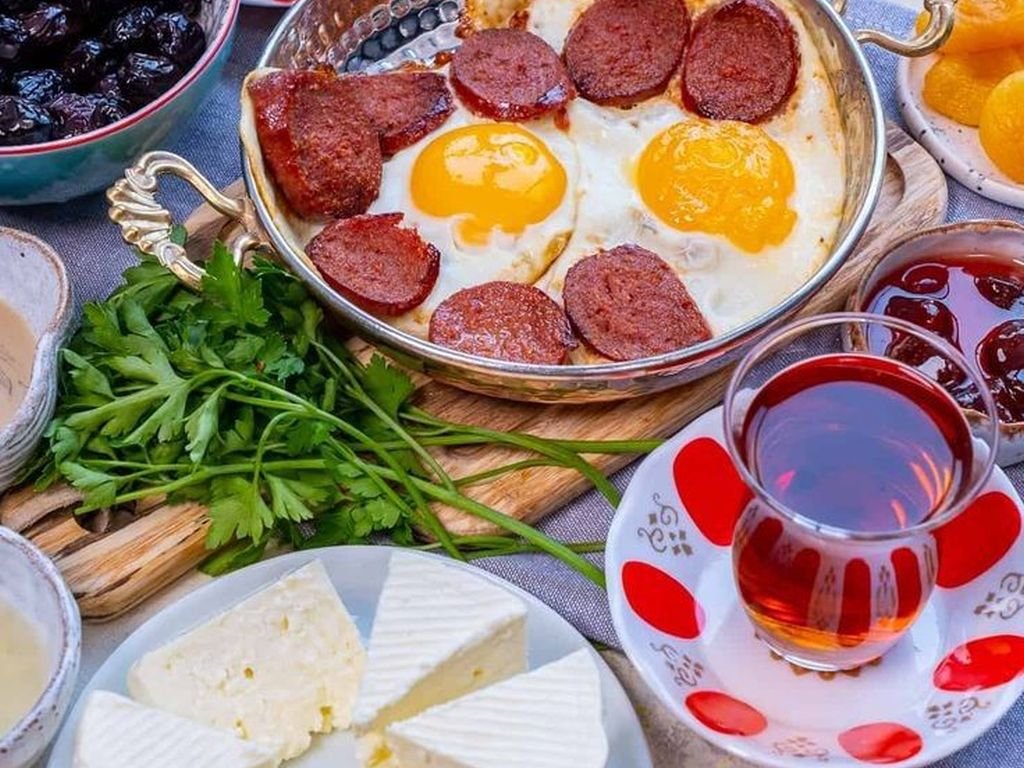
    Known locally as çay, Turkish tea is served from morning until late at night in homes, workplaces, cafés, markets, and village squares. Brewed in a traditional double teapot (çaydanlık), it is poured into elegant tulip-shaped glasses that have become an icon of Turkish culture.

    Offering tea is an expression of friendship and hospitality. Visitors are frequently invited to share a glass while shopping in bazaars, visiting historic sites, or simply chatting with locals.

    Whether concluding a meal or beginning a conversation, tea plays an essential role in bringing people together.

    The Tradition of Turkish Coffee

    Turkish coffee is far more than a beverage—it is an enduring cultural ritual.

    Prepared slowly in a small copper pot known as a cezve, the finely ground coffee is served unfiltered in small cups, producing its distinctive rich aroma and velvety texture.

    Traditionally accompanied by a glass of water and often a piece of Turkish delight, it is enjoyed slowly while conversation unfolds.

    For centuries, Turkish coffee has been associated with hospitality, engagement ceremonies, fortune-telling, and social gatherings. Its preparation and cultural significance have earned international recognition as part of humanity’s intangible cultural heritage.

    Street Food – The Flavors of Everyday Turkey

    One of the greatest pleasures of traveling through Turkey is discovering its vibrant street food culture.

    Bustling squares, waterfront promenades, and neighborhood markets are filled with vendors preparing fresh snacks throughout the day.

    Among the most popular are simit, the sesame-covered bread ring enjoyed for breakfast; döner kebab wrapped in flatbread; lahmacun, a thin crispy flatbread topped with seasoned minced meat; pide, Turkey’s famous boat-shaped bread; and kokoreç, a favorite late-night specialty in many cities.

    Coastal towns tempt visitors with grilled fish sandwiches, stuffed mussels, roasted chestnuts, boiled corn, and freshly squeezed fruit juices.

    Street food offers not only affordable meals but also an authentic glimpse into everyday Turkish life.

    Markets and Bazaars

    Turkey’s markets are among the country’s most colorful cultural experiences.

    Every town hosts weekly farmers’ markets where local producers sell seasonal fruits, vegetables, cheeses, olives, herbs, spices, honey, and freshly baked bread.

    In larger cities, traditional bazaars remain vibrant centers of commerce. Istanbul’s historic Spice Bazaar overflows with fragrant herbs, dried fruits, teas, nuts, coffees, and confectionery, while countless neighborhood markets provide visitors with an opportunity to experience the lively atmosphere of daily shopping.

    The sounds of bargaining, the aromas of freshly ground spices, and the colorful displays of produce create an unforgettable sensory experience.

    Dining as a Social Tradition

    Meals in Turkey are rarely hurried affairs.

    Family members and friends often gather around a table filled with numerous dishes intended to be shared. Conversation is as important as the food itself, and guests are encouraged to help themselves generously.

    Hospitality occupies a central place in Turkish culture. Visitors are commonly offered tea, coffee, sweets, or fresh fruit, and refusing hospitality repeatedly may even be considered impolite.

    Traditional meals frequently conclude with seasonal fruit, Turkish coffee, or tea, allowing conversation to continue long after the plates have been cleared.

    A Culinary Experience for Every Traveler

    Exploring Turkey through its cuisine is one of the country’s greatest travel experiences.

    Cooking classes introduce visitors to traditional recipes handed down through generations, while village breakfasts showcase homemade cheeses, olives, jams, fresh bread, eggs, honey, and local herbs.

    Wine enthusiasts can discover vineyards in the Aegean and Thrace, seafood lovers can dine in charming fishing villages along the Mediterranean, and food markets offer opportunities to sample regional delicacies directly from local producers.

    Every destination reveals new flavors, traditions, and stories waiting to be discovered.

    Why Turkish Cuisine Is One of the World’s Great Culinary Traditions

    Few national cuisines combine such remarkable history, regional diversity, agricultural abundance, and cultural continuity as Turkish cuisine.

    Its foundations were laid by the nomadic peoples of Central Asia, enriched by the civilizations of Anatolia, refined in the magnificent kitchens of the Ottoman Empire, and preserved through generations of family traditions.

    Today, Turkish cuisine continues to evolve while remaining true to its heritage. Its emphasis on fresh ingredients, seasonal produce, balanced flavors, generous hospitality, and communal dining creates an experience that is as meaningful as it is delicious.

    Whether savoring an elegant Ottoman-inspired feast in Istanbul, enjoying freshly grilled seafood on the Aegean coast, sampling spicy kebabs in southeastern Anatolia, or sharing homemade dishes with a village family, every meal tells a story of a nation whose history has been shaped around the table.

    For travelers, discovering Turkey means far more than visiting ancient monuments or beautiful landscapes—it means experiencing one of the world’s most celebrated culinary traditions, where every dish reflects centuries of culture, craftsmanship, and hospitality.

    From bustling city markets to quiet mountain villages, Turkish cuisine offers an unforgettable journey through the flavors, history, and soul of an extraordinary country.
  • Do I Need a Visa to Visit Turkiye?

    Turkey Visa Requirements for International Travelers

    Before traveling to Turkey, every visitor must carry a valid passport or other accepted travel document that meets Turkey’s entry requirements. Passport validity requirements vary depending on nationality, but in general, travelers should ensure that their passport remains valid for at least six months beyond the date of arrival.

    Whether you need a visa depends on your nationality, the purpose of your visit, and the length of your stay. Turkey maintains different visa agreements with countries around the world, meaning entry requirements are not the same for every traveler.

    Visa-Free Travel

    Citizens of many countries can enter Turkey without obtaining a visa for short stays related to tourism or business. The permitted length of stay varies by nationality, so travelers should always verify the latest requirements before departure.

    Visa-free visitors must still comply with Turkey’s immigration regulations, including passport validity requirements and any limits on the duration of their stay.

    Turkey’s Electronic Visa (e-Visa)

    Turkey operates an efficient Electronic Visa (e-Visa) system that allows eligible travelers to apply online before their trip. The e-Visa is available for tourism and business travel and can usually be obtained within minutes through the official government website.

    The application process typically requires:

    • A valid passport.
    • Personal and travel information.
    • Payment of the applicable visa fee.
    • An email address to receive the approved e-Visa.

    Eligibility, visa validity, and permitted length of stay vary according to the applicant’s nationality. Some nationalities may also need to meet additional requirements or provide supporting documents.

    Embassy or Consulate Visas

    Travelers who are not eligible for visa-free entry or an e-Visa must apply for a visa through a Turkish embassy or consulate before traveling.

    This generally applies to visitors traveling for purposes such as:

    • Employment
    • Study
    • Research
    • Long-term residence
    • Family reunification
    • Other non-tourism activities

    Visa applications submitted through Turkish diplomatic missions may require supporting documents, interviews, and additional processing time. Applicants are therefore advised to apply well in advance of their planned departure.

    Transit Through Turkey

    Passengers transiting through Turkey without passing through immigration or leaving the international transit area generally do not require a Turkish visa. However, travelers who intend to leave the airport during a layover may need a visa, depending on their nationality and the applicable entry regulations.

    Important Travel Advice

    Visa regulations can change as Turkey updates its immigration policies and bilateral agreements with other countries. Travelers should always confirm the latest entry requirements before booking flights or departing for Turkey.

    The easiest way to determine whether you need a visa is by checking the official Turkish government visa portal or contacting the nearest Turkish embassy or consulate.

    Official Resources

    For the latest visa information and eligibility requirements, visit:

    Checking these official sources before traveling will help ensure that you have the correct documentation and can enjoy a smooth arrival in Turkey.

  • Highland Culture in Turkiye: Exploring the Traditions of the Turkish Yaylas

    Turkey’s highland culture, known locally as “yayla culture,” is one of the country’s oldest and most cherished traditions. For centuries, families, shepherds, and nomadic communities have migrated to the cool mountain plateaus during the summer months, following a seasonal lifestyle that remains an important part of Turkey’s cultural heritage.

    Surrounded by forests, alpine meadows, clear streams, and breathtaking mountain scenery, Turkey’s highlands offer not only fertile grazing lands but also a peaceful escape from the intense summer heat of the lowlands. Today, these picturesque mountain settlements have become popular destinations for both domestic and international visitors seeking authentic cultural experiences and unspoiled natural landscapes.

    What Is a Yayla?

    A yayla is a high-altitude mountain pasture or plateau traditionally used during the summer months. Located above the hotter lowland regions, yaylas enjoy cooler temperatures, fresh mountain air, and abundant natural springs.

    For generations, people have moved seasonally to these highlands with their livestock, establishing temporary villages where they spend several months grazing animals, producing dairy products, and harvesting mountain resources before returning to lower elevations in autumn.

    This seasonal migration, known as transhumance, has shaped rural life across Anatolia for centuries.

    The Origins of Highland Culture

    The tradition of moving to the mountains dates back to ancient times and was further developed by the Turkic nomadic peoples who settled in Anatolia after migrating from Central Asia.

    These communities relied on seasonal migration to make the best use of natural resources. During the summer, livestock grazed on the lush alpine meadows, while the cooler climate provided healthier conditions for both people and animals.

    Although modern lifestyles have changed many aspects of rural life, the yayla tradition continues in numerous parts of Turkey and remains a living expression of the country’s pastoral heritage.

    Seasonal Migration

    Every year, usually between May and September, families in many rural regions relocate to mountain pastures.

    The migration often includes:

    • Cattle
    • Sheep
    • Goats
    • Horses
    • Household belongings
    • Traditional farming equipment

    Entire families may spend weeks or months in the highlands, living in wooden cottages, stone houses, or traditional mountain homes while caring for their livestock and producing dairy products.

    For many communities, this annual journey is both an economic necessity and a deeply rooted cultural tradition.

    Livestock and Traditional Farming

    Highland pastures provide rich natural grasses that are ideal for grazing animals.

    Shepherds and farming families use these mountain meadows to:

    • Raise cattle
    • Graze sheep and goats
    • Produce milk
    • Make traditional cheeses
    • Prepare butter and yogurt
    • Collect hay for winter feeding

    The nutritious alpine vegetation contributes to the distinctive flavor and high quality of many regional dairy products that are famous throughout Turkey.

    Regional Highland Traditions

    Highland culture varies across Turkey’s diverse regions, each with its own customs and traditions.

    Black Sea Region

    The Black Sea Highlands are among Turkey’s most famous yaylas. Covered with dense forests, rolling green meadows, waterfalls, and misty mountains, these highlands have become iconic symbols of Turkish mountain life.

    Traditional wooden houses, lively folk music, energetic horon dances, and colorful summer festivals characterize the region’s vibrant highland culture.

    Mediterranean Region

    In southern Turkey, families have long moved to mountain plateaus to escape the intense coastal heat.

    These cooler elevations provide comfortable summer living conditions while also serving as grazing grounds for livestock. Many Mediterranean yaylas have evolved into popular summer retreats where families maintain seasonal homes.

    Central Anatolia

    The broad plateaus of Central Anatolia support extensive livestock farming. Here, highland communities continue traditional pastoral practices while harvesting hay and preparing winter fodder for their animals.

    Eastern and Southeastern Anatolia

    In eastern Turkey, many semi-nomadic and pastoral communities continue the centuries-old tradition of moving their flocks to high mountain pastures during the summer.

    The region’s vast alpine meadows provide ideal grazing conditions, supporting sheep and goat farming that remains central to the local economy.

    A Refuge from Summer Heat

    For many people living along Turkey’s Mediterranean and Aegean coasts, the yaylas provide a welcome escape from the intense summer climate.

    Higher elevations offer:

    • Cooler temperatures
    • Fresh mountain air
    • Lower humidity
    • Fewer mosquitoes and insects
    • Peaceful natural surroundings
    • Cleaner environments

    For generations, families have maintained summer homes in the mountains, enjoying a healthier and more comfortable lifestyle during the hottest months of the year.

    Festivals and Local Traditions

    Many Turkish highlands host colorful summer festivals that celebrate local culture and pastoral traditions.

    These events often include:

    • Traditional folk dancing
    • Regional music performances
    • Local handicraft exhibitions
    • Horse and livestock displays
    • Wrestling competitions
    • Traditional games
    • Regional food markets

    These festivals strengthen community ties while preserving customs that have been passed down through generations.

    Highland Cuisine

    One of the highlights of visiting a Turkish yayla is experiencing its distinctive mountain cuisine.

    Fresh local ingredients are used to prepare traditional specialties such as:

    • Village cheeses
    • Homemade butter
    • Yogurt
    • Cream
    • Cornbread
    • Fresh honey
    • Herbal teas
    • Grilled meats
    • Local pastries

    Many dishes are prepared using recipes that have remained virtually unchanged for centuries.

    Highland Tourism in Turkey

    In recent decades, Turkey’s beautiful mountain plateaus have become increasingly popular tourist destinations.

    Known as highland tourism (yayla tourism), this growing form of sustainable travel allows visitors to experience authentic rural life while enjoying spectacular mountain scenery.

    Travelers can:

    • Stay in traditional mountain houses or boutique lodges.
    • Hike through alpine meadows and forests.
    • Visit waterfalls and mountain lakes.
    • Observe traditional livestock farming.
    • Sample regional cuisine.
    • Attend local festivals.
    • Photograph breathtaking landscapes.
    • Experience village hospitality.

    Unlike mass tourism destinations, many yaylas retain their peaceful atmosphere and traditional character, offering visitors an opportunity to connect with nature and local culture.

    Sustainable Mountain Living

    Highland culture represents an environmentally sustainable way of life that has evolved over centuries. Seasonal migration allows pastures to regenerate naturally while maintaining ecological balance and supporting biodiversity.

    Today, many communities are working to preserve both their cultural traditions and the pristine mountain environments that have sustained them for generations.

    The Enduring Spirit of the Yayla

    Turkey’s highland culture is much more than a seasonal migration—it is a living tradition that reflects the country’s deep connection to nature, agriculture, and community life. From the lush green plateaus of the Black Sea Mountains to the rugged alpine pastures of eastern Anatolia, the yaylas continue to embody a unique way of life that has endured for centuries.

    Whether visiting for the cool mountain climate, spectacular scenery, traditional festivals, or authentic village hospitality, travelers will discover that Turkey’s highlands offer one of the country’s most rewarding cultural and natural experiences. As interest in eco-tourism and sustainable travel continues to grow, the timeless traditions of the Turkish yayla remain an enduring symbol of Anatolia’s rich heritage and warm hospitality.

  • Microlight Flying in Turkiye: An Exciting and Accessible Aviation Adventure

    Microlight flying is one of the most enjoyable and accessible forms of recreational aviation in Turkey. Combining the freedom of open-air flight with the simplicity of lightweight aircraft, microlights offer aviation enthusiasts a unique opportunity to experience spectacular landscapes from above without the complexity or expense of conventional airplanes.

    Thanks to Turkey’s diverse geography, favorable climate, and growing aviation community, microlight flying has become an increasingly popular air sport for both beginners and experienced pilots.

    What Is a Microlight?

    A microlight, also known as an ultralight aircraft, is a lightweight, engine-powered aircraft designed for recreational flying. Built with a simple airframe and highly efficient engine, microlights are easy to operate, economical to maintain, and capable of flying at relatively low speeds, allowing pilots to fully appreciate the scenery below.

    Most microlights are designed to carry:

    • One pilot (single-seat)
    • A pilot and one passenger (two-seat)

    Despite their lightweight construction, modern microlights are engineered to meet strict aviation safety standards and provide excellent stability and maneuverability.

    Types of Microlights

    Microlights generally fall into two main categories:

    Weight-Shift Microlights

    These aircraft resemble powered hang gliders, featuring a flexible wing mounted above a lightweight tricycle frame. Pilots control the aircraft by shifting the control bar, changing the aircraft’s center of gravity.

    Three-Axis Microlights

    These resemble small conventional airplanes and are controlled using a joystick or control stick together with rudder pedals. Their handling characteristics are similar to those of standard light aircraft, making them popular for flight training and recreational flying.

    Easy to Learn and Operate

    One of the main attractions of microlight flying is its relative simplicity. Compared with larger aircraft, microlights feature uncomplicated flight controls and straightforward cockpit layouts, making them an excellent introduction to aviation.

    Typical cockpit instruments include:

    • Airspeed indicator
    • Altimeter
    • Engine instruments
    • Compass or GPS navigation system
    • Radio communication equipment

    Although easier to operate than many other aircraft, safe microlight flying still requires proper flight instruction, practical training, and adherence to aviation regulations.

    Short Takeoff and Landing Capability

    A major advantage of microlight aircraft is their ability to operate from relatively short runways or grass airstrips.

    Because they are lightweight and highly aerodynamic, microlights require significantly less distance for takeoff and landing than conventional airplanes. This allows them to use many small airfields and recreational flying sites throughout Turkey.

    Efficient and Economical Flying

    Modern microlights are powered by small, fuel-efficient engines that consume far less fuel than larger aircraft.

    Their lightweight construction and aerodynamic design provide several benefits:

    • Low operating costs
    • Excellent fuel efficiency
    • Extended flying range
    • Reduced environmental impact
    • Lower maintenance requirements

    These advantages make microlight flying one of the most affordable ways to enjoy recreational aviation.

    Can Microlights Glide?

    Although microlights are powered aircraft, they also possess efficient aerodynamic characteristics that allow them to glide safely if the engine is reduced to idle or stops operating.

    Unlike dedicated gliders or sailplanes, however, microlights are not designed for prolonged engine-off soaring. Their primary method of flight relies on engine power, while their aerodynamic efficiency provides additional safety during descent and emergency landings.

    Why Fly a Microlight?

    Microlight flying offers an unforgettable experience that combines adventure with breathtaking aerial views.

    Pilots can enjoy:

    • Panoramic views of mountains, coastlines, forests, and lakes.
    • Open-air flying in some aircraft models.
    • A strong sense of freedom and exploration.
    • Relaxed cross-country flights.
    • Affordable aviation training.
    • An excellent introduction to powered flight.

    Because microlights typically fly at lower altitudes and slower speeds than conventional aircraft, passengers have ample opportunity to admire Turkey’s diverse natural landscapes.

    Microlight Flying in Turkey

    Turkey’s varied geography provides excellent conditions for microlight aviation. Wide plains, coastal regions, valleys, and favorable weather create ideal environments for recreational flights throughout much of the year.

    Microlight activities are available in several parts of the country through licensed aviation clubs and flight schools, where experienced instructors provide both introductory flights and pilot training.

    Many aviation enthusiasts enjoy flying over:

    • Mediterranean coastlines
    • Aegean landscapes
    • Central Anatolian plains
    • Lakes and reservoirs
    • Agricultural valleys
    • Mountain foothills

    Each region offers unique scenery and flying experiences.

    Training and Licensing

    Anyone interested in learning to fly a microlight should receive instruction from a qualified flight school or certified aviation club.

    Training generally includes:

    • Basic aerodynamics
    • Aircraft systems
    • Flight controls
    • Meteorology
    • Navigation
    • Aviation regulations
    • Emergency procedures
    • Practical flight instruction

    After completing the required theoretical and practical training, pilots may become eligible for certification in accordance with Turkish civil aviation regulations.

    Safety First

    Safety is the foundation of all recreational aviation. Modern microlights are designed with reliable engines, durable airframes, and comprehensive safety equipment.

    Before every flight, pilots conduct detailed pre-flight inspections to ensure that:

    • Aircraft systems are functioning correctly.
    • Weather conditions are suitable.
    • Fuel levels are sufficient.
    • Communication equipment is operational.
    • Emergency procedures are reviewed.

    Flying should always be conducted within the aircraft’s operational limits and under appropriate weather conditions.

    Discover Turkey from the Sky

    Microlight flying offers one of the most exciting ways to experience Turkey’s spectacular landscapes from a completely different perspective. Whether soaring above turquoise coastlines, rolling countryside, mountain valleys, or historic landmarks, every flight provides unforgettable views and a unique sense of freedom.

    With its combination of affordability, simplicity, and adventure, microlight aviation continues to grow in popularity across Turkey. For travelers seeking an exhilarating outdoor activity or aspiring pilots looking for an introduction to aviation, a microlight flight is an experience that perfectly combines scenic beauty, modern technology, and the thrill of flight.

  • Sultaniye Thermal Springs and Mud Baths: A Natural Wellness Experience Near Dalyan, Muğla

    Located near Dalyan and Köyceğiz in Muğla Province, the Sultaniye Thermal Springs (Sultaniye Kaplıcaları) are among the most famous natural healing destinations on Türkiye’s Aegean coast. Surrounded by the spectacular landscapes of Lake Köyceğiz, mountains, and lush forests, Sultaniye offers visitors a unique combination of thermal wellness, nature, and relaxation.

    With a history dating back thousands of years, these mineral-rich springs have attracted visitors seeking natural therapies, peaceful surroundings, and the famous traditional mud baths of the Dalyan region.

    Healing Thermal Waters of Sultaniye

    The thermal waters of Sultaniye are rich in natural minerals and have long been valued for their relaxing and therapeutic properties.

    Historically, the spring water was especially known as a drinking water source believed to support digestive health. Today, visitors mainly enjoy the thermal pools and spa facilities for relaxation and wellness purposes.

    The warm mineral waters are traditionally used for:

    • Relaxation and stress relief
    • Supporting muscle comfort
    • Wellness treatments
    • Natural spa experiences

    The springs offer a peaceful environment where visitors can enjoy the benefits of thermal bathing surrounded by nature.

    Famous Sultaniye Mud Baths

    The Sultaniye mud baths are one of the most popular attractions near Dalyan and have become an iconic experience for both domestic and international visitors.

    Guests cover themselves with natural mineral mud before washing off in thermal pools. The activity is popular because of its traditional spa atmosphere and the enjoyable experience of bathing in natural surroundings.

    The mud baths provide:

    • A fun wellness activity
    • A unique photo opportunity
    • A traditional Turkish spa experience
    • A relaxing stop during Dalyan excursions

    Many boat tours from Dalyan include a visit to the mud baths as part of their itinerary.

    Natural Setting Near Lake Köyceğiz

    One of the greatest attractions of Sultaniye is its beautiful location. The springs are situated near Lake Köyceğiz, a protected natural area known for its rich biodiversity and peaceful landscapes.

    Visitors can enjoy views of:

    • Lake Köyceğiz
    • Green mountains
    • Mediterranean vegetation
    • Natural wetlands
    • Dalyan’s famous river ecosystem

    The combination of thermal waters and natural scenery makes Sultaniye one of the most attractive wellness destinations in Muğla.

    Things to Do at Sultaniye Thermal Springs

    Visitors can enjoy several activities during their visit:

    Thermal Bathing

    Relax in warm mineral pools and experience one of the oldest wellness traditions of the region.

    Mud Bath Experience

    Enjoy the famous natural mud treatment, followed by washing in thermal waters.

    Boat Excursions

    Many visitors arrive by boat from Dalyan or Köyceğiz, making the journey itself part of the experience.

    Nature and Photography

    The surrounding landscapes provide excellent opportunities for photography and peaceful walks.

    Combine with Dalyan Attractions

    A visit to Sultaniye can easily be combined with nearby attractions such as:

    • Dalyan River
    • İztuzu Beach
    • Ancient city of Kaunos
    • Köyceğiz Lake

    Transportation to Sultaniye Thermal Springs

    Sultaniye is located approximately 10 kilometers from Köyceğiz and can be reached from both Köyceğiz and Dalyan.

    Transportation options include:

    • Boat tours from Dalyan
    • Boats from Köyceğiz
    • Private vehicles
    • Local tours and excursions

    The boat route through the peaceful waterways of Dalyan is one of the most enjoyable ways to reach the thermal springs.

    Best Time to Visit

    Sultaniye Thermal Springs can be visited throughout the year, but the most popular period is from spring to autumn when the weather is ideal for outdoor activities.

    • Spring: Pleasant temperatures and beautiful natural scenery
    • Summer: Perfect for combining thermal baths with Dalyan and beach excursions
    • Autumn: A quieter period with comfortable weather

    A Perfect Wellness Stop on the Muğla Coast

    The Sultaniye Thermal Springs and Mud Baths offer a different experience from the famous beaches of Muğla. Instead of only sea and sun, visitors can discover the healing traditions, natural landscapes, and peaceful atmosphere of the Dalyan region.

    Combining mineral-rich thermal waters, traditional mud baths, scenic boat routes, and nearby historical attractions, Sultaniye remains one of the most memorable wellness destinations around Marmaris, Dalyan, and Köyceğiz.