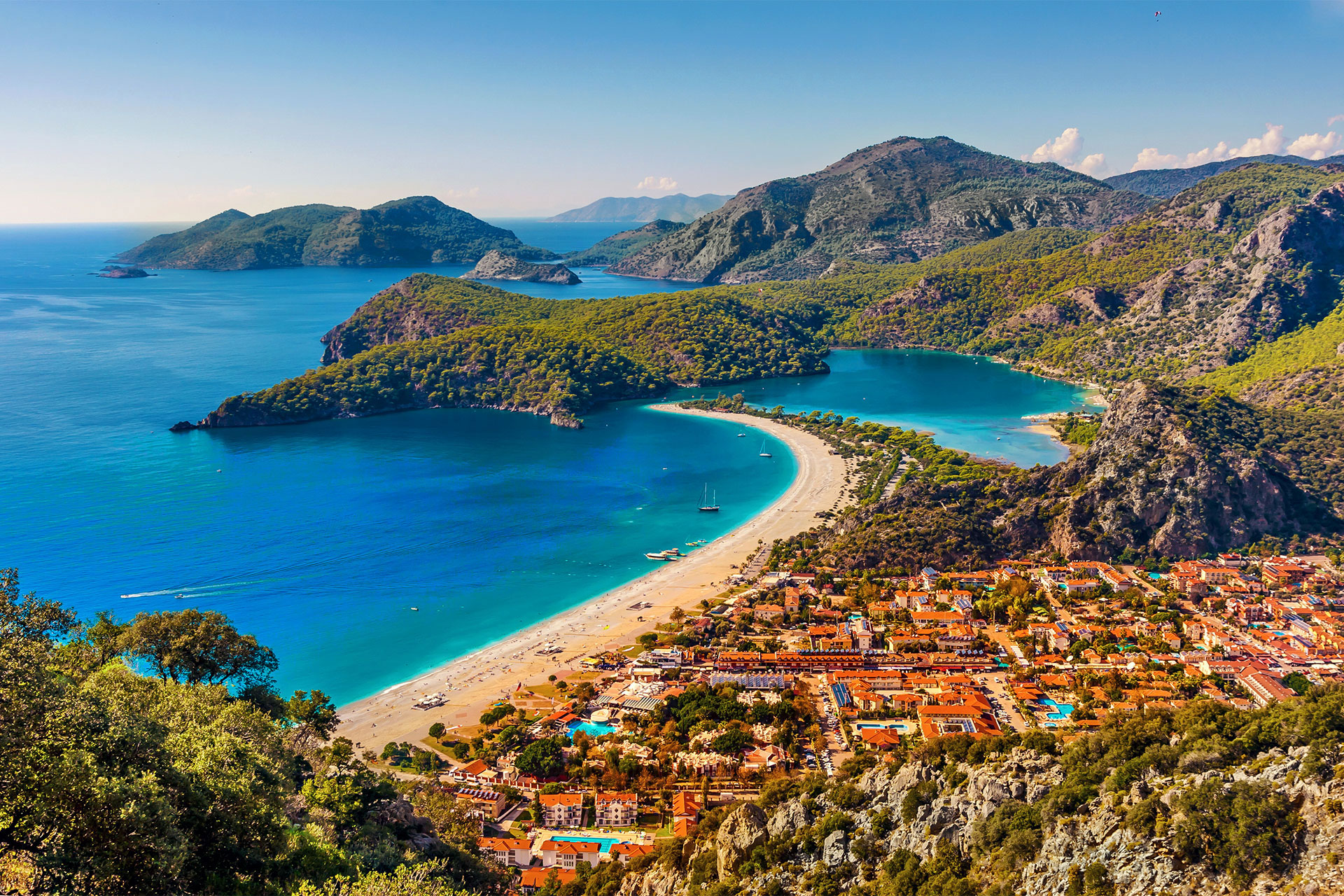
Turkey is one of the most mountainous countries in the Mediterranean region, with mountains covering a large part of its territory. The country’s unique geographical structure has been shaped by powerful geological movements over millions of years, creating a landscape of folded mountains, fault-block mountains, and volcanic peaks.
Stretching between Europe and Asia, Turkey is surrounded and divided by major mountain systems that influence its climate, vegetation, agriculture, wildlife, and human settlement patterns.
The country becomes increasingly arid toward the south and southeast, while its mountain ranges create important climatic barriers, producing rich forests in the north, alpine landscapes in the east, and Mediterranean environments along the southern coast.
Major Mountain Systems of Turkey
Turkey’s mountains are generally grouped into four major regions:
- Northern Anatolian Mountains (Kuzey Anadolu Dağları)
- Central Anatolian Volcanic Massif
- Taurus Mountains (Toros Dağları)
- Southeastern Anatolian Mountains
1. Northern Anatolian Mountains
The Northern Anatolian Mountains run parallel to the Black Sea coast from the west to the eastern borders of Turkey.
These mountains were formed mainly by folding and faulting processes and create a dramatic barrier between the Black Sea coast and the Anatolian interior.
The region is characterized by:
- Dense forests
- High rainfall
- Alpine meadows
- Glacial valleys
- Rich biodiversity
Important Mountains of the Northern Anatolian Range
Kaçkar Mountains
Height: 3,937 meters
Located in Rize and Artvin provinces, the Kaçkar Mountains are among Turkey’s most spectacular alpine regions.
Highlights include:
- Glacial lakes
- High mountain plateaus (yaylas)
- Hiking routes
- Traditional mountain villages
The Kaçkar Mountains are one of Turkey’s best destinations for trekking and nature tourism.
Ilgaz Mountains
Height: 2,587 meters
Located between Kastamonu and Çankırı, the Ilgaz Mountains are famous for:
- National parks
- Winter sports
- Forest landscapes
- Hiking trails
Uludağ Mountain
Height: 2,543 meters
Located near Bursa, Uludağ is Turkey’s most famous winter tourism destination.
It offers:
- Ski resorts
- Mountain hiking
- Cable car rides
- Alpine forests
Yıldız (Istranca) Mountains
Height: approximately 1,000 meters
Located in northwestern Turkey near the Bulgarian border, these mountains are known for forests, wildlife, and natural parks.
2. Central Anatolian Volcanic Mountains
Central and eastern Anatolia contain some of Turkey’s most impressive volcanic mountains.
These peaks were formed by ancient volcanic activity and dominate the surrounding plains.
They are characterized by:
- Volcanic landscapes
- Lava formations
- Crater lakes
- High plateaus
Mount Ararat (Ağrı Dağı)
Height: 5,137 meters
Turkey’s highest mountain
Located in eastern Turkey near the Iranian border, Mount Ararat is a dormant volcanic mountain and one of the country’s most famous natural landmarks.
It is associated with:
- The legend of Noah’s Ark
- Mountaineering expeditions
- Glacial landscapes
- Eastern Anatolian culture
The mountain has two peaks:
- Greater Ararat – 5,137 m
- Lesser Ararat – 3,896 m
Mount Süphan
Height: 4,058 meters
Located north of Lake Van, Mount Süphan is Turkey’s third-highest volcanic mountain.
It offers:
- Alpine hiking
- Volcanic scenery
- Views over Lake Van
Mount Erciyes
Height: 3,917 meters
Located near Kayseri, Mount Erciyes is one of central Anatolia’s most impressive volcanoes.
Today it is famous for:
- Ski tourism
- Mountaineering
- Winter sports
- Panoramic views of Cappadocia
Mount Hasan
Height: 3,263 meters
Located near Aksaray, Mount Hasan is a volcanic peak visible across the Cappadocian landscape.
Ancient communities used volcanic stones from the region for construction, and the mountain remains an important natural symbol of central Anatolia.
Mount Nemrut
Height: approximately 3,050 meters
Located near Lake Van, this volcanic mountain is famous for its crater lake and dramatic volcanic landscape.
It should not be confused with Nemrut Dağı in Adıyaman, famous for the statues of King Antiochus.
3. Taurus Mountains (Toros Dağları)
The Taurus Mountains extend across southern Turkey parallel to the Mediterranean coast.
They form one of Turkey’s most important mountain systems and include some of the country’s highest peaks outside eastern Anatolia.
The Taurus range is divided into:
- Western Taurus
- Central Taurus
- Southeastern Taurus
The mountains are famous for:
- Deep valleys
- Canyons
- Alpine pastures
- Caves
- Traditional nomadic culture
- Winter tourism
Important Taurus Mountain Groups
Beydağları Mountains
Highest peak: 3,086 meters
Located near Antalya, these mountains are famous for:
- Mediterranean scenery
- Lycian hiking routes
- National parks
- Ancient settlements
Bolkar Mountains
Highest peak: Medetsiz Peak – 3,524 meters
Located in Niğde and Mersin provinces, the Bolkar Mountains are known for:
- Alpine lakes
- Wildlife
- Trekking
- Mountain climbing
Aladağlar Mountains
Highest peak: Demirkazık – approximately 3,756 meters
The Aladağlar National Park is one of Turkey’s most important mountain destinations.
Popular activities include:
- Rock climbing
- Trekking
- Camping
- Mountaineering
4. Southeastern Anatolian Mountains
The mountains of southeastern Turkey include some of the country’s highest and most rugged peaks.
They are characterized by:
- Sharp limestone peaks
- Glaciers
- Deep valleys
- Remote wilderness areas
Cilo-Sat Mountains
Highest peak: Gelyansin (Resko Peak) – approximately 4,134 meters
Located in Hakkari Province, the Cilo-Sat Mountains contain some of Turkey’s most impressive glaciers and alpine landscapes.
Amanos (Nur) Mountains
Located between Hatay and Osmaniye, the Amanos Mountains form a natural barrier between the Mediterranean coast and southeastern Anatolia.
They are important for:
- Biodiversity
- Forest ecosystems
- Bird migration routes
Main Types of Mountains in Turkey
1. Fold Mountains
These mountains were created by the compression and folding of the Earth’s crust.
Examples:
- Taurus Mountains
- Kaçkar Mountains
- Cilo-Sat Mountains
- Aladağlar
- Bolkar Mountains
2. Fault-Block Mountains
These formed through movements along geological faults.
Examples:
- Some western Anatolian mountain ranges
- Uludağ region
3. Volcanic Mountains
Created by ancient volcanic activity.
Examples:
- Mount Ararat
- Mount Süphan
- Mount Erciyes
- Mount Hasan
- Mount Nemrut
- Lesser Ararat
Highest Mountains in Turkey
| Mountain | Height | Location |
|---|---|---|
| Mount Ararat (Ağrı) | 5,137 m | Ağrı / Iğdır |
| Mount Süphan | 4,058 m | Bitlis / Van |
| Cilo-Sat Mountains (Resko) | 4,134 m | Hakkari |
| Kaçkar Mountains | 3,937 m | Rize / Artvin |
| Mount Erciyes | 3,917 m | Kayseri |
| Lesser Ararat | 3,896 m | Ağrı |
| Aladağlar Demirkazık | 3,756 m | Niğde |
| Kızılkaya (Aladağlar) | 3,725 m | Niğde |
| Bolkar Mountains Medetsiz | 3,524 m | Niğde / Mersin |
| Beydağları Kızlar Sivrisi | 3,069 m | Antalya |
| Mount Nemrut | 3,050 m | Bitlis |
| Uludağ | 2,543 m | Bursa |
Mountains and Tourism in Turkey
Turkey’s mountains provide exceptional opportunities for outdoor tourism:
Hiking and Trekking
Popular routes include:
- Lycian Way
- Kaçkar Mountain trails
- Aladağlar National Park
- Mount Ararat expeditions
Winter Sports
Major ski destinations include:
- Uludağ
- Erciyes
- Palandöken
- Kartalkaya
- Ilgaz
Nature Tourism
Mountain regions offer:
- Wildlife observation
- Birdwatching
- Camping
- Photography
- Village tourism
- Highland festivals
The Importance of Turkey’s Mountains
Turkey’s mountains are not only geographical formations; they are deeply connected with the country’s history, culture, and lifestyle.
For thousands of years, mountains have provided:
- Natural protection for ancient cities
- Pastures for nomadic communities
- Water resources for agriculture
- Sacred landscapes in mythology
- Unique ecosystems for wildlife
From the legendary peaks of Mount Ararat to the green valleys of the Kaçkars and the dramatic cliffs of the Taurus Mountains, Turkey’s mountains represent one of the country’s greatest natural treasures.