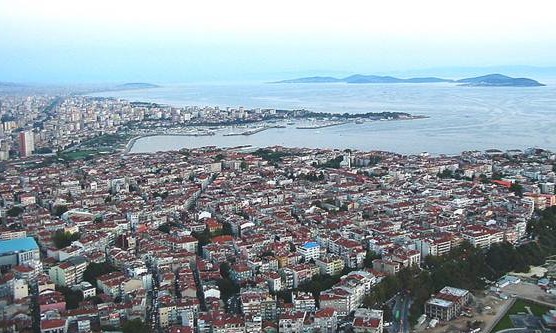
The foundation of Kadikoy is about 17 years before Byzantium, that is, the foundation of Istanbul. As the date of establishment, the year 675 BC is accepted. The first settlement after Fikirtepe was the Chalcedon (Copper country), which was established in the place between today’s Fashion Nose and the Yogurtcu. No remains have reached this city to the present day. Kadikoy, which was a small settlement during the conquest years, did not show much development in the years following the conquest. The mosque built by Kady Hizir Bey to the location of today’s Osmanaga Mosque was the first important structure of the Ottoman Empire. The main development of Kadikoy began in the 19th century in the 2nd half, after the construction of such important structures as Selimiye Barracks, Haydarpasa Military Hospital. In particular, regular ferry services starting in 1857 have made Kadikoy a more preferred location for settlement. This feature of Kadikoy has continued to the present day. In 1869, Kadikoy was connected to the Skopje Sanjak, which was a larger and more important center at the time.
Kadikoy, which has been connected to Skudar for a long time, was built in 1930’s. Kadikoy, although it has completed its urbanization to a great extent, is a growing population in 1940 with a population of 58 thousand Kadikoy, in 1970’s 241 thousand, 1985’te has become a big city with a population of 648 thousand. The population of Kadikoy in 1997 was 699,379. The economic activity common in Kadikoy is trade. Kadikoy Bazaar, Altiyol, Bahariye and Baghdad streets are places where commercial mobility is intense. Traces and artifacts have been found that people lived 1500-3000 years ago around the Frogaldere, which emerged from the Beltra and poured into Kalamysh Bay, and there have been no serious excavations and examinations so far.
Although only a small archeological research was carried out on Fikirtepesi and the artifacts seized during the road and apartment buildings were collected and evaluated, the results were not satisfactory. The findings, in general, have gone as deep as two meters. These are works made of stone, glass and earth.In the excavations on the Willowite Caddesi and Gazhane between 1942-1952, works of the bronze age were also found. The works found on the fikirtepe are stones used as hammers, pearl grains, turquoise stone, arrowhead made of bronze, fish needle and other kinds of needles. In the Fashion Nose, oil lamps made of earth, vases with painted embroidery on them, an ox statue, a bearded male head and a bronze sheet were found that plagued the Chalcedonian book.
Strangely enough, the similarities of the works found in Kadikoy were also seen in the Hisarlik region, the old Trojan city, and the idea that there was a close relationship between Kadikoy and Trova in terms of art, culture and trade was born. Although the research is not satisfactory, the pots found in Fikirtepe are all handmade, although not many, but puncture instruments made of bones and horns. Numerous mussels, fish, and wild animal bones have been found, suggesting that the public is survived by livestock and fishing. Similar pottery in Fikirtepe was found in excavations in Eskisehir Plain. Therefore, it is thought that the people of Fikirtepe are of Central Anatolian origin.
Historic People Seated in Kadikoy: 446 in II. Teheodes sat in Kadikoy. II. Villehardouin, the beauty of the palace, which was built in Kadikoy during the Constantine period, mentions a long time. Although the exact location is not known, it is estimated that it is on the back of the windmill. Because, very thick wall remains were found in the basic excavations of the apartments made here. From the demands of Eflatun, Ksemokrates was born in Kadikoy in 4 BC. At the time, the Kadikoy was not crowded; but it was a government center that included the Straits and the Anatolian side. Byzantine Emperor Justinian and his wife Theodora Fenerbahce spent a significant part of the year in their palace. After Byzantium, the Ottoman sultan, Kanuni Sultan Suleiman, and following him, some sultans sat in the summer at the Shadyrvan Pavilion in Fenerbahce.