GTurkiye

Author: Tn

  • Turkiye Citizenship By Investment

    Turkey’s Citizenship by Investment program (launched 2017) allows foreign investors to obtain a Turkish passport by purchasing real estate worth at least $400,000 USD or investing $500,000 USD in bank deposits, government bonds, or capital investments.

    The investment must be held for at least three years, after which it can be sold. The program typically takes 4–8+ months to process, includes the applicant’s spouse and children, and offers visa-free travel to 120+ countries.

    Key Investment Options (Minimum $400k-$500k)
    Real Estate Purchase ($400,000+): The most popular option. You can buy one or more properties, but they must total at least $400,000 USD and be held for 3 years.
    Bank Deposit ($500,000+): Deposit USD, EUR, or TRY equivalent into a Turkish bank for 3 years.
    Capital Investment ($500,000+): Fixed capital investment in a Turkish company.
    Government Bonds/Funds ($500,000+): Purchasing government bonds or real estate investment fund shares.

    Requirements and Process
    Eligibility: The main applicant must be over 18, possess a clean criminal record, and prove legal source of funds.
    Currency Regulation: Investments must be made in USD or equivalent foreign currency, converted via a Turkish bank.
    Family Inclusion: Spouse and children under 18 (or disabled children of any age) can receive citizenship along with the main applicant.
    Process Time: Typically 4 to 8+ months for approval.

    Benefits of Turkish Citizenship
    Fast Tracking: No minimum residency requirement to obtain citizenship.
    Dual Citizenship: Turkey allows dual nationality.
    Global Mobility: Visa-free or visa-on-arrival access to 120+ countries.
    USA E-2 Visa: Turkish citizens are eligible to apply for the USA E-2 Investor Visa.
    Lifestyle: Access to high-quality healthcare and education systems.

    Note: As of 2026, the minimum real estate investment threshold is $400,000 USD.

  • Investment in Turkiye For Foreigners

    Investment in Turkiye For Foreigners

    Foreigners investing in Turkey can obtain citizenship by purchasing real estate ($400,000+), depositing $500,000+ in banks, or investing in business capital, with a 3-year holding period required.

    Popular options include residential/commercial property in Istanbul and Antalya, boasting 15-25% annual price growth and 8% rental yields. Key sectors for investment include real estate, tourism, manufacturing, and tech.

    Key Investment Options for Citizenship
    Real Estate Purchase: Minimum $400,000 value, with a restriction against selling for at least three years.
    Bank Deposit: Minimum $500,000 in a Turkish bank account.
    Fixed Capital Investment: Minimum $500,000 (attested by Ministry of Industry and Technology).
    Government Bonds/Funds: Minimum $500,000 in government bonds, Real Estate Investment Funds (REIF), or Venture Capital Funds (VCIF).
    Job Creation: Establishing a company that provides employment to at least 50 people.

    Popular Investment Sectors
    Real Estate: High demand in Istanbul, Ankara, and Antalya due to strong rental returns and high liquidity.
    Tourism & Hospitality: Hotels, resorts, and restaurants, particularly in coastal regions.
    Technology & Startups: Software, IT, and fintech sectors.

    Key Requirements and Information
    Foreign Exchange Certificate: Required for all foreign nationals buying property, obtained from an official bank in Turkey.
    Documentation: Requires a notarized passport translation, tax number, and, for business, a 25% capital deposit.
    Family Inclusion: Spouses and minor children can obtain citizenship alongside the investor.
    Timeframe: Citizenship is usually acquired in 8+ months.

    Benefits
    Visa-free or visa-on-arrival access to over 110 destinations.
    Eligibility for the E-2 investor visa for the USA.
    High ROI potential due to rapid growth in property prices (15-25% annually).

  • Doing Business in Turkiye

    Doing Business in Turkiye

    Doing business in Turkey offers significant opportunities for foreign investors, featuring a large, young population, strategic location, and 100% foreign ownership options.

    Companies can be established in one day, with Limited Liability Companies (LLCs) requiring a 50,000 TRY minimum capital and a 25% corporate tax rate. Top sectors include manufacturing, technology, tourism, and construction, with opportunities for citizenship via investment.

    Key Aspects of Doing Business in Turkey
    Company Structures: The most popular for foreigners are Limited Liability Companies (LLC) and Joint Stock Companies (JSC).
    Establishment Process: “One-stop-shop” procedures at Trade Registry Directorates allow company formation within one day.
    Foreign Investment Rules: Turkey’s Foreign Direct Investment (FDI) Law ensures equal treatment, meaning foreign investors have the same rights and obligations as local ones.
    Key Sectors: Strong investment potential exists in automotive, manufacturing, construction, electronics, agriculture, and tourism.
    Taxation: A standard corporate tax rate of 25% applies, and a new minimum 10% tax rule applies from 2025.
    Location Strategy: Istanbul is a major hub but highly competitive. Other regions may offer different advantages.

    Steps to Set Up a Business
    Draft Documents: Prepare Articles of Association, translating necessary documents (passports, etc.) into Turkish.
    Tax Identification Number: Obtain a potential tax number from the tax office.
    Capital Deposit: Deposit the required minimum capital (10,000–50,000+ TRY depending on structure).
    Registration: Register with the local Trade Registry Directorate.
    Notarization: Certify signature circulars and official books.
    Work Permits: Required for foreign owners actively managing the company (not required for passive investors).

    Investment Incentives
    Citizenship: Real estate investment of $400,000 or more can grant citizenship.
    Special Zones: Various incentives are available for investments in technology development zones and free zones.

    It is highly recommended to engage local legal counsel for navigating regulatory requirements and ensuring compliance with the Turkish Commercial Code (TCC).

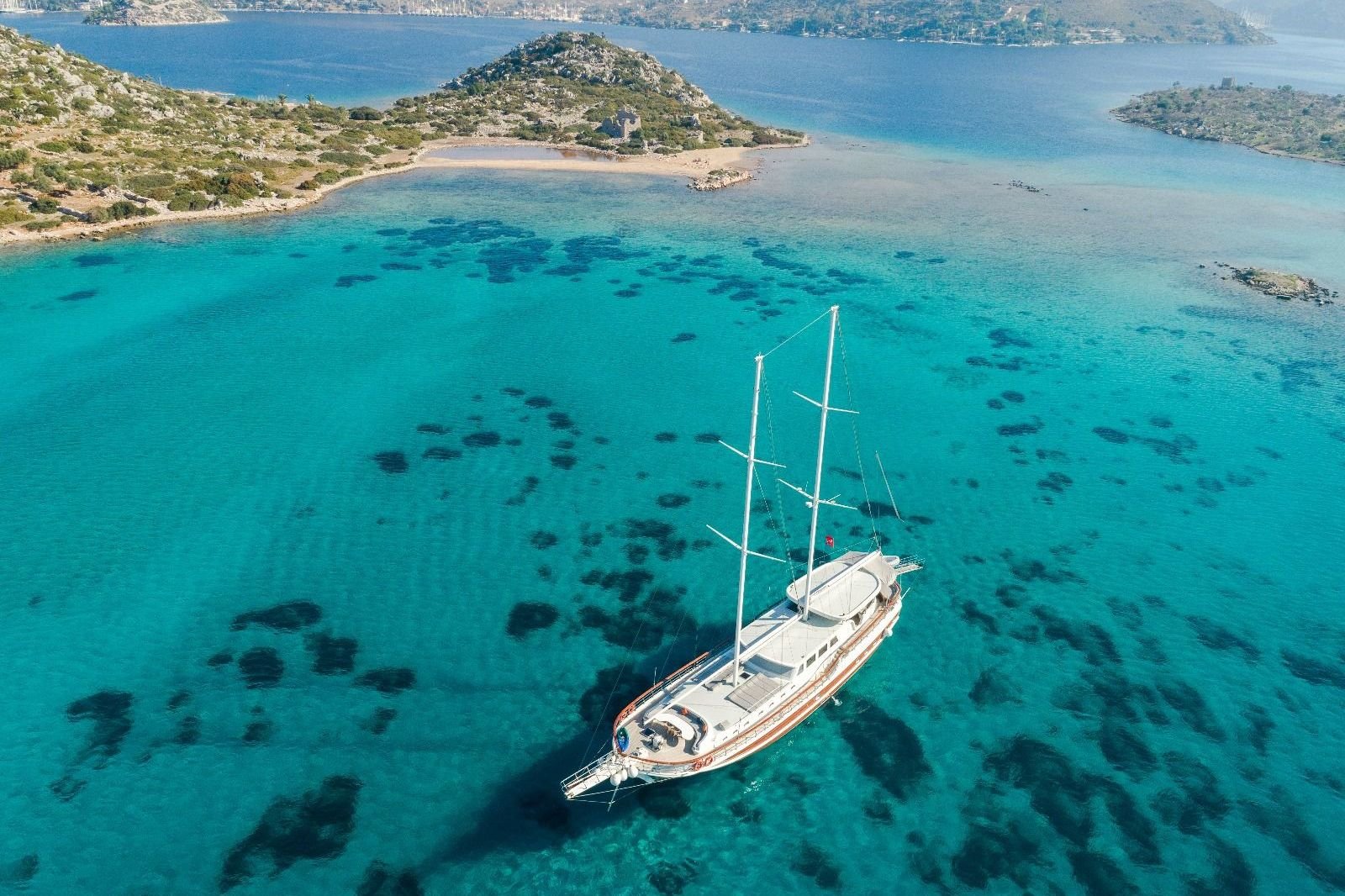
  • Explore the 2025 km of the Turkey Mediterranean coastline, dive in crystal clear waters

    All of the ruins in Turkey are closed to diving. In such prohibited areas, special permission is required for diving. Suitable places to dive in the Eastern Mediterranean region are; Iskenderun Arsuz region, Mersin vicinity, Maiden’s Castle, Anamur coast.