GTurkiye

Category: Geography

  • Geographical statistics about Turkiye

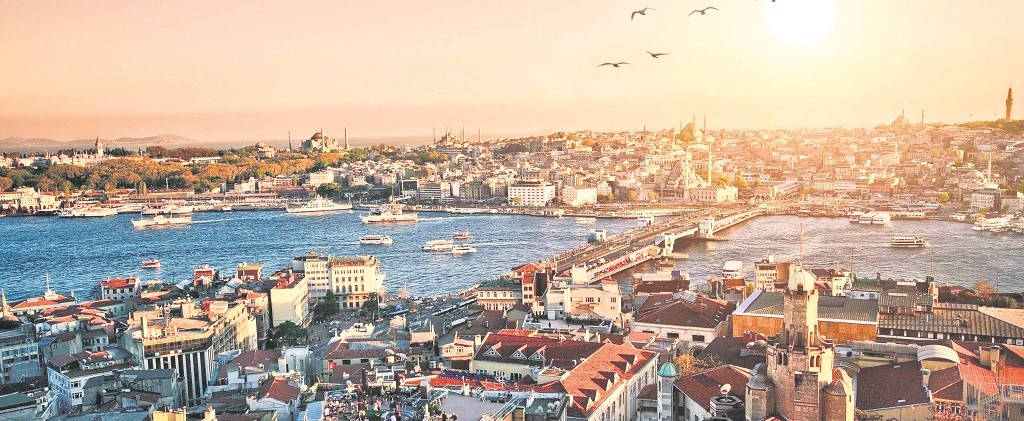
    istanbul

    Turkey extends itself with a small part (3% of the land mass) its country area on the European continent and with the much larger part (97% of the land mass) on the Asian continent.

    Through its size of almost 800,000 km² Turkey is scenically extremely multilateral and for a trip extremely attractive.

    The Flora and fauna in Turkey seeks sewed can be discovered people like her in the entire East, it over 9000 different types at plants and animals.

    Nature lover can connect so its vacation with an excursion into the wilderness and can observe yet numerous in freedom living brown bears and wolfs.

    Similar to it with that multilaterally the landscape behaves, is the climate of also extremely different in the respective province.

    In the head vacation zones at the Mediterranean Sea, Mediterranean climatic ratios, that make trips into Turkey to every year time to a comfortable pleasure, rule.

    To the many goals whether city, coast come or Innland after the facts, that the costs extremely economically is for a vacation in Turkey in comparison with other destinations in Europe and that must accept one restrictions in the achievements.

    OFFICIAL NAME: Republic of Turkey
    Government: Parliamentary republic.
    Formation of Parliament: April 23, 1920
    Declaration of Republic: October 29, 1923
    Capital: Ankara.
    Largest city: Istanbul
    Population ( 31 December 2023 estimate): 85,372,377 .
    Area: 301,380 sq mi/780,574 sq km.
    Water (%): 1.3
    Languages: Turkish (official).
    Health Certificates: None required. Contact health authorities for latest information.
    Weather: Mediterranean in coastal areas, harsher temperatures inland.
    Economy: Agriculture, industry, mining, tourism.
    Predominant Religions: Predominately Islamic (Sunni), though many other sects and religions are represented.
    Currency: Turkish Lira.
    Internet TLD: .tr
    Weights & Measures:
    Time Zone: 2 hours ahead of Greenwich Mean Time (+2 GMT). Daylight Saving Time is observed March-October.
    Telephone Codes: 90, country code; 212, Istanbul (European side); 216, Istanbul (Asian side).
    Voltage Requirements : 220 volts.
    Airport Departure Tax: None.

  • Turkey is situated in a geographical location where climatic conditions are quite temperate

    Although Turkey is situated in a geographical location where climatic conditions are quite temperate, the diverse nature of the landscape, and the existence in particular of the mountains that run parallel to the coasts, results in significant differences in climatic conditions from one region to the other. Istanbul is part of Europe and the weather reflects that. You’ll find a wet cold winter (3-8 degrees Celsius) slowly turning into a damp, warm Spring and a mild to hot (18-32 C°) summer that doesn’t hang around any longer than feels is necessary. The Aegean and Mediterranean coasts have a typical Mediterranean climate with hot summers (24-36°C) and mild winters (4-16 °C). Cappadocia shares the climate of much of inland Turkey. Summers can be very hot and your altitude is directly proportional to the amount of snow you get in the winter.

    Being a large country there is no ‘average’ climatic condition and there are considerable variations between Istanbul, Cappadocia and the coastal regions. In Central Anatolia (Cappadocia) there is a considerable variation between day and night time temperatures, with summer peaking at around 26°C. Around Izmir and Ephesus the climate is warmer still, with average summertime temperatures occasionally exceeding 30°C. Further south on the Mediterranean in Fethiye mild winter for a few months and long hot summers with 30°C average. As for eastern Turkey The climate of the region can be harsh and unpredictable, summers tend to be hot and extremely dry. Winters are bitterly cold with frequent, heavy snowfall. Villages can be isolated for several days during winter storms. Spring and autumn are generally mild, but during both seasons sudden hot and cold spells frequently occur.

    There are seven basic climatic areas:
    Marmara — temperate, warm and fairly humid summer days, cool nights, chilly and rainy winters; Marmara Average Temperature: 14.2

    Aegean — hotter and drier than Marmara, but can be almost as cold in winter; Aegean Average Temperature: 4.3

    Mediterranean — hot and humid in summer, especially the eastern coast, mild but rainy and coolish in winter; Mediterranean Average Temperature: 17.2

    Central Anatolia — hot, dry summers, cold, rainy winters with snow; Central Anatolia Average Temperature: 0.7

    Black Sea — high rainfall, most days overcast, mild and humid in summer, damp and chilly in winter; Black Sea Average Temperature: 12.5

    Southeast Anatolia — very dry and very hot (100+ F/38+ C) in summer, mild and dry in winter; Southeast Anatolia Average Temperature: 16.0

    Eastern Anatolia — mild, short, dry summers, long and bitterly cold winters with lots of snow. Do take a sweater for evenings year round. Eastern Anatolia Average Temperature: 8.1

  • The Sea of Marmara, Turkey

    Known as the Sea of Marmora or the Marmara Sea, is the inland sea that connects the Black Sea to the Aegean Sea, thus separating Turkey’s Asian and European parts. The Bosporus strait connects it to the Black Sea and the Dardanelles strait to the Aegean. The former also separates Istanbul into its Asian side and European side. The Sea has an area of 11,350 km² (280km x 80km) with the greatest depth reaching 1 370 m.

    The salinity of the sea averages about 22 parts per thousand, which is slightly greater than that of the Black Sea but only about two thirds that of most oceans. However, the water is much more saline at the sea-bottom, averaging salinities of around 38 parts per thousand — similar to that of the Mediterranean Sea. This high density saline water, like that of the Black Sea itself, does not migrate to the surface. Water from the Granicus, Susurluk, Biga and Gonen Rivers also reduces the salinity of the sea, though with less influence than on the Black Sea.

    With little land in Thrace draining southward, almost all of these rivers flow from Anatolia. There are two major island groups known as the Prince’s and Marmara islands. The latter group is rich in sources of marble and gives the sea its name (Greek marmaro, marble). Alternatively, the name may come from the Indo European, compare Hittite marmar(r)a, from mori ‘inland body of water’. The North Anatolian fault, which has triggered many major earthquakes in recent years, such as the Izmit Earthquake of 1999, runs under the sea.

    The sea’s ancient Greek name Propontis derives from pro (before) and pont (sea), deriving from the fact that the Greeks sailed through it to reach the Black Sea. In Greek mythology, a storm on Propontis brought the Argonauts back to an island they had left, precipitating a battle where either Jason or Heracles killed King Cyzicus, who mistook them for his Pelasgian enemies.