GTurkiye

Category: Holiday

  • What is the Blue Cruise

    What is the Blue Cruise

    1. What is the Blue Cruise?

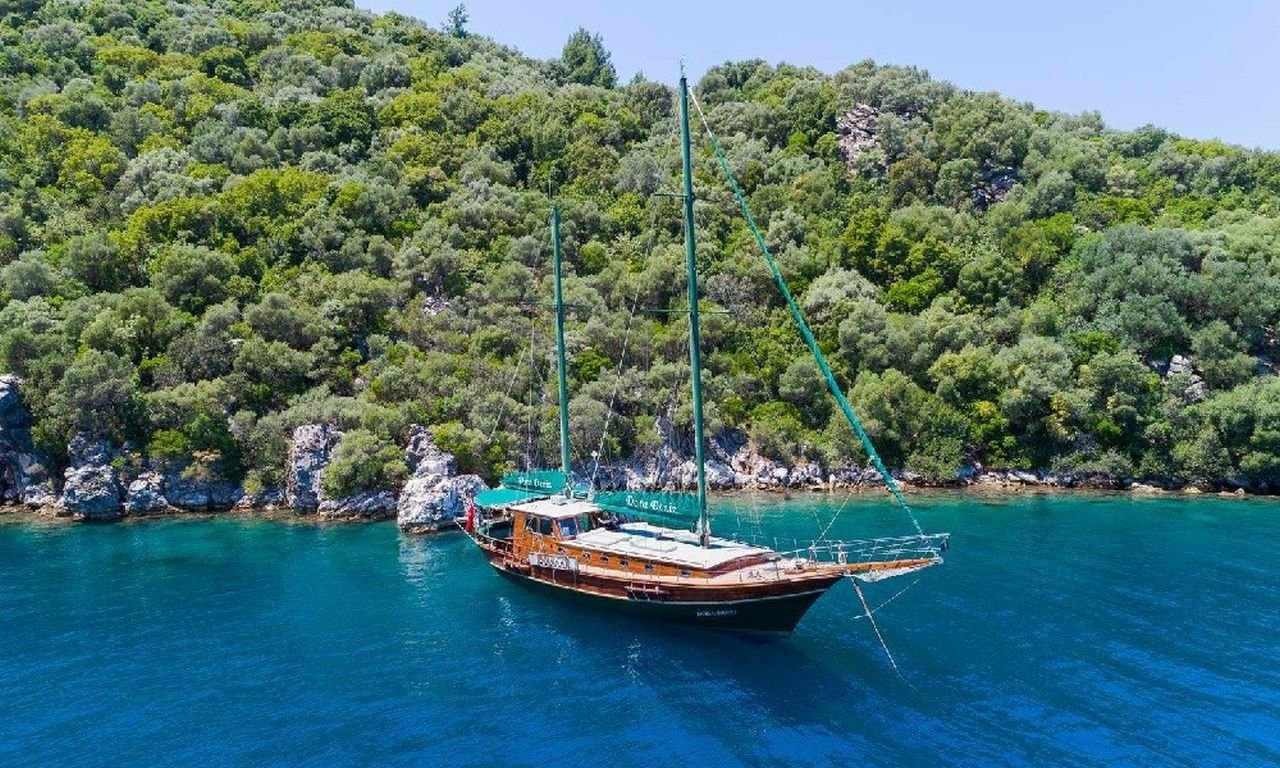
    The Blue Cruise is a popular sailing experience along the southwestern coast of Turkey (mainly the Aegean and Mediterranean coasts). It involves cruising along the turquoise waters on traditional wooden boats, usually gulets, exploring hidden bays, secluded beaches, ancient ruins, and charming coastal towns.

    The name comes from the vivid blue color of the sea and sky combined with the relaxed, luxurious sailing lifestyle. It’s not just a cruise—it’s a cultural, historical, and nature adventure.


    2. Duration of a Blue Cruise

    • Short Cruise: 1–3 days, ideal for a weekend trip. Usually covers a few nearby bays.
    • Standard Cruise: 5–7 days, most popular for fully exploring the Turkish Riviera.
    • Extended Cruise: 10–14 days, perfect for visiting many islands, ancient cities, and remote beaches.

    3. Types of Boats

    Most Blue Cruises are done on gulets, but there are different options:

    1. Classic Gulet: Wooden, spacious, cozy, ideal for authentic experience.
    2. Modern Gulet: Wooden body with modern interior and navigation tools.
    3. Luxury Gulet: High-end gulets with deluxe cabins, jacuzzi, entertainment systems.
    4. Small Gulet / Yacht: Smaller boats for couples or small groups.

    4. Typical Blue Cruise Itinerary

    Here’s a sample 7-day Blue Cruise along the Turkish coast:

    1. Day 1: Bodrum / Marmaris
      • Board the gulet in the afternoon
      • Welcome drinks, orientation, and first dinner on board
    2. Day 2: Bozburun & Cleopatra’s Beach
      • Swim in crystal-clear waters
      • Explore local villages
    3. Day 3: Datça Peninsula & Knidos
      • Visit ancient city of Knidos
      • Anchor in hidden bays for swimming
    4. Day 4: Symi Island (Greece) or local Turkish bays
      • Explore colorful Greek or Turkish villages
      • Evening sailing under the stars
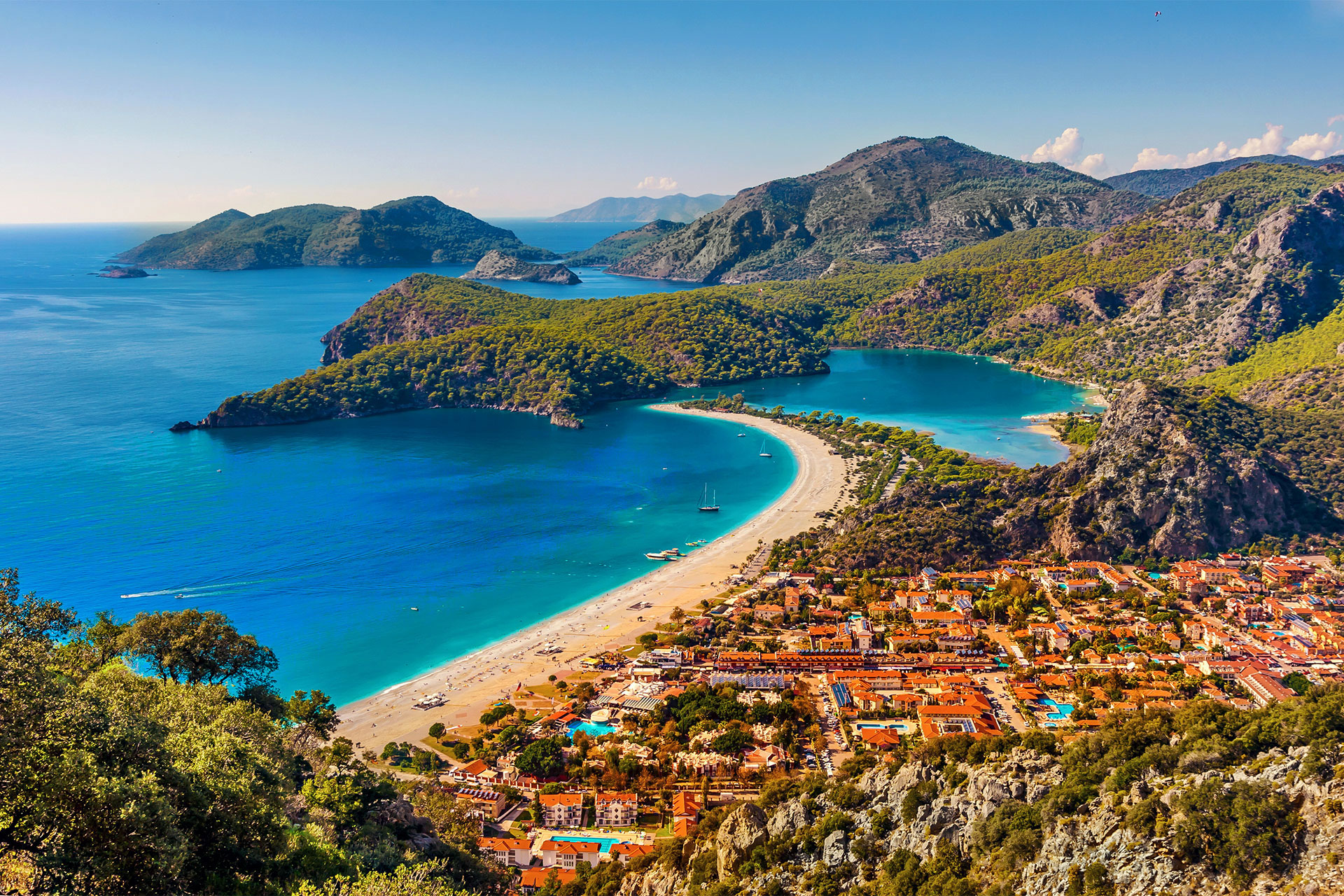
    5. Day 5: Fethiye – Ölüdeniz & Butterfly Valley
      • Swim in lagoons and scenic coves
      • Optional paragliding in Ölüdeniz
    6. Day 6: Göcek & Dalyan
      • Visit ancient Lycian tombs
      • Mud baths and river cruise in Dalyan
    7. Day 7: Return to Marmaris / Bodrum
      • Breakfast, farewell, and disembark

    Most cruises are flexible; routes can be tailored to weather, preferences, or islands to visit.


    5. Activities on a Blue Cruise

    • Swimming & Snorkeling: Explore hidden coves and crystal waters
    • Hiking: Visit ancient ruins and scenic viewpoints
    • Diving / Water Sports: Some gulets provide snorkeling and paddleboards
    • Cultural Visits: Small villages, local markets, Lycian tombs, and Greek islands
    • Relaxation: Sunbathing, reading, stargazing, and enjoying freshly cooked meals onboard

    6. What’s Included in a Typical Blue Cruise

    • Accommodation in cabins (shared or private)
    • Full board meals (breakfast, lunch, dinner)
    • Crew service (captain, cook, sometimes a deckhand)
    • Water, tea, and coffee
    • Some cruises include alcohol or soft drinks; check the package

    Optional costs: Excursions, diving, wine, or transfers to/from airports.


    7. Best Time for Blue Cruise

    • Peak Season: June–September (warm sea, sunny days, calm seas)
    • Shoulder Season: April–May and October (fewer crowds, mild weather)
    • Off-Season: November–March (many gulets inactive, cooler waters)

    8. Popular Starting Points

    • Bodrum – Vibrant nightlife, close to Greek islands
    • Marmaris – Marina hub with many gulets and beaches
    • Fethiye / Göcek – Scenic coves, ideal for Lycia exploration
    • Antalya / Kaş – Less crowded, more remote bays

    9. Tips for Travelers

    • Pack lightweight clothes, swimwear, hat, sunscreen, and comfortable shoes
    • Bring cash for small local purchases
    • Internet may be limited; enjoy a digital detox
    • Respect local customs and nature
    • If prone to seasickness, take medication or acupressure bands

    10. Blue Cruise vs. Regular Cruise

    FeatureBlue CruiseRegular Cruise
    VesselWooden gulet / yachtLarge ferry / cruise ship
    FocusNature, culture, small baysEntertainment, big ports
    Passengers8–20Hundreds to thousands
    PaceSlow, flexibleScheduled, fast
    MealsHome-cooked on boardBuffet / restaurant
    DestinationHidden coves, small islandsPopular ports only

    Blue Cruises are the perfect mix of adventure, relaxation, and culture. Whether you want to explore ancient ruins, swim in turquoise bays, or simply sunbathe with a cocktail, the Blue Voyage has it all.
  • Is it Safe to Travel in Turkey ?

    fethiye turkiye

    Turkey is one of the safest countries in the world in which to travel, and its crime rate is low in comparison to many Western European countries. Interpol ranked Turkey as the safest holiday destination in Europe for travelers. Naturally, we recommend that travelers to Turkey exercise the same precautions they would elsewhere, and be aware of security concerns that affect all international travelers.

    The Turkish Government takes air safety very seriously, and maintains strict oversight, particularly on international flights. The U.S. Federal Aviation Administration (FAA) has places Turkey’s civil aviation authority in Category 1-in full compliance with international aviation safety standards in overseeing Turkey’s air carrier operations.

  • What types of tours do tour operators offer?

    travel

    Tour operators listed in our Travel Directory, are Turkey specialists – they have extensive knowledge and experience in Turkish tourism. Some exclusively offer trips to Turkey. Others offer trips to Turkey in combination with other countries, such as Greece and Italy. The companies listed in the Travel Directory can provide a wide range of services including package tours, air ticketing, rental car reservations, hotel reservations, day tours, customized itineraries, guides, and more.

    Many companies specialize in different areas of Turkish travel and tourism. Almost all tours include western Turkey and focus on historical and archeological sites. However, some tour operators also offer tours of the Black Sea region and eastern and southeastern Turkey. There are also special-interest tours such as golf tours, photography tours, culinary tours, trekking tours and more.

  • Fascinating Facts Illustrating Turkey’s Rich Heritage

    istanbul

    – As an ancient land and modern nation, Turkey today holds and protects the common past of all people.

    – The only city in the world located on two continents is Istanbul, which has been the capital of three great empires – Roman, Byzantine and Ottoman – for more than 2000 years.

    Istanbul is the only city in the world located on two continents Europe and Asia. During its 25,000 year history, it has been the capital of the Roman, Byzantine, and Ottoman Empires.

    – The number of archaelogical excavations going on in Turkey every year is at least 150.

    – The oldest known human settlement is in Catalhoyuk, Turkey (7500 B.C.).

    Ephesus and Halicarnassus – two of the seven wonders of the ancient world – are in Turkey.

    – Anatolia is the birthplace of historic legends, such as Homer (the poet), King Midas, Heredotus (the father of history), and St. Paul the Apostle.

    – Julius Caesar proclaimed his celebrated words, “Veni, Vidi, Vici” (I came, I saw, I conquered) in Turkey when he defeated the Pontus, a formidable kingdom in the Black Sea region of Turkey.

    – The famous Trojan Wars took place in western Turkey, around the site where a wooden statue of the Trojan Horse rests today.

    – The first church built by man (St. Peter’s Church) is in Antioch Antakya, Turkey.

    – The Amazons originated in Turkey’s Northeastern region.

    – The First Ecumenical Council was held in Iznik, Turkey.

    – Writing was first used by people in ancient Anatolia. The first clay tablets – in the ruins of Assyrian Karum (merchant colony) – date back to 1950 B.C.

    – Prophet Abraham was born in Sanliurfa in Southeast Turkey.

    – St. Nicholas, known as Santa Claus today, was born and lived in Demre (Myra) on Turkey’s Mediterranean coast. The village contains the famous Church of St. Nicholas, which contains the sarcophagus believed to be his tomb.

    – Many archeologists and biblical scholars believe Noah’s Ark landed on Agri Dagi (Mount Ararat) in eastern Turkey.

    – The last meal on Noah’s Ark, a pudding with nearly 40 ingredients, is still served throughout Turkey.

    – The last home of Virgin Mary is in Selcuk, Turkey.

    – St. John, St. Nicholas, St. Paul and St. Peter have all lived and prayed in Southern Anatolia.

    – Part of Turkey’s Southwestern Shore was a wedding gift that Mark Anthony gave to Cleopatra.

    – The first man ever to fly was Turkish. Using two wings, Hezarfen Ahmet Celebi flew from the Galata Tower over the Bosphorus to land in Uskudar in the 17th century.

    – Homer was born in Izmir on the west coast of Turkey and he depicted Troy in his Epic the Iliad.

    – Suleyman the Magnificent (the famous Ottoman Sultan) was a poet who wrote over 3000 poems some of them criticising the greed of mankind.

    – One of the biggest and best preserved theatres of antiquity seating 15,000 is Aspendos on the southern coast of Turkey where international music festivals are held each year.

    – Aesop – famous all over the world for his fables and parables – was born in Anatolia.

    – Leonardo da Vinci drew designs for a bridge over the Bosphorus, the strait that flows through Europe and Asia. (It was never built then; but now there are two Bosphorus bridges.).

    – President Woodrow Wilson was fond of telling some of the tales of Nasreddin Hoca (13th century Turkish wit and raconteur; UNESCO has declared a “Nasreddin Hoca year”, 1996-1997).

    – Alexander the Great conquered a large territory in what is now Turkey – and cut the Gordion Knot in the Phrygian capital (Gordium) not far from Turkey’s present day capital Ankara.

    – Greek Cynic philosopher Diogenes was born in Sinop on Turkey’s Black Sea Coast.

    – Croesus – whose name is synonymous with great wealth – had his kingdom (Lydia) in Western Turkey.

    – Smallpox vaccination was introduced to England and Europe from Turkey by Lady Montagu in early 18th century (after Turkish phsycians saved her son’s life).

    – Istanbul’s Robert College, established in 1863, is the oldest American School outside the United States.

    – Throughout history Anatolia – land of Turks has been a bridge between Europe and Asia where people of different origins have come together and mingled with the ones already settled each time creating a new sythesis.

    – Early Christians escaping Roman persecution nearly 2000 years ago sheltered in Cappadocia in Central Anatolia.

    – In 1492 Sultan Beyazid II, learning about the expulsion of Jews dispatched the Ottoman Navy to bring the Jews safely to the Ottoman lands. Like wise Jews expelled from Hungary in 1376; from Sicily early in the 15th century; from Bavaria in 1470; from Bohemia in 1542 and from Russia in 1881, 1891, 1897, 1903 all took refuge in the Ottoman Empire.

    – As it was the case during the Bolshevik revolution, Turkey served as a safe passage an haven for those fleeing their native countries during the World War II, Turkey was one of the few countries in the world which welcomed the Jewish refugees escaping the horros of Nazism.

    – During the Gulf War in 1991, Turkey welcomed nearly half a million Kurds from Northern Iraq, who were fleeing the torment of Saddam.

    – Turkey provided homes for some 313,000 Bulgarian refugees of Turkish origin expelled from their homelands in Bulgaria in 1989.

    – According to Turkish tradition a stranger at one’s doorstep is considered “A Guest from ALLAH” and should be accommodated accordingly.

  • Where can I find information on Festivals, Fairs and other Events in Turkey?

    There are more than 100 festivals in Turkey every year. In addition to the local festivals organized in almost every city of the country, international culture and art festivals are held in major cities including Istanbul, Ankara, Izmir and Antalya. Istanbul is the most important center in Turkey of international culture and art festivals.

    Information on the principle Turkish international art and culture festivals and other important events can be found at www.turkey.org (click on Travel and Tourism Calender and Weather section) The Istanbul Culture and Art Foundation’s web site, www.istfest.org, gives detailed information on their festivals in Istanbul. In recent years, Turkey has been very popular with the congress tourism market, and Turkey hosts more congresses, fairs and conventions every year. With over 50 airlines flying to Turkey and most major European cities just a two or three hour flight away, Istanbul has become the venue of choice for many conventions and exhibitions.

    Istanbul offers the 5,000-person capacity Istanbul Convention & Exhibition Center (ICEC), two fair and exhibition halls, the International Exhibition Center (CNR) and the Fair and Congress Center (TUYAP), and numerous five star hotels with convention facilities. Istanbul can host 25,000 conference and exhibition delegates and visitors at any one time.

    For more information on ICEC, CNR, TUYAP and for a calendar of fairs and exhibitions at these centers, visit their web sites: www.icec.org, www.itf-exhibitions.com, and www.tuyap.com A list and a calendar of all fairs throughout Turkey can be found at www.igeme.org.tr (the calendar of fairs is in Turkish).